The Rise of African Tech Billionaires: How the Continent's Digital Economy is Creating New Wealth

Africa's wealth landscape is undergoing a dramatic transformation. While the continent has long been home to billionaires who made their fortunes in oil, mining, and telecommunications, a new generation of entrepreneurs is emerging from an unexpected sector: technology. These digital pioneers are not only accumulating substantial wealth but also reshaping Africa's economic narrative and proving that innovation, not just natural resources, can create generational prosperity.
A New Era of African Wealth Creation
For decades, Africa's wealthiest individuals built their empires on the continent's abundant natural resources. Names like Aliko Dangote, Nicky Oppenheimer, and Mike Adenuga became synonymous with industries like cement, diamonds, and telecommunications. However, the 21st century has ushered in a digital revolution that is democratizing wealth creation and opening doors for a new class of African billionaires and multimillionaires.
The statistics tell a compelling story. Between 2015 and 2023, African tech startups raised over $10 billion in venture capital funding, with several companies achieving unicorn status, valuations exceeding $1 billion. This influx of capital has created substantial wealth for founders, early employees, and investors, marking a fundamental shift in how fortunes are made on the continent.
The Architects of Africa's Digital Wealth
Several entrepreneurs have emerged as the faces of this technological wealth revolution, demonstrating that African innovation can compete on the global stage.
Sim Shagaya, the Nigerian entrepreneur behind Konga, one of Africa's largest e-commerce platforms, exemplifies this new breed of tech wealth creators. After selling his company and investing in numerous startups, Shagaya has become both a successful entrepreneur and a prominent angel investor, helping to fuel the next generation of African tech companies.
Rapelang Rabana, the South African entrepreneur who co-founded Yeigo Communications at just 22, represents the growing number of young Africans building significant wealth through technology. Her success in the telecommunications technology space opened doors for other young innovators to dream bigger.
The founders of Flutterwave, including Olugbenga Agboola and Iyinoluwa Aboyeji, have built one of Africa's most valuable fintech companies, processing billions of dollars in transactions and achieving a valuation that has made them some of the continent's youngest wealthy tech entrepreneurs. Their story illustrates how solving uniquely African problems, in this case, seamless digital payments, can create enormous value.
The Sectors Driving Digital Wealth
Africa's tech wealth isn't concentrated in a single sector. Instead, several key industries are producing substantial returns and creating new millionaires and billionaires.
Fintech has emerged as the crown jewel of African tech, addressing the continent's significant unbanked population. Companies like Interswitch in Nigeria, which processes the majority of the country's electronic transactions, have created substantial wealth for their founders. Wave in Senegal, which recently became one of Africa's most valuable startups, demonstrates that fintech opportunities extend beyond the continent's largest economies.
E-commerce platforms are capitalizing on Africa's growing middle class and increasing internet penetration. Jumia, often called "the Amazon of Africa," became the first African tech startup to list on the New York Stock Exchange, creating significant wealth for its founders and early investors despite later challenges.
Mobility and logistics have proven to be another lucrative sector. Uber's acquisition of Careem, which had significant Middle Eastern and North African operations, for $3.1 billion showcased the potential value in solving transportation challenges in emerging markets.
Agri-tech is increasingly attracting both investment and generating returns. Entrepreneurs building platforms that connect farmers to markets, provide weather data, or facilitate agricultural financing are creating sustainable businesses with strong growth potential.
The Infrastructure Enabling Tech Wealth
The rise of African tech billionaires hasn't occurred in a vacuum. Several factors have converged to create an environment conducive to digital wealth creation.
Mobile internet penetration has been transformative. With over 600 million Africans now online and smartphone adoption accelerating, the potential customer base for digital services has expanded exponentially. This connectivity has made it possible for tech entrepreneurs to reach markets that were previously inaccessible.
Investment infrastructure has matured significantly. A decade ago, African startups struggled to find local venture capital. Today, numerous VC firms focus exclusively on African tech, including local players like TLcom Capital and CRE Venture Capital, alongside international firms establishing African presences. This capital availability has allowed founders to scale their businesses and build substantial valuations.
Tech hubs and incubators have proliferated across the continent. Lagos, Nairobi, Cape Town, and Cairo have emerged as major startup ecosystems, providing entrepreneurs with mentorship, networking opportunities, and access to resources. These hubs have created clusters of innovation that attract talent and investment.
Government initiatives in several African countries have also played a role. Nigeria's startup act, Kenya's digital economy blueprint, and Rwanda's innovation-friendly policies have created regulatory environments that support rather than stifle digital entrepreneurship.
How Tech Wealth Differs From Traditional African Fortunes
The wealth being created in Africa's tech sector differs from traditional African fortunes in several meaningful ways.
Scalability is perhaps the most significant difference. While mining operations or manufacturing plants require substantial physical infrastructure and capital expenditure to expand, digital platforms can scale exponentially with relatively modest additional investment. A fintech app that works for 10,000 users can serve 10 million without proportionally increasing costs.
The speed of wealth creation has accelerated dramatically. Traditional industries often required decades to build billion-dollar valuations. Tech companies can achieve unicorn status in less than a decade, as Flutterwave and others have demonstrated.
Accessibility has broadened significantly. Starting a tech company requires less initial capital than launching a mining operation or building a telecommunications network. This lower barrier to entry has democratized entrepreneurship and wealth creation.
Geographic flexibility means tech entrepreneurs aren't bound to resource-rich regions. A startup can be built in any city with internet connectivity, spreading economic opportunity more evenly across the continent.
The Multiplier Effect: Beyond Individual Wealth
The creation of tech wealth is generating positive spillover effects throughout African economies. Successful entrepreneurs are becoming angel investors and venture capitalists, recycling their wealth into the next generation of startups. This creates a virtuous cycle of innovation and wealth creation.
Job creation extends beyond the founding companies. Each successful tech startup creates employment not just within the company but throughout its ecosystem—from developers and designers to customer service representatives and logistics partners.
The demonstration effect is powerful. When young Africans see people who look like them building billion-dollar companies through innovation rather than inheritance or resource extraction, it expands their sense of what's possible. This aspirational impact may ultimately prove more valuable than the direct wealth created.
Challenges on the Path to Tech Wealth
Despite the promising trends, African tech entrepreneurs face significant obstacles in building and preserving wealth.
Exit opportunities remain limited compared to more mature markets. While there have been notable acquisitions and a few IPOs, the paths for founders and early investors to realize their paper wealth remain constrained. This can trap value and prevent its recycling into new ventures.
Currency volatility poses risks to wealth preservation. Tech valuations are typically denominated in dollars, but many founders' personal expenses are in local currencies. Significant currency devaluations can dramatically impact purchasing power even as dollar-denominated net worth remains stable.
Infrastructure challenges persist. Unreliable electricity, poor internet connectivity in some regions, and inadequate logistics networks increase operational costs and complicate scaling efforts.
Regulatory uncertainty in some markets creates risks. Changes in data protection laws, taxation policies, or foreign exchange regulations can dramatically impact business models and valuations.
The Road Ahead: Africa's Digital Wealth Future
The trajectory suggests that Africa's tech sector will create many more fortunes in the coming decades. Several trends point toward continued growth in digital wealth creation.
Artificial intelligence and machine learning applications tailored to African contexts present enormous opportunities. From credit scoring using alternative data to agricultural yield predictions, AI-powered solutions could spawn the next generation of African tech giants.
Climate tech is emerging as a promising sector. As Africa faces significant climate challenges while having immense renewable energy potential, entrepreneurs building solutions in this space may capture substantial value.
Web3 and blockchain technologies are gaining traction, with African entrepreneurs exploring applications in remittances, identity verification, and decentralized finance. Some believe this could leapfrog traditional financial infrastructure just as mobile money did.
Cross-border expansion is becoming more feasible. As African Continental Free Trade Area implementation progresses, tech companies will find it easier to operate across multiple African markets, increasing their total addressable market and potential valuations.
Conclusion: A Transformation Still Unfolding
The rise of African tech billionaires represents more than just individual success stories. It signals a fundamental shift in Africa's economic potential and global positioning. The continent is no longer just a source of raw materials but increasingly a hub of innovation and digital solutions.
While challenges remain and the number of African tech billionaires is still modest compared to other regions, the trajectory is clear. Technology is creating new pathways to wealth that are more accessible, scalable, and potentially transformative than traditional industries. As infrastructure improves, investment capital flows more freely, and successful entrepreneurs reinvest in the ecosystem, Africa's digital economy will likely produce many more substantial fortunes.
For a continent often defined by its challenges, the emergence of tech-driven wealth creation offers a powerful counter-narrative: one of innovation, possibility, and a future where African entrepreneurs build globally competitive companies that create prosperity at home. The question is no longer whether technology will create African billionaires, but how many, how quickly, and what impact their success will have on the continent's broader economic transformation.
The digital revolution in African wealth creation has only just begun.
Featured Profiles
Related Articles
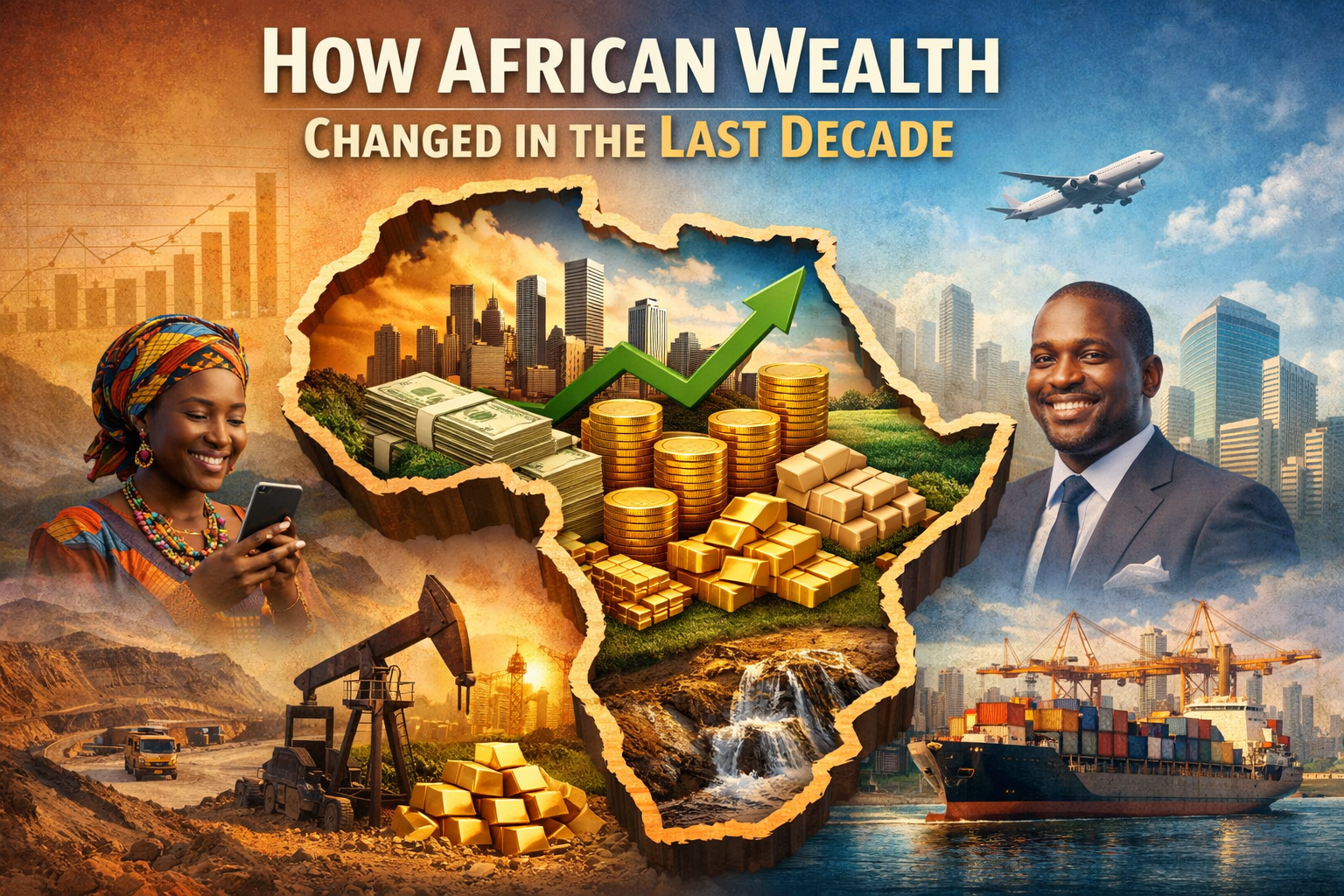
How African Wealth Changed in the Last Decade
The past decade has witnessed a remarkable transformation in Africa's wealth landscape, marked by ex ...