$20M
Estimated Net Worth
As of 2024 • medium confidence
Financial Breakdown
Asset Distribution
Assets vs Liabilities
Assets
Disclaimer: These financial estimates are based on publicly available information and should be considered approximate. Last updated: 12/29/2025
Biography
Introduction: The Steward of Modern Egypt
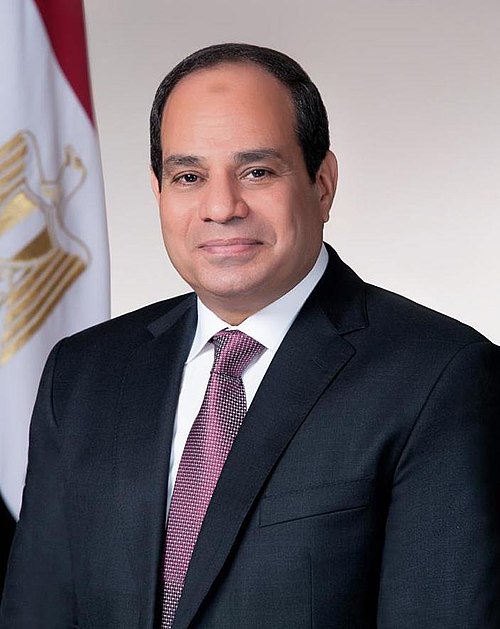
Abdel Fattah el-Sisi is the sixth and current President of Egypt, a defining figure in the nation's modern political landscape. Ascending to the executive presidency following a period of profound upheaval, el-Sisi has positioned himself as a stalwart of stability, national security, and economic sovereignty. His rise from a career military officer to the pinnacle of Egyptian Politics & Government is a narrative deeply intertwined with the country's turbulent post-2011 trajectory. As both a former Defense Minister and the sitting President, his tenure has been marked by ambitious mega-projects, a firm stance on counter-terrorism, and a foreign policy aimed at reasserting Egypt's regional influence. Understanding the role of Abdel Fattah el-Sisi is crucial to understanding contemporary Egypt's direction on the global stage.
Early Life & Military Education
Abdel Fattah Saeed Hussein Khalil el-Sisi was born on November 19, 1954, in Cairo, Egypt. Raised in a traditional, religious family in the Gamaleya district, his upbringing instilled in him a strong sense of national pride and discipline. His early education was in Cairo, and he demonstrated academic promise from a young age. The defining turn in his life came when he entered the Egyptian Military Academy, graduating in 1977. This was the foundation for a lifelong dedication to military service and national duty.
El-Sisi’s formative experiences were shaped by rigorous training and specialized education. He distinguished himself early, earning a place at the Egyptian Command and Staff College. His pursuit of military excellence led him abroad to the United Kingdom, where he studied at the Joint Services Command and Staff College in 1992. Further honing his strategic acumen, he attended the United States Army War College in Pennsylvania in 2006, earning a Master’s degree in Strategic Studies. These international experiences provided him with a broad perspective on military strategy, geopolitics, and national security management, preparing him for future leadership roles within the Egyptian Armed Forces.
Career Progression & Major Achievements as President
Rise Through the Ranks and the 2013 Transition
Abdel Fattah el-Sisi's military career was marked by steady advancement through key infantry and command positions. He served as a military attaché in Saudi Arabia and held command posts in the Second Field Army. His big break came in 2010 when he was appointed Director of Military Intelligence and Reconnaissance. In a pivotal moment for Egypt's Politics & Government, following the election of President Mohamed Morsi in 2012, el-Sisi was appointed Minister of Defense and Commander-in-Chief of the Armed Forces by Morsi himself in August 2012.
The following year, amid widespread public protests against Morsi's rule, then-Defense Minister el-Sisi announced the removal of the president on July 3, 2013, suspending the constitution and installing an interim government. This move, supported by mass demonstrations but condemned by the Muslim Brotherhood and others as a coup, placed el-Sisi at the center of Egyptian power. After a period as Deputy Prime Minister, he resigned from the military in March 2014 to run for the Executive Presidency. He won the presidential election in May 2014 with 96.9% of the vote, and was re-elected for a second term in 2018 and a third term in 2023, each by overwhelming majorities.
Domestic Policy and Mega-Projects
President el-Sisi's domestic agenda has been characterized by a focus on large-scale national infrastructure projects and economic reform. His government launched the construction of a New Administrative Capital east of Cairo, a mega-city project designed to decentralize government and attract investment. Other significant projects include the expansion of the Suez Canal, the "Decent Life" initiative for rural development, and massive nationwide road and housing construction campaigns. In 2016, his government implemented a stringent economic reform program in agreement with the International Monetary Fund (IMF), which involved floating the Egyptian pound and cutting subsidies—painful measures aimed at stabilizing the economy in the long term.
National Security and Foreign Policy
As a former head of military intelligence and Defense Minister, Abdel Fattah el-Sisi has made National Security the cornerstone of his presidency. His administration has led a sustained campaign against Islamist militant groups, particularly in the Sinai Peninsula, following numerous terrorist attacks. On the foreign policy front, el-Sisi has worked to restore Egypt's traditional role as a leading Arab state. He has strengthened strategic ties with Gulf allies like Saudi Arabia and the UAE, maintained a complex but stable relationship with Israel focused on security cooperation, and sought to mediate in regional conflicts, including the Libyan civil war. Under his rule, Egypt's foreign policy has been pragmatic, prioritizing state sovereignty and economic partnerships.
Personal Life, Philanthropy, and Legacy
Abdel Fattah el-Sisi is known for a reserved personal life. He is married to Entissar Amer (often referred to as "Mme. Entissar"), and the couple has four children: Mustafa, Mahmoud, Hassan, and Aya. He is often described as a devout Muslim and is frequently photographed in pious gestures. His public persona is one of austerity and paternalistic concern for the nation, often giving lengthy, impassioned televised speeches calling for hard work and sacrifice from the Egyptian people.
Philanthropy and social initiatives under his tenure are often state-led. The "Tahya Misr" (Long Live Egypt) Fund, established in 2014, is a state-managed fund that finances development projects in healthcare, education, and social welfare, funded by voluntary donations from businesses and citizens. His lasting impact, or legacy, remains a subject of intense debate. Supporters credit him with rescuing Egypt from chaos, implementing necessary economic reforms, and securing the state. Critics point to a severe crackdown on political dissent, restrictions on freedom of expression, and a heavy-handed approach to governance. Regardless of perspective, Abdel Fattah el-Sisi has indelibly shaped the era of Egyptian Politics & Government in the 21st century.
Financial Context and Economic Vision
As a public servant whose career has been almost entirely within the state military and government apparatus, Abdel Fattah el-Sisi's personal net worth is not officially published and is a topic of speculation rather than documented fact. His official salary as President of Egypt is public, but his personal finances are not transparent in the manner of a corporate executive. His financial narrative is less about personal business ventures and more about his government's economic vision for Egypt.
The el-Sisi administration has aggressively pursued foreign direct investment (FDI), particularly from Gulf Arab states, to fund its vision. The government has also issued sovereign bonds and engaged with international financial institutions. The economic model prioritizes state-led, military-associated enterprises in construction and development, which play a dominant role in the economy. Therefore, discussions about "net worth and business" in the context of el-Sisi are intrinsically linked to the economic policies and state-capitalist model his presidency champions, rather than personal business holdings.
References and Further Reading
For more information on Abdel Fattah el-Sisi and contemporary Egypt, credible sources include profiles from major international news agencies and research institutes. These sources provide ongoing analysis of his policies and their impacts within the region of the Middle East and North Africa.
Net Worth Analysis
Official disclosures and independent reports estimate his wealth in the tens of millions, primarily from his military salary and state-owned housing, but no credible source places him among billionaires.
Quick Stats
Related People

Aaron Motsoaledi
LP; Minister of Home Affairs

Abane Ramdane†
FLN Leader & Strategist

Abdalla Hamdok
Ex-Prime Minister

Abdallah Kigoda
Ex-Minister of Natural Resources