Financial Breakdown
Asset Distribution
Assets vs Liabilities
Assets
Disclaimer: These financial estimates are based on publicly available information and should be considered approximate. Last updated: 12/30/2025
Biography
Introduction: The Professor Turned Prime Minister
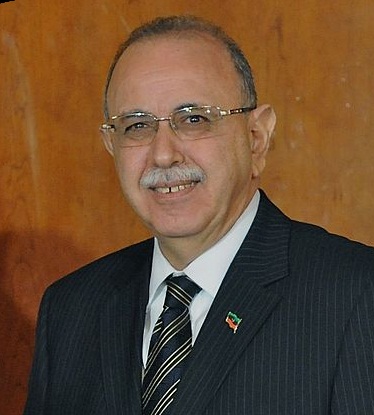
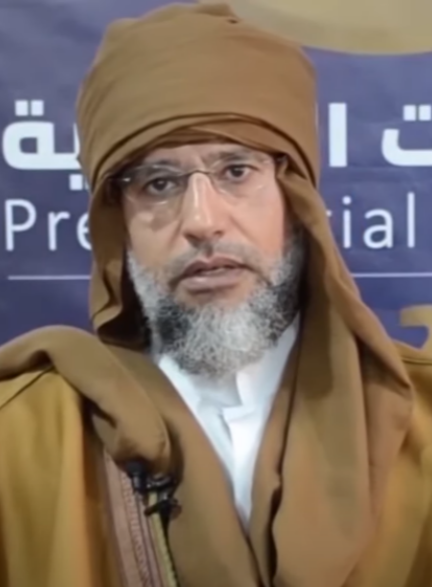
Abdel Rahim al-Keib emerged as a pivotal figure in modern Libyan history, serving as the Prime Minister of Libya during a critical transitional period following the 2011 revolution that toppled Muammar Gaddafi. An electrical engineering professor and successful businessman with deep roots in Tripoli, Abdel Rahim al-Keib was a surprising consensus choice for the nation's top executive post. His appointment in November 2011 by the National Transitional Council (NTC) marked a deliberate turn towards a technocratic leader, one untainted by the old regime and distant from the emerging factional rivalries. His key achievement was steering the fledgling government through its first fragile months, overseeing initial reconstruction efforts and setting the stage for the country's first national elections in decades. The story of Abdel Rahim al-Keib is intrinsically linked to Libya's tumultuous early steps towards democracy.
Early Life and Education: Foundations in Tripoli and Abroad
Abdel Rahim al-Keib was born in 1950 in the capital city of Tripoli, Libya. Growing up in a pre-revolutionary Libya, he demonstrated academic prowess from an early age. He pursued higher education in the United States, a path that would shape his professional worldview. He earned a Master of Science degree in Electrical Engineering from North Carolina State University in 1975. He continued his academic journey at the University of California, Santa Barbara, where he completed another Master's degree before ultimately receiving his Ph.D. in Electrical Engineering in 1984. His doctoral research focused on power systems and solid-state electronics, fields of critical importance to infrastructure development.
These formative years abroad exposed him to different systems of governance and academic rigor. After completing his Ph.D., Abdel Rahim al-Keib embarked on an international academic career. He served as a professor at the University of Tripoli, imparting knowledge to a generation of Libyan engineers. He also held prestigious teaching and research positions at universities in Saudi Arabia and the United Arab Emirates, most notably at The Petroleum Institute in Abu Dhabi. This period solidified his reputation as a respected academic and a pragmatic technocrat, far removed from the political machinations of Gaddafi's Libya.
Career and Major Achievements: From Academia to the Executive Cabinet
The trajectory of Abdel Rahim al-Keib's life changed dramatically with the outbreak of the Libyan Civil War in February 2011. While not a frontline revolutionary, he supported the anti-Gaddafi forces, leveraging his international connections and resources. Following Gaddafi's death and the declaration of liberation in October 2011, the National Transitional Council faced the daunting task of appointing a leader for the interim government. The council sought a unifying figure—someone educated, ethical, and acceptable to both the eastern and western regions of Libya. Abdel Rahim al-Keib, the apolitical professor from Tripoli with strong tribal connections, fit this description perfectly.
Ascension to Prime Minister
On November 24, 2011, the NTC elected Abdel Rahim al-Keib as the interim Prime Minister of Libya. He defeated the more politically experienced Mahmoud Jibril in a runoff vote, a signal that the council preferred a clean break. His primary mandate was to form a government and prepare the country for elections to a General National Congress (GNC) within eight months.
Key Challenges and Actions in Office
Al-Keib's tenure, which lasted until November 2012, was fraught with immense challenges:
- Forming a Representative Government: He carefully balanced regional and ideological interests in his cabinet, attempting to integrate various militias into state security structures.
- Economic Revitalization: He worked to restart Libya's oil production, the lifeline of the economy, which had been crippled by the war.
- Security Stabilization: His government grappled with the proliferation of armed brigades and the urgent need to establish a national army and police force.
- Transition to Democracy: His administration successfully organized and conducted the first free national elections in July 2012 for the GNC, a historic achievement with a voter turnout of over 60%.
Despite these efforts, his government was often criticized as weak, unable to disarm the powerful militias or impose central authority. The limitations of his short-term, transitional mandate became increasingly apparent. In November 2012, following the peaceful handover of power to the newly elected GNC, Abdel Rahim al-Keib was succeeded by Prime Minister Ali Zeidan. His exit from the Executive Cabinet marked the end of Libya's first post-revolutionary government.
Personal Life, Legacy, and Lasting Impact
Known for his mild-mannered and scholarly demeanor, Abdel Rahim al-Keib was often described as a "gentleman" in the rough-and-tumble world of Libyan politics. He was married and had children, maintaining a relatively private family life. His interests remained academic, and he was a proponent of education as the cornerstone of Libya's future development. While not known for large-scale public philanthropy, his career itself was viewed by many as a service to the nation.
The legacy of Abdel Rahim al-Keib is complex. He is credited with presiding over a peaceful, if fragile, initial transition. The successful 2012 election under his watch remains a high point in Libya's post-2011 history. He demonstrated that a technocrat could lead, emphasizing governance over ideology. However, the unresolved security issues and institutional weaknesses that festered during his tenure eventually plunged Libya into further conflict. Historians view him as a well-intentioned leader who navigated an impossible situation, setting foundational precedents for peaceful power transfer but ultimately unable to contain the centrifugal forces that would later tear the country apart. His story remains a crucial chapter in understanding the early hopes and subsequent challenges of post-Gaddafi Libya.
Net Worth and Business Ventures
Prior to his political career, Abdel Rahim al-Keib had established himself as a successful entrepreneur in the energy sector. His business acumen, combined with his technical expertise, led to significant financial success. He was the founder and chairman of several companies, most notably Energy Libya, a firm involved in electricity and infrastructure projects. He also held interests in other energy-related ventures across the Middle East and North Africa region. While his exact net worth was never publicly disclosed, his business holdings positioned him as a wealthy individual independent of state resources. This financial independence was likely a factor in his political appointment, as it suggested a degree of incorruptibility and a focus on national, rather than personal, gain. His transition from business and academia to the pinnacle of political power in Libya remains a unique trajectory in the nation's modern history.
Frequently Asked Questions
What is Abdel Rahim al-Keib's estimated net worth?
Abdel Rahim al-Keib has an estimated net worth of $10.0 Million.
What is Abdel Rahim al-Keib's role and nationality?
Abdel Rahim al-Keib is a Ex-Prime Minister from Libya.
How did Abdel Rahim al-Keib make their money?
Abdel Rahim al-Keib built their fortune primarily through As a former academic and short-term political figure in a country with significant instability and state-controlled oil wealth, personal fortunes are not typically amassed through public office; no credible public net worth estimates exist..
How old is Abdel Rahim al-Keib?
Abdel Rahim al-Keib was born in 1948 (78 years old).
Which category is Abdel Rahim al-Keib listed under?
Abdel Rahim al-Keib is featured under the Politics & Government category on NetWorth Africa.
How is Abdel Rahim al-Keib's net worth calculated?
NetWorth Africa estimates financial valuations using publicly available stock equity holdings, company ownership records, real estate assets, and verified market data.
Net Worth Analysis
As a former academic and short-term political figure in a country with significant instability and state-controlled oil wealth, personal fortunes are not typically amassed through public office; no credible public net worth estimates exist.
Quick Stats
Related People
Aaron Motsoaledi
LP; Minister of Home Affairs • South Africa
Abane Ramdane†
FLN Leader & Strategist • Algeria
Abdalla Hamdok
Ex-Prime Minister • Sudan
Abdallah Kigoda
Ex-Minister of Natural Resources • Tanzania