Financial Breakdown
Asset Distribution
Assets vs Liabilities
Assets
Disclaimer: These financial estimates are based on publicly available information and should be considered approximate. Last updated: 12/30/2025
Biography
Introduction: The Diplomat Who Defected
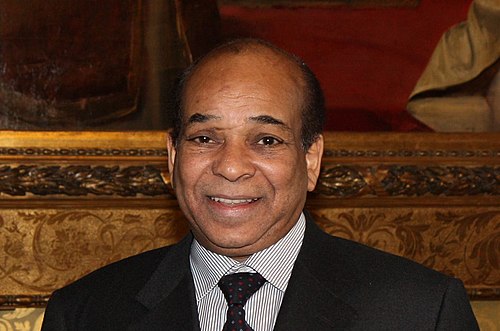
Abdel Rahman Shalgham is a prominent Libyan political figure whose career is inextricably linked with the modern history of his nation. Best known internationally as the Ex-Foreign Minister of Libya under Muammar Gaddafi, Shalgham's legacy is defined by a singular, dramatic moment in 2011 that cemented his place in the annals of Politics & Government. For decades, he served as a loyal diplomat and administrator for the Gaddafi regime, playing a crucial role in negotiating Libya's return to the international fold in the 2000s. However, his most notable achievement came during the Libyan Civil War, when, as Libya's Permanent Representative to the United Nations, he publicly broke with Gaddafi in an emotional speech that called for international intervention to save Benghazi. This act transformed Abdel Rahman Shalgham from a regime insider into a symbol of principled defection, marking him as a complex and pivotal figure in Libya's turbulent transition.
Early Life & Education: Foundations in Fezzan
Abdel Rahman Shalgham was born in 1946 in the southwestern region of Fezzan, Libya. Growing up in the final years of the Italian colonial period and the nascent Kingdom of Libya, his formative years were shaped by a nation finding its identity. Details of his early family life are sparse in public records, but his upbringing in a region known for its cultural diversity and trade routes may have influenced his later diplomatic outlook. Shalgham pursued higher education with a focus on the humanities, which laid the groundwork for his future in public service and Diplomacy.
He attended the University of Libya (later the University of Tripoli), where he studied history and geography, graduating with a degree that provided a deep understanding of regional dynamics and social structures. This academic background proved invaluable for a career navigating the complex interplay of tribal, regional, and international politics that defines Libya. His intellectual formation occurred during a period of rising Arab nationalism and anti-colonial sentiment, ideologies that permeated the political landscape of the era and would later be central to the rhetoric of the Gaddafi government he would eventually serve.
Career & Major Achievements: From Loyalist to Defector
The career of Abdel Rahman Shalgham is a chronicle of Libya's shifting political fortunes. His rise within the bureaucratic apparatus began after the 1969 coup that brought Muammar Gaddafi to power. Shalgham's intellect and loyalty saw him appointed to several key positions, establishing him as a trusted figure within the regime's inner circle long before he became Ex-Foreign Minister.
Rise Through the Ranks
Shalgham's early career included a significant tenure as Libya's Ambassador to the Italian Republic, a critical posting given the historical colonial ties between the two nations. He later served as the Secretary of the People's Committee (equivalent to Prime Minister) from 1990 to 1994, overseeing domestic administration during a period of intense international isolation due to UN sanctions imposed over the Lockerbie bombing. His adept handling of this difficult period demonstrated his administrative competence and resilience.
Tenure as Foreign Minister (2000-2009)
In March 2000, Abdel Rahman Shalgham was appointed as the Secretary of the General People's Committee for Foreign Liaison and International Cooperation, effectively making him Libya's Foreign Minister. This marked the most impactful phase of his career. His mandate was central to Gaddafi's strategic decision to rehabilitate Libya's global standing. Shalgham was a key architect and negotiator in the delicate diplomatic processes that led to:
- Libya accepting responsibility for the Lockerbie bombing in 2003.
- Renouncing its weapons of mass destruction (WMD) program.
- The eventual lifting of UN and US sanctions.
- The normalization of relations with Western powers, including the United States and the United Kingdom.
During this nearly decade-long tenure, Shalgham became the familiar face of Libyan diplomacy, advocating for a new chapter in the country's international relations and working to attract foreign investment, particularly in the crucial energy sector.
The 2011 Defection: A Speech Heard Around the World
In 2009, Shalgham was appointed as Libya's Permanent Representative to the United Nations. When the Arab Spring ignited the Libyan Civil War in February 2011, he initially defended the government's actions. However, as the regime's violent crackdown on protesters escalated, culminating in the threat to Benghazi, Shalgham's position shifted irrevocably. On February 25, 2011, in an address to the UN Security Council, Abdel Rahman Shalgham delivered a tearful and impassioned plea, stating, "Gaddafi has said he will crush us... Please, save Libya!" He explicitly called for a no-fly zone to prevent a massacre. This public defection was a profound moral and political earthquake, stripping the Gaddafi regime of significant diplomatic legitimacy and galvanizing international support for UNSC Resolution 1973.
Personal Life, Legacy, and Later Years
Abdel Rahman Shalgham has largely maintained a private personal life, with public information focused on his political career. Known among colleagues for his intellectual demeanor and deep knowledge of Libyan history and society, these traits defined his approach to statecraft. Following the fall of the Gaddafi regime, Shalgham remained with the UN mission representing the National Transitional Council (NTC) before eventually retiring from frontline politics. His legacy is profoundly dualistic: he is remembered both as the diplomat who helped end Libya's pariah status and as the loyalist who served an authoritarian regime for over four decades. Yet, his defiant 2011 speech ensures he is ultimately viewed as a figure who, at a decisive historical juncture, chose the cause of the people over the dictator, a moment that continues to define his historical image.
In the chaotic post-Gaddafi landscape, Shalgham has occasionally commented on Libyan affairs as an elder statesman, often warning of the dangers of fragmentation and foreign interference. His life's journey—from Fezzan to the pinnacle of diplomacy, through a dramatic defection—mirrors Libya's own tumultuous path in the 20th and 21st centuries, making him a human archive of the nation's recent history.
Net Worth & Business Ventures
As with many figures from the Gaddafi era, precise details regarding Abdel Rahman Shalgham's personal net worth and private business interests are not publicly verifiable. His career was spent almost entirely in public service within the Libyan government, first as a senior administrator and later as a diplomat. During his tenure as Foreign Minister and Prime Minister, he would have overseen significant state budgets and economic negotiations, particularly in the oil and gas sector, but there is no credible evidence or reporting from sources like BBC or Reuters that suggests involvement in private commercial ventures or the accumulation of vast personal wealth outside the official structures of the state. His financial situation post-2011 remains a private matter, with no substantial information available in the public domain.
Frequently Asked Questions
What is Abdel Rahman Shalgham's estimated net worth?
Abdel Rahman Shalgham has an estimated net worth of $5.0 Million.
What is Abdel Rahman Shalgham's role and nationality?
Abdel Rahman Shalgham is a Ex-Foreign Minister from Libya.
How did Abdel Rahman Shalgham make their money?
Abdel Rahman Shalgham built their fortune primarily through As a former diplomat and government official in Libya, his wealth is not publicly documented and is not comparable to major business figures; estimate is based on typical earnings and assets for high-ranking officials in the region..
How old is Abdel Rahman Shalgham?
Abdel Rahman Shalgham was born in 1946 (80 years old).
Which category is Abdel Rahman Shalgham listed under?
Abdel Rahman Shalgham is featured under the Politics & Government category on NetWorth Africa.
How is Abdel Rahman Shalgham's net worth calculated?
NetWorth Africa estimates financial valuations using publicly available stock equity holdings, company ownership records, real estate assets, and verified market data.
Net Worth Analysis
As a former diplomat and government official in Libya, his wealth is not publicly documented and is not comparable to major business figures; estimate is based on typical earnings and assets for high-ranking officials in the region.
Quick Stats
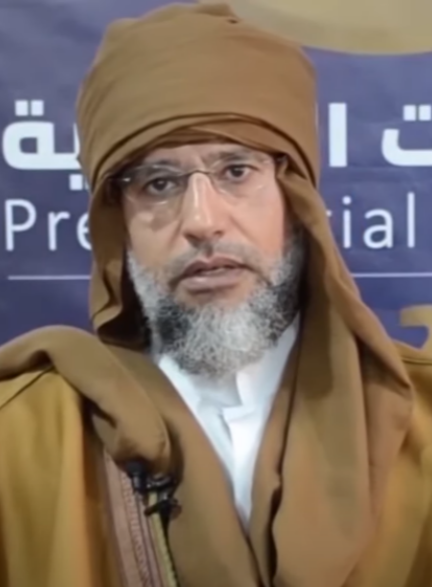
Related People
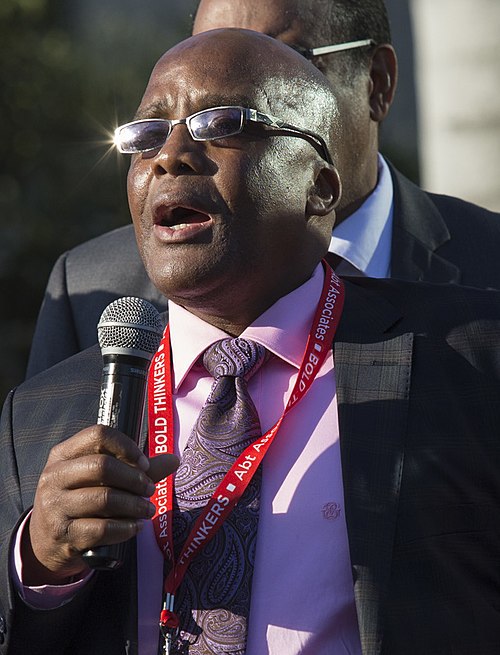
Aaron Motsoaledi
LP; Minister of Home Affairs • South Africa
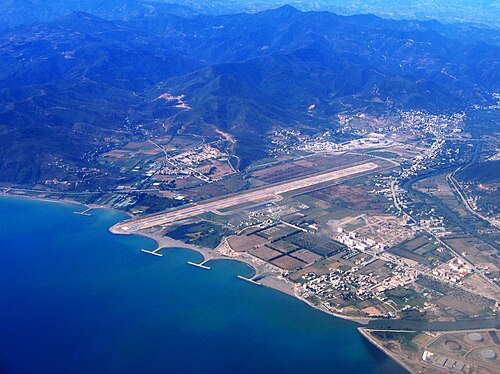
Abane Ramdane†
FLN Leader & Strategist • Algeria
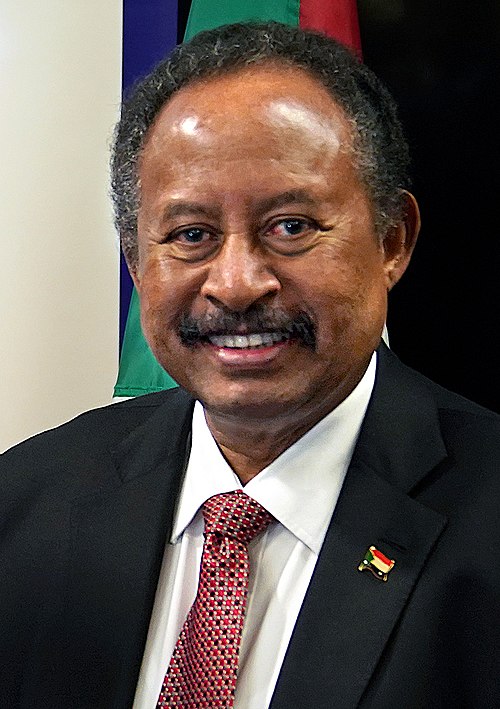
Abdalla Hamdok
Ex-Prime Minister • Sudan
Abdallah Kigoda
Ex-Minister of Natural Resources • Tanzania