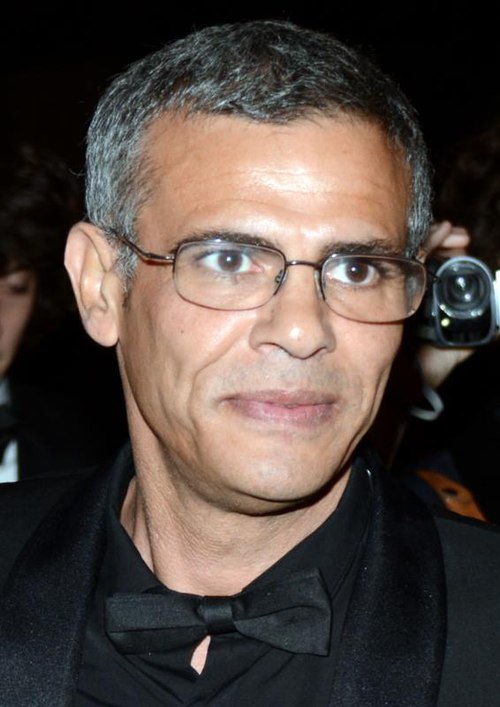
$5M
Estimated Net Worth
As of 2024 • medium confidence
Financial Breakdown
Asset Distribution
Assets vs Liabilities
Assets
Liabilities
Disclaimer: These financial estimates are based on publicly available information and should be considered approximate. Last updated: 12/31/2025
Biography
Introduction: The Palme d'Or Laureate
Abdellatif Kechiche stands as one of the most compelling and controversial auteurs in contemporary cinema. A Tunisian-born French director, screenwriter, and former actor, Kechiche carved a unique niche in the Arts & Culture landscape with his intensely naturalistic films that dissect social class, racial tensions, and raw human desire. His international fame reached its zenith in 2013 when his film La Vie d'Adèle (Blue Is the Warmest Colour) was awarded the prestigious Palme d'Or at the Cannes Film Festival, a historic win that also saw the prize controversially awarded to the film's two lead actresses alongside the director. Abdellatif Kechiche's work is characterized by its immersive, often lengthy scenes, a documentary-like aesthetic, and a fearless exploration of the intimate lives of characters on the margins of society, securing his place as a pivotal figure in world cinema.
Early Life & Education: Roots in Tunisia, Blossoming in France
Abdellatif Kechiche was born in 1960 in Tunis, Tunisia, into a modest family. At the age of six, his family emigrated to France, settling in Nice. This experience of displacement and existing between cultures—North African and European—would later become a central, recurring theme in his filmography. His adolescence was not focused on film; instead, he initially pursued a passion for acting. After studying drama in Paris, Abdellatif Kechiche began a career on the stage and in television during the 1980s and early 1990s. He appeared in several French TV series and films, including a role in André Téchiné's Les Innocents (1987).
This period as an actor proved formative. It provided him with a deep, practical understanding of performance and actor-director dynamics, which would later define his directorial style. Frustrated by the limited and often stereotypical roles available to actors of Maghrebi origin, Kechiche turned his creative energy toward writing and directing. He sought to tell stories that reflected the complex, nuanced realities of immigrant families and working-class communities he knew intimately, a perspective largely absent from mainstream French cinema at the time. This drive to represent the unseen laid the groundwork for his transition behind the camera.
Career & Major Achievements: From Critical Acclaim to Palme d'Or Glory
Abdellatif Kechiche's directorial debut, La Faute à Voltaire (Blame It on Voltaire) in 2000, immediately announced a distinctive new voice. The film, following a Tunisian immigrant navigating the underbelly of Paris, set the template for his style: empathetic observation, non-professional actors, and a focus on socio-economic struggle. His breakthrough came with his second film, L'Esquive (Games of Love and Chance) in 2003. This vibrant look at teenagers in a Parisian housing project, who rehearse a Marivaux play, won four César Awards (the French Oscars), including Best Film and Best Director, defeating high-profile favorites. It established Abdellatif Kechiche as a major force.
The Trilogy of Desire and Acclaim
Kechiche followed with La Graine et le Mulet (Couscous) in 2007, a sprawling, heartfelt epic about an aging Maghrebi immigrant fighting to open a restaurant on a boat. The film was a massive critical success, winning the Special Jury Prize at the Venice Film Festival and another three Césars. These first three films formed a loose trilogy about desire—for love, for dignity, for a better life—within France's immigrant communities.
The pinnacle of his career arrived in 2013 with La Vie d'Adèle. The film's explicit and lengthy depiction of a passionate lesbian romance between a high school student and a older art student sparked global debate. Beyond its notoriety, it was celebrated for its revolutionary emotional depth and the stunning performances Kechiche elicited from his actresses, Adèle Exarchopoulos and Léa Seydoux. Winning the Palme d'Or cemented his international reputation. His subsequent film, Mektoub, My Love: Canto Uno (2017), premiered at Venice but was met with polarized reviews, criticized for its length and perceived voyeurism, showcasing the divisive nature of his uncompromising vision.
Impact and Style
The impact of Abdellatif Kechiche on film is significant. His achievements paved the way for more diverse narratives in French cinema. His directorial hallmarks include:
- Hyper-naturalism: Use of handheld cameras, long takes, and overlapping dialogue to create a sense of real life unfolding.
- Collaborative Process: Famous for demanding numerous takes, working closely with actors to strip away performative layers.
- Sociological Eye: His films serve as sharp, non-judgmental studies of class, ethnicity, and gender dynamics.
- Focus on the Body: Scenes of eating, working, and lovemaking are given profound narrative weight, emphasizing physical, visceral experience.
Personal Life & Legacy: The Reclusive Auteur
Abdellatif Kechiche is famously private and avoids the media spotlight, which has contributed to his enigmatic persona. He is known to be intensely focused and demanding on set, a perfectionist dedicated to achieving his artistic vision, a trait that has sometimes led to public disputes with collaborators. Beyond film, he has expressed a deep love for literature, theater, and music, influences that subtly permeate his work.
His legacy in Arts & Culture is assured as a fearless and original filmmaker who expanded the boundaries of cinematic realism. He brought the lives of France's immigrant and working-class populations to the center of critical discourse and international awards stages. Despite controversies, his body of work presents a powerful, often beautiful, and always challenging portrait of human yearning. As a Tunisia-born artist who achieved the highest honor in cinema, Abdellatif Kechiche remains an inspirational and contentious figure, whose films continue to be studied and debated for their formal innovation and unflinching honesty.
Net Worth & Business Ventures
While Abdellatif Kechiche's exact net worth is not publicly disclosed, his financial success is intrinsically linked to his film career. The commercial and critical performance of his movies, particularly the Palme d'Or-winning La Vie d'Adèle, which had a global box office gross of over $19 million against a modest budget, represents a significant source of revenue. Income streams for a director of his stature typically include film salaries, backend profit participation, screenwriting fees, and royalties from international distribution and home media sales.
Unlike some filmmakers, Kechiche has not been associated with major commercial endorsements, luxury brand partnerships, or significant business ventures outside of filmmaking. His "business" is his art. He operates primarily through his production company, Quat'sous Films, which he uses to maintain creative control over his projects. This independence is a hallmark of his career, allowing him to pursue his unique artistic vision without studio interference, even if it sometimes limits the scale of his productions. His financial standing is best understood as that of a successful, prize-winning auteur in the European art-house cinema system, where cultural capital often precedes vast personal wealth.
Sources: Information compiled from reputable film databases and industry reports including the Cannes Film Festival archives, Académie des Arts et Techniques du Cinéma (César Awards), and biographical entries from authoritative cinema publications.
Net Worth Analysis
As a critically acclaimed film director, his wealth is derived from film projects and awards, not business ventures, placing him in the multi-millionaire range, not on billionaire lists.
Quick Stats
Related People
Abasse Ndione
Novelist & Playwright
Abdel Rahman al-Abnudi†
Poet (Egypt-Sudan)
Abdelkrim Ghallab†
Novelist & Journalist
Abdellah Taïa
Novelist & Filmmaker