$50M
Estimated Net Worth
As of 2024 • low confidence
Financial Breakdown
Asset Distribution
Assets vs Liabilities
Assets
Disclaimer: These financial estimates are based on publicly available information and should be considered approximate. Last updated: 12/29/2025
Biography
Introduction: A Veteran Leader at a Critical Juncture
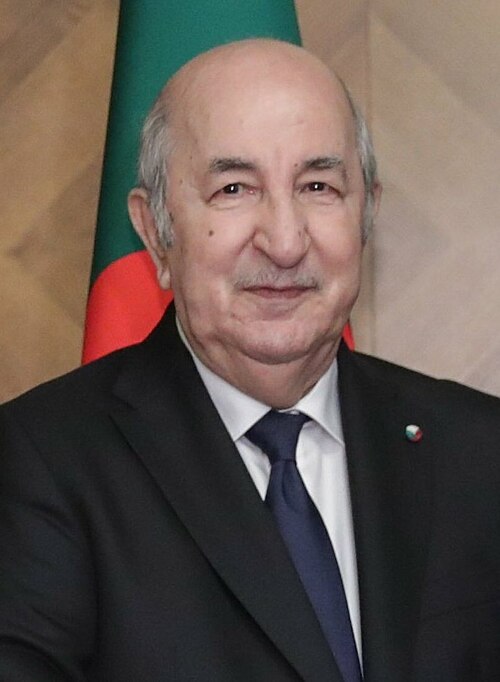
Abdelmadjid Tebboune is a central figure in modern Algerian politics, ascending to the nation's highest office during a period of profound transition. Elected as the President of Algeria in December 2019, his presidency was shaped from its inception by the Hirak protest movement, a massive, peaceful popular uprising that demanded radical political change and an end to the old guard's dominance. A seasoned political veteran with a career spanning over four decades within the state's administrative and ministerial structures, Abdelmadjid Tebboune positioned himself as a candidate of reform and stability. His key achievement, thus far, has been navigating the complex aftermath of the Hirak, overseeing a constitutional revision, and attempting to steer the country toward a "new Algeria" amidst significant economic challenges and regional instability. His tenure represents a critical chapter in the nation's post-Bouteflika era, aiming to balance continuity with promised renewal.
Early Life and Education: Forging a Path in Public Service
Abdelmadjid Tebboune was born on November 17, 1945, in Mécheria, within the Naâma Province of Algeria. His formative years coincided with the escalating struggle for Algerian independence from French colonial rule, an experience that deeply influenced his generation's commitment to national sovereignty. Following Algeria's independence in 1962, he pursued higher education with a focus on administration and public policy, laying the groundwork for his lifelong career in government.
He attended the prestigious École Nationale d'Administration (ENA) in Algiers, the premier institution for training the country's administrative elite. Graduating with a specialization in finance and administration, Tebboune was equipped with the technical expertise required for high-level governance. This educational background in the rigorous French-inspired administrative system provided him with a deep understanding of state machinery, which would become the hallmark of his professional trajectory. His early career was spent within various administrative departments, where he developed a reputation for competence and a detailed, if traditional, approach to public management.
Career and Major Achievements: A Political Journey Through the Decades
The career of Abdelmadjid Tebboune is a mosaic of senior roles across multiple governments, reflecting his adaptability and enduring presence within Algeria's political landscape. His rise was steady, marked by appointments to increasingly powerful ministerial portfolios.
Ministerial Ascent and Varied Portfolios
Tebboune's first major ministerial appointment came in 1999 as Minister of Communication and Culture. Over the next two decades, he would lead a remarkable array of ministries, demonstrating his utility to successive administrations. His portfolio included:
- Minister of Housing and Urban Planning (2001-2002): A role he would return to later, focusing on large-scale public housing projects.
- Minister for National Territorial Development and Environment (2002)
- Minister of Housing and Urban Planning (again from 2012-2017): This tenure was particularly notable, as he oversaw massive state-funded housing initiatives, a key populist policy of President Bouteflika's government.
His most prominent pre-presidential role was as Prime Minister of Algeria, appointed by President Abdelaziz Bouteflika in May 2017. However, his tenure was remarkably brief, lasting only three months. His dismissal was widely attributed to tensions with powerful business oligarchs close to the presidency, after he made statements critical of their influence. This episode unexpectedly bolstered his public image as a figure willing to challenge entrenched interests.
The 2019 Election and Presidential Tenure
Following the resignation of President Bouteflika under pressure from the Hirak movement in April 2019, Algeria entered a period of uncertainty. The presidential election of December 12, 2019, saw Abdelmadjid Tebboune emerge victorious with 58.13% of the vote, though the election was marked by low turnout and rejection by the ongoing Hirak protests, which viewed it as a ploy by the existing system to perpetuate itself.
Upon taking office, President Tebboune faced immediate challenges: addressing the demands of the protest movement, reviving a struggling economy heavily dependent on hydrocarbons, and managing the COVID-19 pandemic. His major policy initiatives have included:
- Constitutional Revision (2020): Overseeing a national referendum on a revised constitution aimed at strengthening parliamentary powers and limiting presidential terms. It was approved, though critics argued the changes were insufficient.
- Political Reconciliation and Prisoner Releases: Pardoning and releasing dozens of Hirak activists and political figures, while also calling for a "dialogue" to end the political crisis.
- Economic Reforms:** Launching initiatives to diversify the economy away from oil and gas, encourage private investment, and reduce bureaucracy, though progress has been slow against entrenched systemic hurdles.
- Foreign Policy Recalibration: Asserting Algeria's role in regional diplomacy, particularly regarding the crises in Mali and Libya, and taking a firmer stance on Western Sahara in support of the Polisario Front.
In 2021, Abdelmadjid Tebboune faced a serious health challenge, undergoing treatment in Germany for complications related to COVID-19. He returned to Algeria after several months, resuming his duties. His government has continued to grapple with inflation, unemployment, and periodic resurgence of public discontent, even as the organized Hirak movement has diminished.
Personal Life, Legacy, and Lasting Impact
Known for a more austere and bureaucratic style compared to his predecessor, Abdelmadjid Tebboune maintains a relatively low-profile personal life. He is married and has children. His public persona is that of a diligent, hard-working statesman, often emphasizing the themes of national sovereignty, the sacrifices of the war of independence, and the need for discipline and order in governance. Unlike many of his contemporaries, he is not associated with flamboyant wealth or a strong media presence, which aligns with his image as a technocrat.
The legacy of Abdelmadjid Tebboune is still being written. He will undoubtedly be remembered as the president who followed the Bouteflika era and the Hirak, tasked with managing a fragile and contested transition. His supporters view him as a pragmatic reformer working within difficult constraints to modernize the state and economy. His critics see him as a product of the old system, incapable of delivering the fundamental change demanded by the Algerian people. His lasting impact will be judged on his ability to deliver tangible economic improvements, foster genuine political inclusion, and set Algeria on a sustainable path forward in a turbulent region. Whether he is seen as a bridge to a new era or a guardian of the old order will depend on the outcomes of the remaining years of his presidency.
Financial Standing and Business Associations
In the context of Algerian Politics & Government, the personal wealth of high-ranking officials is a subject of significant public interest. Unlike some figures from the Bouteflika era, Abdelmadjid Tebboune has not been publicly associated with vast business empires or allegations of grand corruption. His financial profile appears to be largely tied to his long career as a public servant and minister. Official declarations, as required by law, suggest a wealth accumulated through state salary and pensions. His brief tenure as Prime Minister in 2017 was notably defined by his criticism of "the oligarchs," referring to powerful businessmen with close ties to the state, which positioned him as an antagonist to that particular model of wealth accumulation. As President, he has overseen anti-corruption drives that have targeted some of these same figures. While precise figures of his net worth are not officially confirmed and are subject to speculation, his public narrative has consistently been framed around administrative service rather than private business venture success.
Net Worth Analysis
As a long-serving public official, his wealth is not publicly documented and is not listed on any billionaire index; estimates are based on his career in government and typical assets for a senior official in Algeria.
Quick Stats
Related People
Aaron Motsoaledi
LP; Minister of Home Affairs
Abane Ramdane†
FLN Leader & Strategist
Abdalla Hamdok
Ex-Prime Minister
Abdallah Kigoda
Ex-Minister of Natural Resources