$5M
Estimated Net Worth
As of 2024 • medium confidence
Financial Breakdown
Asset Distribution
Assets vs Liabilities
Assets
Disclaimer: These financial estimates are based on publicly available information and should be considered approximate. Last updated: 12/29/2025
Biography
Introduction
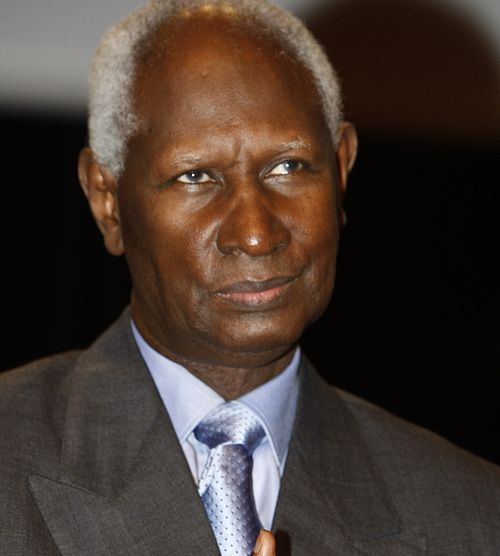
Abdou Diouf stands as one of the most significant figures in modern West African history. Serving as the second President of Senegal from 1981 to 2000, his tenure spanned nearly two decades of profound regional and global change. A technocrat by training and a statesman by vocation, Abdou Diouf is widely recognized for his steadfast commitment to democratic principles, economic modernization, and Pan-African unity. His leadership guided Senegal through periods of economic difficulty while maintaining the nation's cherished reputation as a beacon of political stability and pluralism in a sometimes turbulent region. Beyond his presidential legacy, Abdou Diouf later served as the Secretary-General of the Organisation internationale de la Francophonie (OIF) from 2003 to 2014, amplifying his influence on the global stage. This biography explores the life and career of a leader whose dedication to Senegal and Africa left an indelible mark on the continent's Politics & Government landscape.
Early Life & Education: The Making of a Technocrat
Abdou Diouf was born on September 7, 1935, in Louga, a city in the northwest of Senegal, then part of French West Africa. Hailing from the Serer ethnic group, his early years were shaped within a society deeply rooted in traditional values yet increasingly exposed to colonial administration. His intellectual promise was evident from a young age, leading him to pursue a rigorous academic path that would define his methodical approach to governance.
Diouf's secondary education culminated at the prestigious Lycée Faidherbe in Saint-Louis. He then embarked on higher education studies in both Senegal and France, specializing in law and public administration—fields that would become the cornerstones of his career. He graduated from the University of Dakar and later from the elite École nationale de la France d'Outre-Mer in Paris, an institution dedicated to training administrators for the French colonial empire. This education provided him with a deep understanding of bureaucratic systems and statecraft. His formative professional experience began in 1960, the very year of Senegal's independence, when he entered the civil service. His competence and reliability saw him rise rapidly, and by 1964, at just 29 years old, he was appointed as the Secretary-General of the Government under President Léopold Sédar Senghor. This role was the crucible in which Abdou Diouf honed the administrative skills and political acumen that would later define his presidency.
Career & Major Achievements: From Prime Minister to President
Abdou Diouf's political ascent was closely tied to his mentor, President Senghor. Recognizing his loyalty and managerial prowess, Senghor appointed him as Prime Minister of Senegal in 1970, a newly re-established position. For over a decade, Diouf served as the government's chief operating officer, managing day-to-day affairs and implementing state policy. This period solidified his reputation as a capable and disciplined administrator.
The Presidency (1981-2000)
In a move that underscored a rare peaceful transition of power in post-colonial Africa, President Senghor voluntarily retired in 1981. As stipulated by the constitution, Prime Minister Abdou Diouf automatically succeeded him on January 1, 1981. His presidency was characterized by several key themes and achievements:
- Democratic Consolidation: Diouf oversaw a significant political liberalization. He moved Senegal from a de facto one-party state under Senghor's Socialist Party to a vibrant multi-party democracy. By the late 1980s and early 1990s, over two dozen political parties were active. He also introduced a two-term limit for the presidency (though it did not apply retroactively to his own tenure).
- Economic Challenges and Reforms: His presidency coincided with economic crises, including droughts and falling prices for key exports like groundnuts. In response, Diouf implemented structural adjustment programs in collaboration with the International Monetary Fund and World Bank. These reforms, while often painful in the short term, aimed to stabilize the economy, promote private enterprise, and diversify away from agricultural dependency.
- Regional and International Diplomacy: Abdou Diouf was a respected voice in Africa and beyond. He served as Chairman of the Organization of African Unity (OAU) from 1985 to 1986 and was a key mediator in regional conflicts. He was a staunch advocate for African integration, playing a pivotal role in the establishment of the Economic Community of West African States (ECOWAS).
- Infrastructure and Development: His government invested in major national projects, including the construction of the Dakar-Diamniadio Toll Highway and significant improvements to the Port of Dakar, aiming to boost trade and economic activity.
Diouf won presidential elections in 1983, 1988, and 1993. The 1988 election was particularly contentious, leading to unrest, but he maintained power. His commitment to democratic process was ultimately tested and proven in 2000 when he lost the presidential election to opposition leader Abdoulaye Wade. In a moment that cemented his legacy, Abdou Diouf gracefully conceded defeat and facilitated a peaceful transfer of power—a landmark event in African politics.
Leadership in La Francophonie
After leaving the Senegalese presidency, Abdou Diouf's diplomatic career continued to flourish. In 2003, he was elected Secretary-General of the Organisation internationale de la Francophonie (OIF), a global community of French-speaking nations. For eleven years, he championed cultural diversity, French language education, peace, democracy, and sustainable development across the OIF's member states, further expanding his influence as a global elder statesman.
Personal Life & Legacy
Abdou Diouf is known for his reserved, dignified, and intellectual demeanor, a contrast to the more flamboyant style of some contemporaries. He is married to Elisabeth Diouf, and the couple has children. His personal interests have often been overshadowed by his public service, but he is recognized as a man of deep faith and principle. His legacy is multifaceted and enduring.
First and foremost, Abdou Diouf is remembered as the guardian of Senegal's democratic tradition. His peaceful acceptance of electoral defeat in 2000 is perhaps his single most powerful act, setting a crucial precedent not only for Senegal but for the entire continent. He demonstrated that political power could be transferred through ballots, not bullets. Secondly, his long tenure provided a continuity of governance that ensured stability during challenging economic times. While critics point to persistent poverty and the hardships of structural adjustment, supporters credit him with modernizing the state apparatus and integrating Senegal more fully into the global economy. Finally, his post-presidential work with La Francophonie underscored a lifelong commitment to dialogue, cultural exchange, and international cooperation. Today, Abdou Diouf remains a revered figure in Senegal, symbolizing integrity, stability, and a profound belief in the democratic process within the sphere of Executive Presidency.
Net Worth & Business Ventures
As a career public servant who transitioned from the civil service directly into high political office, Abdou Diouf's wealth has never been associated with significant private business ventures or commercial enterprises. His financial profile is consistent with that of a long-serving statesman whose income derived primarily from his official salaries as Prime Minister, President of Senegal, and later as Secretary-General of the OIF. Unlike some political figures, there are no widespread reports or allegations of Diouf amassing considerable personal wealth through corruption or illicit means during his tenure. His public image is that of a leader who lived a relatively modest lifestyle compared to the scale of his office. In Senegalese and African media, discussions about Abdou Diouf's net worth are notably absent, with the focus instead remaining firmly on his political legacy and contributions to public life. His post-presidential activities have centered on diplomatic and institutional roles rather than private business, aligning with his lifelong identity as a dedicated administrator and international diplomat.
For further reading on Abdou Diouf's life and policies, credible sources include the official archives of the Organisation internationale de la Francophonie, biographical entries from institutions like the Encyclopædia Britannica, and historical analyses of Senegalese politics from academic publishers.
Net Worth Analysis
As a former public servant and statesman, not a business figure, his wealth is not comparable to African billionaires; estimates for former African presidents in similar contexts typically range in the low millions.
Quick Stats
Related People
Aaron Motsoaledi
LP; Minister of Home Affairs
Abane Ramdane†
FLN Leader & Strategist
Abdalla Hamdok
Ex-Prime Minister
Abdallah Kigoda
Ex-Minister of Natural Resources