$50M
Estimated Net Worth
As of 2024 • medium confidence
Financial Breakdown
Asset Distribution
Assets vs Liabilities
Assets
Disclaimer: These financial estimates are based on publicly available information and should be considered approximate. Last updated: 12/30/2025
Biography
Introduction: A Leader Forged in Libya's Turbulent Transition
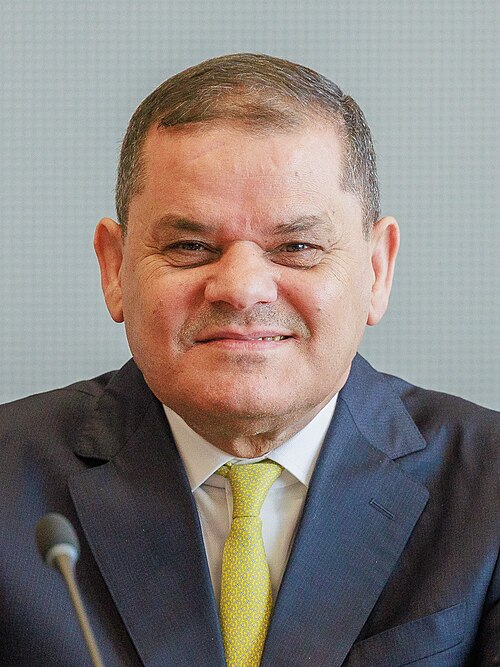
Abdul Hamid Dbeibeh is a central figure in contemporary Libyan Politics & Government, serving as the Prime Minister of the Government of National Unity (GNU). His ascent to power in 2021 marked a pivotal moment in Libya's post-civil war landscape, representing a UN-backed effort to unify the country's fractured political and military institutions. Appointed through a UN-facilitated Libyan Political Dialogue Forum (LPDF), Abdul Hamid Dbeibeh's key achievement lies in his mandate to lead the first unified executive authority since 2014, tasked with steering the nation toward national elections and restoring stability. His tenure, however, has been defined by the immense challenge of navigating deep-seated rivalries, managing a tense ceasefire, and addressing the dire economic needs of the Libyan people amidst ongoing political deadlock.
Early Life & Education: Foundations in Misrata
Abdul Hamid Mohammed Dbeibeh was born in 1959 in the port city of Misrata, a commercial powerhouse and a community known for its strong sense of identity and resilience. Growing up in Libya during the monarchy and early years of Muammar Gaddafi's rule, his formative years were shaped by the evolving socio-political environment of the country. The Dbeibeh family is well-established in Misrata, with ties to business and construction, which would later influence his career path.
Driven by an aptitude for engineering and management, Dbeibeh pursued higher education abroad. He earned a degree in Civil Engineering from a university in Canada, where he was exposed to Western engineering practices and project management methodologies. This international education provided him with a technical foundation distinct from the traditional military or diplomatic backgrounds of many Libyan political figures. Upon returning to Libya, he leveraged his family's standing and his own qualifications to enter the business world, initially focusing on construction and development projects. His early career was spent not in the halls of government, but in managing large-scale infrastructure works, an experience that ingrained in him a practical, project-oriented approach to problem-solving—a trait that would later be tested in the complex arena of national politics.
Career & Major Achievements: From Business to the Premiership
Prior to his political emergence, Abdul Hamid Dbeibeh built a significant career in the private sector. He served as the Chairman of the Libyan Investment and Development Company (LIDCO), a major state-owned enterprise under the Gaddafi regime responsible for executing large infrastructure projects. In this role, he oversaw the construction of critical facilities, including the iconic "Great Man-Made River" project phases and major sports stadiums. This position placed him at the intersection of business and state interests, granting him extensive managerial experience and a network of contacts across the country.
Entry into High-Stakes Politics
Dbeibeh's entry into high-level politics was sudden and dramatic. Following the 2011 revolution and the subsequent civil conflict, Libya was split between rival administrations in the east and west. In a bold move to break the stalemate, the United Nations Support Mission in Libya (UNSMIL) facilitated the Libyan Political Dialogue Forum in 2020. From a pool of candidates, Abdul Hamid Dbeibeh was selected on February 5, 2021, as the interim Prime Minister-designate. His mandate was clear yet daunting: to form a unified government to guide the country to presidential and parliamentary elections scheduled for December 24, 2021.
Forming the Government of National Unity
His first major political achievement was successfully presenting a cabinet lineup to the Libyan House of Representatives (based in Tobruk) and securing a vote of confidence on March 10, 2021. This act alone was historic, as it represented the first nationally endorsed government since 2014. The GNU, under Prime Minister Abdul Hamid Dbeibeh, took office in Tripoli with key objectives:
- Unify state institutions and initiate national reconciliation.
- Prepare for and hold free and fair national elections.
- Address pressing public service issues and revive the economy.
- Maintain the fragile ceasefire agreement.
Initially, the GNU made progress in reopening major coastal roads, initiating dialogue between rival factions, and presenting a unified national budget. However, the failure to hold elections in December 2021 plunged the political process into renewed crisis. A rival government, led by Fathi Bashagha, was appointed by the eastern-based House of Representatives in early 2022, claiming the GNU's mandate had expired. Despite this, Abdul Hamid Dbeibeh has refused to step down without a clear electoral mandate, arguing that he should remain until elections are held. This has resulted in a protracted political standoff, with Dbeibeh controlling the capital, Tripoli, and the vital state financial institutions.
Personal Life & Legacy: The Man Behind the Office
Abdul Hamid Dbeibeh is known to be a private individual regarding his family life. He is married and has children, and he maintains strong roots in his hometown of Misrata. His identity as a Misratan is a significant aspect of his political persona, as the city played a decisive role in the 2011 revolution and subsequent conflicts, giving him a power base but also tying his fortunes to the city's complex political and military alliances.
His legacy is still being written and remains intensely contested. Supporters view him as a pragmatic technocrat who prevented the country from sliding back into full-scale war by maintaining a functioning, if imperfect, administration in Tripoli that provides salaries and basic services. They credit him with keeping the prospect of elections alive through difficult negotiations. Critics, however, accuse him of clinging to power and contributing to the political deadlock by failing to facilitate a smooth transition. They also point to allegations of corruption from his time heading LIDCO, though no convictions have been made. Ultimately, Abdul Hamid Dbeibeh's lasting impact will be judged by whether his tenure leads to a peaceful, democratic transition or becomes another chapter in Libya's prolonged instability.
Net Worth & Business Ventures
While no official net worth is declared, Abdul Hamid Dbeibeh's financial standing is widely understood to be substantial, stemming from his decades-long leadership of major state-linked construction enterprises. His role as Chairman of the Libyan Investment and Development Company (LIDCO) placed him at the helm of multi-billion-dollar infrastructure projects, granting significant influence over contracts and development funds. This background has shaped his image as a "businessman-politician," with supporters citing his managerial acumen and detractors raising questions about the origins of his wealth and potential conflicts of interest. His business network, particularly within Misrata's powerful commercial circles, has been both an asset in building political coalitions and a source of scrutiny. In the context of Libya's Politics & Government, where control over economic resources is a key source of power, Dbeibeh's business history remains a defining and often debated aspect of his profile.
Information sourced from United Nations reports, Libyan news agencies, and international coverage from Reuters and the BBC.
Net Worth Analysis
Abdul Hamid Dbeibeh is a political figure, not a business tycoon, and there are no credible public reports of significant personal wealth. His net worth is likely derived from his political career and family business interests in construction, estimated to be in the tens of millions.
Quick Stats
Related People
Aaron Motsoaledi
LP; Minister of Home Affairs
Abane Ramdane†
FLN Leader & Strategist
Abdalla Hamdok
Ex-Prime Minister
Abdallah Kigoda
Ex-Minister of Natural Resources