Biography
Introduction: The Soldier-President of Somalia
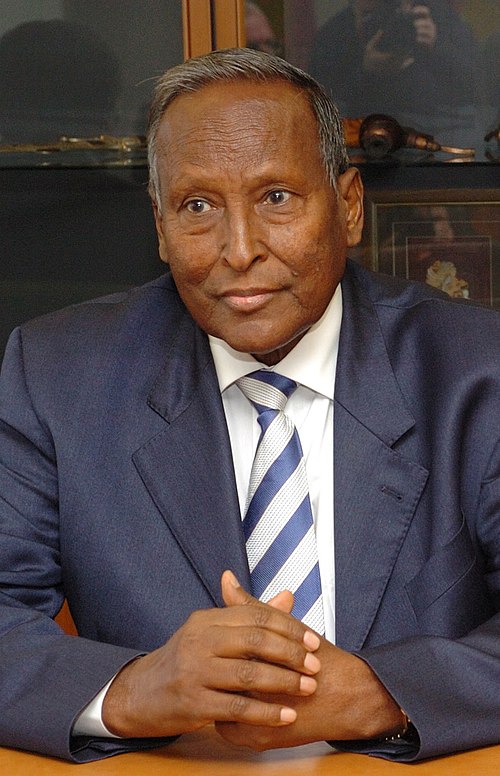
Abdullahi Yusuf Ahmed† stands as a pivotal and controversial figure in modern Somali history. As the Ex-President (2004-2008) of the Transitional Federal Government (TFG) of Somalia, his tenure marked a critical, albeit turbulent, attempt to re-establish a central authority in a nation fractured by over a decade of civil war and statelessness. His key achievement was his pivotal role in the formation of the TFG in 2004, representing the first internationally recognized federal government since 1991. However, his presidency was defined by immense challenges, including persistent insurgency, deep political divisions, and the difficult task of national reconciliation. The life and career of Abdullahi Yusuf Ahmed† encapsulate the struggle for power, clan politics, and the daunting quest for stability in the Horn of Africa.
Early Life & Education: Forging a Leader in Colonial Somalia
Abdullahi Yusuf Ahmed was born in 1934 in the town of Galkayo, in the north-central Mudug region of what was then Italian Somaliland. He hailed from the Omar Mahmoud sub-clan of the larger Majeerteen Darod clan, a lineage that would significantly influence his political alliances and challenges. His formative years coincided with the tail end of European colonial administration, an experience that shaped his understanding of governance and power structures.
For his education, Yusuf attended local schools before pursuing higher military training. He first attended the Police Academy in Mogadishu, laying an early foundation in discipline and state security apparatus. Seeking further expertise, he received a scholarship to study in Italy, where he graduated from the Military Academy of Modena in 1960. This year was momentous, as it marked Somalia's independence. Returning as a commissioned officer, Abdullahi Yusuf Ahmed was poised to serve in the nascent Somali National Army, bringing with him a professional military ethos that would define his approach to politics—often viewing complex problems through a lens of military strategy and confrontation.
Career & Major Achievements: From Military Officer to Transitional President
The career of Abdullahi Yusuf Ahmed was a tumultuous journey through Somalia's most volatile decades, characterized by military service, imprisonment, rebellion, and finally, the presidency.
Military Career and the SSDF Rebellion
During the early governments of the Somali Republic and the subsequent military regime of Siad Barre, Yusuf rose through the army ranks. By the 1970s, he had become a prominent colonel. However, following the disastrous Ogaden War (1977-1978), discontent with Barre's rule grew, particularly among the Majeerteen clan. In 1978, Abdullahi Yusuf Ahmed co-founded the first major armed opposition group, the Somali Salvation Democratic Front (SSDF). He was arrested in 1981 and sentenced to death, but international pressure commuted his sentence. After six years in prison, he escaped in 1987 and resumed his leadership of the SSDF, which played a key role in the eventual overthrow of Siad Barre in 1991.
The Puntland Presidency and Path to National Leadership
In the anarchic aftermath of Barre's fall, Somalia fragmented. In his home region, Yusuf helped establish the autonomous state of Puntland in 1998. He was elected as its first President, serving until 2001. This period was crucial, as it provided him with a platform and a regional power base. His administration in Puntland, though authoritarian, demonstrated a capacity to impose a degree of order and basic governance, which bolstered his credentials as a leader who could bring stability.
The Transitional Federal Presidency (2004-2008)
The major turning point came with the internationally-backed Somali Peace Process held in Kenya. In October 2004, after protracted negotiations, Abdullahi Yusuf Ahmed was elected by the Transitional Federal Parliament as the President of the Transitional Federal Government (TFG). This was his paramount achievement: leading the first central government with broad international recognition in over 13 years.
His presidency, however, was fraught with monumental challenges:
- Security and Insurgency: The rise of the Islamic Courts Union (ICU) in 2006 challenged the TFG's authority. Yusuf supported the Ethiopian military intervention in late 2006 to oust the ICU, a deeply unpopular move that fueled a potent insurgency.
- Political Fragmentation: He struggled to build an inclusive government, with conflicts with the parliamentary Speaker and Prime Ministers (like Ali Mohamed Ghedi and Nur Hassan Hussein) paralyzing governance.
- Limited Territorial Control: For much of his term, the TFG's authority was confined to parts of Mogadishu and Baidoa, protected by Ethiopian troops and African Union peacekeepers (AMISOM).
By late 2008, with the peace process stalled, the insurgency raging, and his health failing, Abdullahi Yusuf Ahmed faced immense pressure. On December 29, 2008, he announced his resignation before parliament, stating his inability to unite the government and achieve peace.
Personal Life, Legacy, and Final Years
Abdullahi Yusuf Ahmed was known for his stern, uncompromising personality, shaped by his military background and years in the struggle. He was married and had several children. His health was a constant issue during his presidency; he underwent a liver transplant in 1996 and required frequent medical treatment abroad, which sometimes impacted his ability to govern.
The legacy of Abdullahi Yusuf Ahmed is complex and subject to intense debate. Supporters view him as a strongman who tried to impose order on chaos, a nationalist who fought against dictatorship and Islamist extremism. Critics argue his clan-based politics and reliance on Ethiopian force undermined national reconciliation and exacerbated conflict. His lasting impact lies in his central role in establishing the transitional political framework that, despite its flaws, became the internationally recognized pathway for subsequent Somali governments. He passed away on March 23, 2012, in Dubai, United Arab Emirates, at the age of 77.
Net Worth & Business Ventures
Details regarding the precise net worth of Abdullahi Yusuf Ahmed are not publicly verifiable, as is common with many political figures from conflict states. His financial resources were intertwined with his political and military activities. During his leadership of the SSDF and later as President of Puntland, he would have commanded significant resources related to administration, security, and regional trade. As President of the TFG, he had access to state funds and international financial support aimed at rebuilding government institutions. However, the TFG was perpetually underfunded, and accusations of corruption within his administration were widespread. There is no documented evidence of significant private business ventures separate from his political career; his economic standing was fundamentally linked to his position and the patronage networks inherent in Somali Politics & Government at the time.
This biography is compiled from reputable historical and news sources documenting modern Somali history, including reports from the BBC, Reuters, and academic analyses of the Somali transitional period.
Frequently Asked Questions
What is Abdullahi Yusuf Ahmed†'s estimated net worth?
Net worth details for Abdullahi Yusuf Ahmed† are currently being updated.
What is Abdullahi Yusuf Ahmed†'s role and nationality?
Abdullahi Yusuf Ahmed† is a Ex-President (2004-2008) from Somalia.
How did Abdullahi Yusuf Ahmed† make their money?
Abdullahi Yusuf Ahmed† built their fortune primarily through Abdullahi Yusuf Ahmed was a former Somali president with no known significant personal wealth; his financial status was not publicly documented and he is not on any billionaire list..
How old is Abdullahi Yusuf Ahmed†?
Abdullahi Yusuf Ahmed† was born in 1934 (92 years old).
Which category is Abdullahi Yusuf Ahmed† listed under?
Abdullahi Yusuf Ahmed† is featured under the Politics & Government category on NetWorth Africa.
How is Abdullahi Yusuf Ahmed†'s net worth calculated?
NetWorth Africa estimates financial valuations using publicly available stock equity holdings, company ownership records, real estate assets, and verified market data.
Net Worth Analysis
Abdullahi Yusuf Ahmed was a former Somali president with no known significant personal wealth; his financial status was not publicly documented and he is not on any billionaire list.
Quick Stats
Related People
Aaron Motsoaledi
LP; Minister of Home Affairs • South Africa
Abane Ramdane†
FLN Leader & Strategist • Algeria
Abdalla Hamdok
Ex-Prime Minister • Sudan
Abdallah Kigoda
Ex-Minister of Natural Resources • Tanzania