Biography
Introduction: The Diplomat at a Crossroads
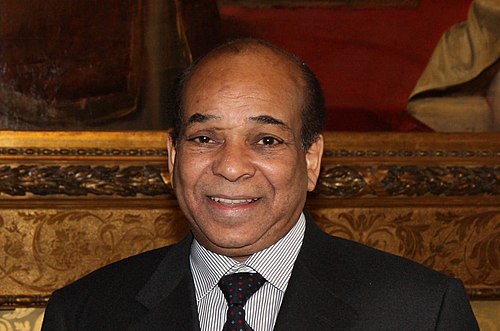
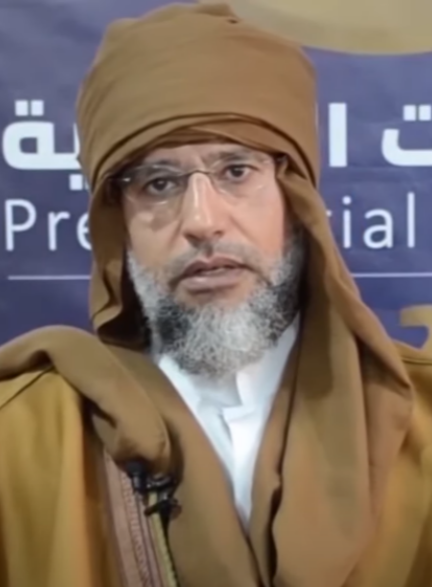
Abdurrahman Shalgham stands as a pivotal figure in modern Libyan political history, whose career uniquely bridged two starkly different eras of the nation's governance. Serving as both the Foreign Minister of Libya and later as its Permanent Representative to the United Nations, Shalgham's tenure was marked by profound transformation and high-stakes international diplomacy. Born in 1946, his professional life unfolded against the backdrop of Colonel Muammar Gaddafi's four-decade rule, a period during which Shalgham rose to become one of the regime's most prominent and recognizable faces on the global stage. His most notable and dramatic moment came in 2011, during the Libyan Civil War, when he publicly broke with Gaddafi, delivering an emotional speech at the UN that denounced the regime's violence against its own people. This act cemented Abdurrahman Shalgham's legacy not just as a career diplomat, but as a symbol of the internal fractures within the Libyan state during its most turbulent period.
Early Life and Education: Formative Years in Libya
Abdurrahman Shalgham was born in 1946 in Libya, a nation then under British and French administration following World War II. He came of age during the country's early years of independence, declared in 1951 under King Idris I. This period shaped his initial worldview, prior to the revolutionary changes that would later sweep the nation. Details of his specific hometown and immediate family are less documented in public sources, a common feature for many officials from that era.
Shalgham pursued higher education with a focus on the humanities and social sciences, laying the groundwork for his future in public service and international relations. He is reported to have studied history, a discipline that undoubtedly informed his understanding of Libya's complex position within regional and global geopolitics. His academic path led him into the sphere of journalism and media early in his career, where he developed skills in communication and narrative—tools that would prove invaluable in diplomacy. Before entering the diplomatic corps, Abdurrahman Shalgham served as the editor of *Al-Jamahiriya* newspaper, a state-run publication. This role placed him within the media apparatus of the Gaddafi government, providing a platform and visibility that facilitated his transition into formal political office in the 1990s.
Career and Major Achievements: From Minister to Defector
The career of Abdurrahman Shalgham is a chronicle of Libya's evolving foreign policy from the 1990s through the 2000s. His ascent within the government's hierarchy was steady and significant.
Rise to Foreign Minister and Key Diplomatic Roles
Shalgham's first major governmental appointment was as Secretary of the General People's Committee for Foreign Liaison and International Cooperation—effectively, Libya's Foreign Minister—a position he assumed in 2000. He succeeded Abdul Rahman al-Zintani and held the post for nearly a decade until 2009. This period was arguably the most dynamic phase of Libya's international relations since the 1970s. Shalgham was at the forefront of efforts to rehabilitate Libya's global standing after decades of isolation due to sanctions linked to state-sponsored terrorism. He played a key role in negotiations that led to Libya abandoning its weapons of mass destruction programs in 2003 and settling compensation claims for past terrorist attacks, such as the Lockerbie bombing. These actions were critical in mending ties with Western nations, including the United States and the United Kingdom.
Ambassador to the United Nations and the 2011 Defection
In 2009, in a reshuffle, Shalgham was moved from the Foreign Ministry to become Libya's Permanent Representative to the United Nations in New York. While some viewed this as a sidelining, it positioned him for his most historically significant act. When the Arab Spring protests erupted in Libya in February 2011, leading to a brutal crackdown by Gaddafi's forces, Shalgham faced a profound moral and professional crisis. On February 25, 2011, he addressed the UN Security Council. In a dramatic and tearful plea, he broke ranks with the regime he had served for years, urging the international community to "save Libya," and calling for a no-fly zone to protect civilians from Gaddafi's military. This defection was a major propaganda and diplomatic blow to the Gaddafi government and made Abdurrahman Shalgham an international symbol of the rebellion from within.
Post-2011 Political Engagement
Following the fall of Tripoli and the death of Gaddafi in 2011, Shalgham returned to Libya and remained active in the tumultuous post-revolution political landscape. He served as an advisor to the National Transitional Council (NTC), the interim governing authority. However, like many figures associated with the old regime, even those who defected, his influence waned as the country descended into factional conflict. His later years were spent largely away from the forefront of power, observing the continued instability in Libya from a more private capacity.
Personal Life, Legacy, and Lasting Impact
Abdurrahman Shalgham has maintained a relatively private personal life amidst his public career. He is known to be married and has children. Unlike some of his contemporaries, he has not been associated with significant personal wealth or ostentatious displays, maintaining the profile of a career bureaucrat and diplomat. His interests, as reflected in his early career, likely remained in writing, history, and the nuanced study of international affairs.
The legacy of Abdurrahman Shalgham is complex and dual-natured. For the first part of his career, he was a loyal servant of the Gaddafi government, instrumental in executing its foreign policy during a critical period of re-engagement with the West. He was a key architect in dismantling Libya's pariah status. However, history will most vividly remember him for his decisive break in 2011. His defection was not just a personal act; it provided crucial legitimacy to the opposition at a key moment and helped shape the international response. In this sense, his legacy is that of a diplomat who, when faced with his government's extreme violence against civilians, ultimately chose to side with his people, using his diplomatic platform to appeal for international intervention. He remains a studied figure in the annals of Libyan Politics & Government and modern diplomatic history, representing the profound personal and professional dilemmas faced by officials during times of revolution.
Net Worth and Business Ventures
There is no verifiable or publicly disclosed information regarding the personal net worth or private business ventures of Abdurrahman Shalgham. His professional life was spent almost entirely within the sphere of public service and diplomacy, first as a journalist for state media and then as a high-ranking government minister and ambassador. As a senior official in the Gaddafi government, he would have enjoyed the privileges and stipends associated with such a position. However, unlike some regime figures known for controlling state economic enterprises or amassing vast personal fortunes, Shalgham's profile was predominantly political and diplomatic. In the chaotic aftermath of the 2011 revolution, no substantial claims or evidence emerged linking him to significant private commercial holdings or illicit wealth accumulation. His financial profile appears consistent with that of a long-serving career diplomat rather than a business oligarch, with his primary capital being his political experience and international connections.
Key Facts and Timeline
- 1946: Born in Libya.
- Pre-2000: Served as editor of *Al-Jamahiriya* newspaper.
- 2000-2009: Served as Libya's Foreign Minister (Secretary for Foreign Liaison).
- 2003-2004: Pivotal in negotiations to end Libya's WMD program and settle Lockerbie bombing claims.
- 2009-2011: Appointed Permanent Representative of Libya to the United Nations.
- February 25, 2011: Defected from the Gaddafi regime in a historic speech at the UN Security Council.
- Post-2011: Served as an advisor to Libya's National Transitional Council.
For further reading on the context of his diplomatic work, credible sources include archives from the United Nations and historical analyses from major news outlets and foreign policy institutes covering Libyan affairs during the 2000s and the Arab Spring.
Frequently Asked Questions
What is Abdurrahman Shalgham's estimated net worth?
Abdurrahman Shalgham has an estimated net worth of $5.0 Million.
What is Abdurrahman Shalgham's role and nationality?
Abdurrahman Shalgham is a Ex-Foreign Minister & UN Ambassador from Libya.
How did Abdurrahman Shalgham make their money?
Abdurrahman Shalgham built their fortune primarily through As a long-serving Libyan diplomat and former minister, his wealth is derived from a public service career, not major private business holdings, and he is not listed on any billionaire rankings..
How old is Abdurrahman Shalgham?
Abdurrahman Shalgham was born in 1946 (80 years old).
Which category is Abdurrahman Shalgham listed under?
Abdurrahman Shalgham is featured under the Politics & Government category on NetWorth Africa.
How is Abdurrahman Shalgham's net worth calculated?
NetWorth Africa estimates financial valuations using publicly available stock equity holdings, company ownership records, real estate assets, and verified market data.
Net Worth Analysis
As a long-serving Libyan diplomat and former minister, his wealth is derived from a public service career, not major private business holdings, and he is not listed on any billionaire rankings.
Quick Stats
Related People
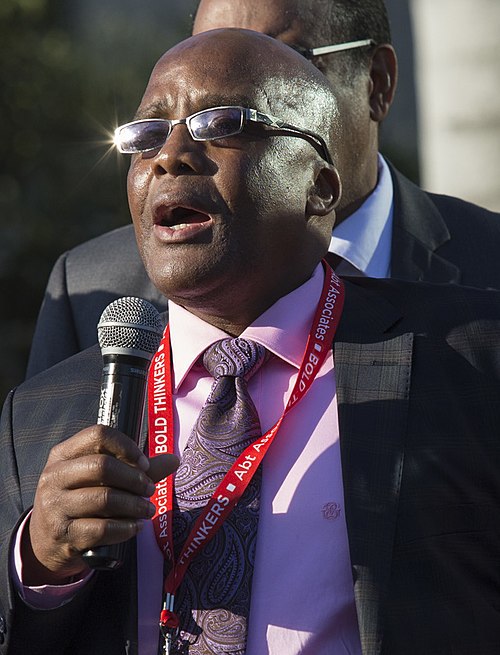
Aaron Motsoaledi
LP; Minister of Home Affairs • South Africa
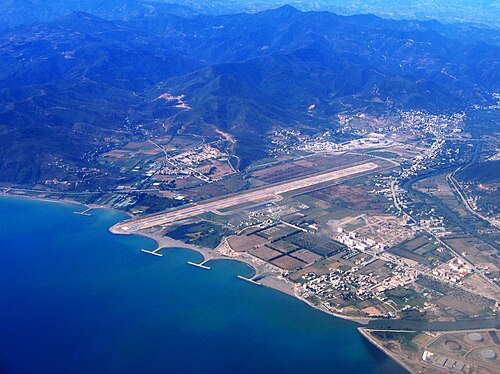
Abane Ramdane†
FLN Leader & Strategist • Algeria
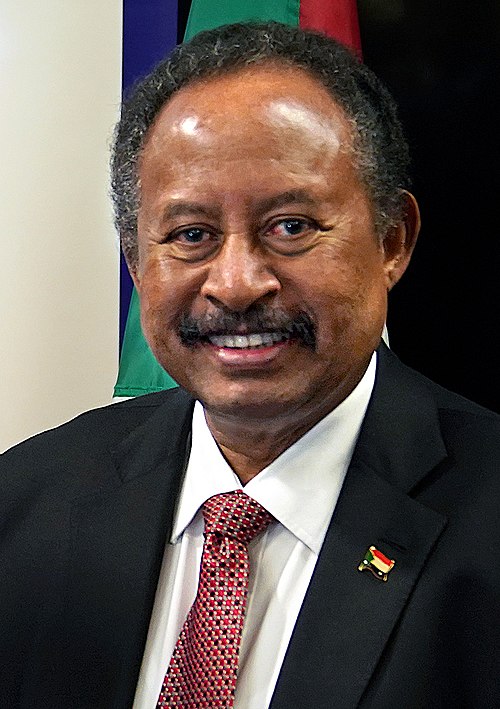
Abdalla Hamdok
Ex-Prime Minister • Sudan
Abdallah Kigoda
Ex-Minister of Natural Resources • Tanzania