Financial Breakdown
Asset Distribution
Assets vs Liabilities
Assets
Disclaimer: These financial estimates are based on publicly available information and should be considered approximate. Last updated: 12/29/2025
Biography
Introduction: The Revolutionary Leader of the Spice Islands
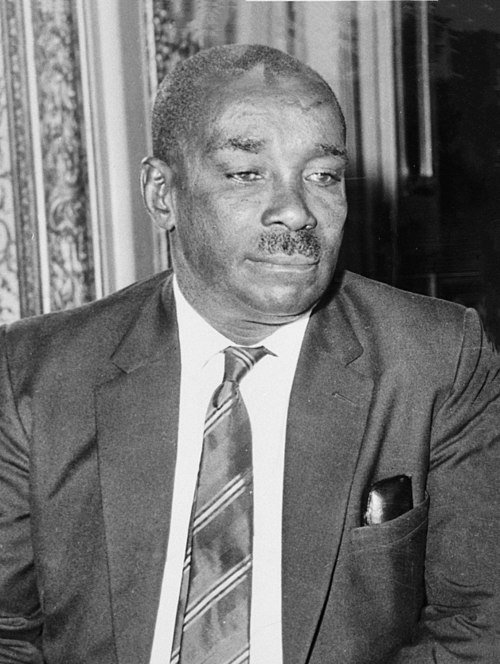
Abeid Karume† stands as a colossus in the modern history of Tanzania and East Africa. He is best remembered as the First President of Zanzibar, a title he assumed following the dramatic and bloody Zanzibar Revolution of January 1964. A man of humble origins who rose to become a defining figure in the Politics & Government of the Liberation Era, Karume's most enduring legacy is his pivotal role in forging the union between Zanzibar and Tanganyika, which created the United Republic of Tanzania on April 26, 1964. His leadership, often described as pragmatic and populist, steered Zanzibar through a period of radical social and economic transformation, dismantling the old Arab-dominated sultanate and attempting to build a society based on African socialism and equality. The story of Abeid Karume† is intrinsically linked to the birth of a nation and the complex politics of post-colonial Africa.
Early Life & Education: From Seafarer to Political Organizer
Abeid Amani Karume was born in 1905 in the village of Mwera, Zanzibar, into a family of modest means. Unlike many independence leaders across Africa, his formal education was limited. The classroom of his youth was the Indian Ocean. He left school early and, like many young men from the islands, took to the sea, working as a seaman on merchant ships. This period proved formative, exposing him to the wider world, different political ideas, and the harsh realities of labor and colonialism. His travels took him to ports in the Middle East and Europe, broadening his perspective beyond the confines of the Zanzibar archipelago.
Upon returning to Zanzibar, Karume settled into life as a fisherman and a dockworker. It was in the urban environment of Zanzibar City, particularly among the working-class African communities, that his political consciousness fully awakened. He witnessed firsthand the stark social and economic inequalities between the Arab and Indian minority, who held most of the wealth and political power under the British-protected Sultanate, and the African majority, who often lived in poverty. This experience fueled his desire for change. His natural leadership abilities and concern for his community led him into local organizing, where he earned a reputation for being a straightforward and forceful advocate for the rights of ordinary Africans. This grassroots credibility would become the bedrock of his future political power.
Career & Major Achievements: Revolution, Presidency, and Union
Karume's political career accelerated with his involvement in the Zanzibar Nationalist Party (ZNP), but he grew frustrated with its multiracial approach and perceived dominance by Arab intellectuals. In 1957, seeking a party that would more directly champion the cause of the African majority, he co-founded the Afro-Shirazi Party (ASP). The ASP quickly became the main political vehicle for the African population. Despite winning the popular vote in the 1961 and 1963 elections, the ASP lost parliamentary power due to the British-designed electoral system. This political injustice, coupled with deep-seated social grievances, set the stage for revolution.
The Zanzibar Revolution of 1964
On the night of January 11-12, 1964, a small, poorly armed group of revolutionaries, led by the Marxist-inspired John Okello but under the symbolic banner of the ASP, overthrew the Sultan's government. In the ensuing chaos, Abeid Karume†, who was initially not directly involved in the planning, emerged as the consensus leader. On January 12, he was sworn in as President of the newly proclaimed People's Republic of Zanzibar. The revolution was a watershed moment, violently upending centuries of Arab elite rule and initiating a profound social upheaval.
Forging the Union with Tanganyika
Facing international isolation, internal political fragility, and the radical influence of Okello, Karume made his most historic decision. In April 1964, he negotiated with Julius Nyerere, President of Tanganyika, to merge the two states. This act of political union, signed on April 26, 1964, created the United Republic of Tanzania. Karume became the First Vice-President of the Union under President Nyerere, while retaining his position as President of Zanzibar, which maintained considerable autonomy. This union, which has endured for decades, remains Karume's most significant contribution to regional stability and nation-building.
Domestic Policies and Leadership Style
As President of Zanzibar, Karume embarked on a radical socialist program. His government:
- Nationalized clove plantations and other key industries, redistributing land to farmers.
- Implemented free healthcare and education policies.
- Initiated large-scale public housing projects, like the iconic "Michenzani" flats in Stone Town.
- Pursued a policy of international alignment, notably building close ties with the German Democratic Republic (East Germany) and China.
Personal Life, Legacy, and Assassination
Abeid Karume† was known for a simple, austere personal life that reflected his populist image. He was a devout Muslim. His legacy is complex and subject to intense debate. To his supporters, he is a revolutionary hero who liberated the African people of Zanzibar from feudal oppression, championed the poor, and secured their place within the larger Tanzanian union. His portraits still adorn many public places in Zanzibar as a symbol of this liberation.
To critics, his rule was marked by autocracy, human rights abuses, and economic policies that led to Zanzibar's decline. His tragic assassination on April 7, 1972, in Zanzibar Town by army officers marked a violent end to his era. Despite the controversies, his impact is undeniable. Abeid Karume† fundamentally reshaped the political and social landscape of Zanzibar. The union he co-created with Nyerere remains the defining feature of Tanzania, making him a permanent fixture in the annals of the nation's Politics & Government. The Abeid Amani Karume International Airport in Zanzibar stands as a major physical testament to his enduring memory.
Net Worth & Business Ventures
Unlike many modern political figures, Abeid Karume† was not associated with personal wealth accumulation or private business ventures. His financial context was defined by the socialist ideology he espoused during his presidency. As the leader of a revolutionary government that nationalized major industries, including the lucrative clove trade, Karume's focus was on state control of the economy rather than personal enrichment. He lived a relatively modest life, and his legacy is tied to public assets and nationalized properties, not a private commercial empire. Any discussion of "net worth" in the contemporary sense is largely inapplicable; his historical significance lies in his political power and the economic transformations he enacted for the state of Zanzibar, not in personal financial success. His primary "venture" was the political project of building a socialist Zanzibar within the union of Tanzania.
Frequently Asked Questions
What is Abeid Karume†'s estimated net worth?
Net worth details for Abeid Karume† are currently being updated.
What is Abeid Karume†'s role and nationality?
Abeid Karume† is a First President of Zanzibar from Tanzania.
How did Abeid Karume† make their money?
Abeid Karume† built their fortune primarily through Abeid Karume was a political leader, not a business figure, and died in 1972 with no significant personal wealth reported; his legacy is political, not financial..
How old is Abeid Karume†?
Abeid Karume† was born in 1905 (121 years old).
Which category is Abeid Karume† listed under?
Abeid Karume† is featured under the Politics & Government category on NetWorth Africa.
How is Abeid Karume†'s net worth calculated?
NetWorth Africa estimates financial valuations using publicly available stock equity holdings, company ownership records, real estate assets, and verified market data.
Net Worth Analysis
Abeid Karume was a political leader, not a business figure, and died in 1972 with no significant personal wealth reported; his legacy is political, not financial.
Quick Stats

Related People

Aaron Motsoaledi
LP; Minister of Home Affairs • South Africa

Abane Ramdane†
FLN Leader & Strategist • Algeria

Abdalla Hamdok
Ex-Prime Minister • Sudan

Abdallah Kigoda
Ex-Minister of Natural Resources • Tanzania