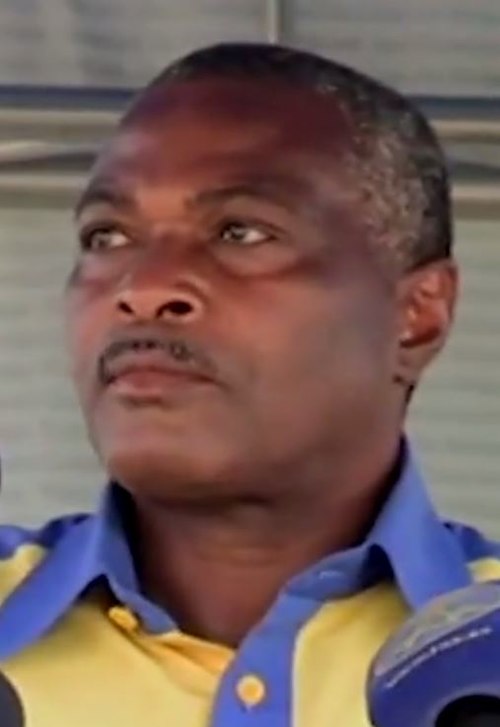
Biography
Introduction: The Defiant Voice of Angolan Opposition
In the complex political landscape of post-civil war Angola, few figures have embodied the spirit of opposition and democratic challenge as persistently as Abel Chivukuvuku. Born in 1957, Chivukuvuku rose to national prominence as a charismatic and outspoken leader who dared to contest the decades-long dominance of the MPLA (People's Movement for the Liberation of Angola). His most notable achievement was co-founding and leading the CASA-CE (Broad Convergence for the Salvation of Angola - Electoral Coalition), which rapidly became the third-largest political force in the country. As an Ex-CASA-CE Leader, his journey from a UNITA military commander to a unifying opposition figure encapsulates the struggles and evolution of Angola's democratic processes, making him a pivotal subject in the study of Politics & Government in Southern Africa.
Early Life & Education: Formative Years in a Nation at War
Abel Chivukuvuku was born in 1957, in the province of Bié, central Angola, a region that would become deeply affected by the protracted Angolan Civil War. His early life was shaped by the escalating conflict against Portuguese colonial rule, which culminated in independence in 1975, immediately followed by a devastating civil war. This environment steered many young Angolans toward military and political engagement. Chivukuvuku joined UNITA (National Union for the Total Independence of Angola), the main rebel movement led by Jonas Savimbi, at a young age.
Despite the ongoing conflict, he pursued his education, demonstrating a commitment to intellectual growth alongside military duty. He earned a degree in Civil Engineering, a field that requires strategic planning and structural understanding—skills he would later apply to his political endeavors. His formative experiences within UNITA, where he rose to become a high-ranking military commander and a member of its political commission, provided him with an intimate understanding of both guerrilla warfare and political negotiation. However, these years also planted the seeds for his future break from the party, as he witnessed the challenges of transforming a rebel movement into a viable peacetime political entity.
Career & Major Achievements: From UNITA to Building a New Opposition
The political career of Abel Chivukuvuku is a narrative of strategic shifts and coalition-building. After the death of Jonas Savimbi in 2002 and the end of the civil war, Chivukuvuku became a key figure in UNITA's transition to a peaceful political party. He served as a Member of Parliament and was seen as a potential future leader. However, growing disillusioned with the party's direction and its electoral strategies, he made a bold move in 2012. Alongside other dissidents, he left UNITA to found a new, broader coalition aimed at uniting Angola's fragmented opposition.
The Rise and Impact of CASA-CE
This move led to the creation of CASA-CE in April 2012. Abel Chivukuvuku's leadership was instrumental in its rapid ascent. In the 2012 general elections, just months after its formation, CASA-CE achieved a remarkable result, securing 6% of the vote and 8 parliamentary seats, instantly establishing itself as the third-largest political force and the most significant new opposition voice. This was a major achievement in an MPLA-dominated system. Under Chivukuvuku's guidance, CASA-CE positioned itself as a pragmatic, center-ground alternative, criticizing both the MPLA's governance and UNITA's opposition tactics. The coalition's platform focused on national reconciliation, economic diversification, and fighting corruption.
Electoral Challenges and Internal Struggles
The 2017 elections were a critical test. CASA-CE increased its vote share to 4.5%, but due to the electoral system, it lost seats, dropping to 2. Despite this setback, it maintained its position as a relevant player. However, internal tensions began to surface. In 2019, a major leadership crisis erupted. Abel Chivukuvuku faced suspension and then expulsion from the party he helped create, following disputes over his leadership style and the party's strategic direction. This marked his exit as the Ex-CASA-CE Leader. Undeterred, he announced the formation of a new political project, PRA-JA Servir Angola (Party for the Reconstruction of Angola), in 2020, aiming to register it for future elections and continue his political mission.
Personal Life, Legacy & Lasting Impact
Outside the political arena, Abel Chivukuvuku is known as a devout Christian, often referencing his faith as a guiding principle for reconciliation and integrity. His personal story of transformation—from a military commander in a brutal civil war to an advocate for peaceful democratic change—resonates with many Angolans seeking a break from the past. While details of his family life are kept relatively private, his public persona is that of a resilient, eloquent, and determined figure.
The legacy of Abel Chivukuvuku in Angolan Politics & Government is multifaceted. His most enduring contribution is arguably the demonstration that a new, viable opposition force could be built from scratch in Angola's challenging political environment. By fracturing the traditional UNITA vote and appealing to urban youth and disaffected voters, he forced a reconfiguration of the opposition landscape. He championed the idea of a "third way," challenging the binary MPLA-UNITA paradigm that had defined Angolan politics since independence. Even after his departure from CASA-CE, his career continues to symbolize the persistent demand for alternative leadership and the difficult, often personal, struggles involved in building democracy in post-conflict nations.
Net Worth & Business Ventures
Specific details regarding Abel Chivukuvuku's personal net worth are not publicly disclosed, which is common for many Angolan opposition figures. His primary career has been in politics and public service, rather than in conspicuous private business. However, his educational background in civil engineering suggests potential for professional involvement in that sector. It is important to note that in the context of Angola's political economy, where business and politics are often intertwined, opposition figures typically have less access to the state-linked economic resources available to members of the long-ruling party. Therefore, any discussion of Chivukuvuku's financial standing is largely speculative. His political ventures, particularly the founding and funding of new parties like CASA-CE and PRA-JA, likely rely on a combination of supporter donations, personal investment, and coalition resources, reflecting the financial challenges of sustaining opposition movements in the country.
Conclusion
The biography of Abel Chivukuvuku is a compelling chapter in modern Angolan history. From his early days in UNITA to his groundbreaking leadership of CASA-CE and his ongoing political ambitions, he has remained a constant and vocal figure in the fight for a more pluralistic democracy. As the Ex-CASA-CE Leader, his experiences highlight both the possibilities and profound difficulties of opposition politics in a dominant-party system. Whether through his electoral successes, his dramatic party exits, or his unwavering commitment to presenting an alternative vision for Angola, Abel Chivukuvuku has indelibly shaped the nation's journey in Politics & Government, ensuring his place as a key actor in its ongoing democratic story.
Frequently Asked Questions
What is Abel Chivukuvuku's estimated net worth?
Abel Chivukuvuku has an estimated net worth of $5.0 Million.
What is Abel Chivukuvuku's role and nationality?
Abel Chivukuvuku is a Ex-CASA-CE Leader from Angola.
How did Abel Chivukuvuku make their money?
Abel Chivukuvuku built their fortune primarily through As a career politician and opposition leader in Angola, his wealth is not publicly documented and is not on any billionaire list; estimate is based on typical assets for a senior political figure in the country..
How old is Abel Chivukuvuku?
Abel Chivukuvuku was born in 1957 (69 years old).
Which category is Abel Chivukuvuku listed under?
Abel Chivukuvuku is featured under the Politics & Government category on NetWorth Africa.
How is Abel Chivukuvuku's net worth calculated?
NetWorth Africa estimates financial valuations using publicly available stock equity holdings, company ownership records, real estate assets, and verified market data.
Net Worth Analysis
As a career politician and opposition leader in Angola, his wealth is not publicly documented and is not on any billionaire list; estimate is based on typical assets for a senior political figure in the country.
Quick Stats
Related People
Aaron Motsoaledi
LP; Minister of Home Affairs • South Africa
Abane Ramdane†
FLN Leader & Strategist • Algeria
Abdalla Hamdok
Ex-Prime Minister • Sudan
Abdallah Kigoda
Ex-Minister of Natural Resources • Tanzania