$5M
Estimated Net Worth
As of 2024 • medium confidence
Financial Breakdown
Asset Distribution
Assets vs Liabilities
Assets
Disclaimer: These financial estimates are based on publicly available information and should be considered approximate. Last updated: 12/30/2025
Biography
Introduction: A Leader of Reform and Reconciliation
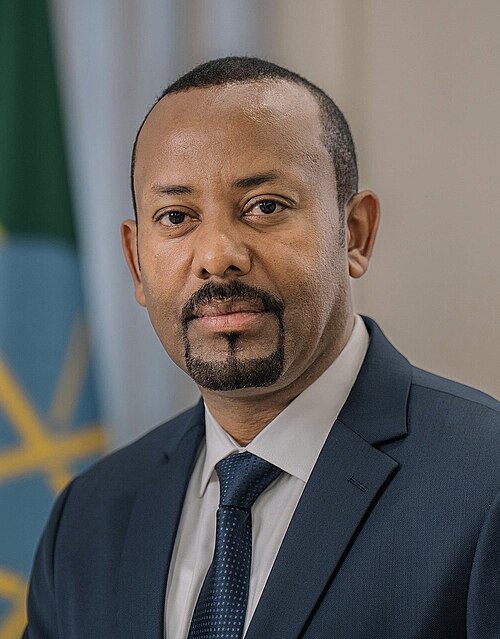
Abiy Ahmed Ali is a defining figure in modern African politics, serving as the Prime Minister of the Federal Democratic Republic of Ethiopia since April 2018. His ascent to power marked a dramatic shift in the nation's trajectory, transitioning from decades of authoritarian rule towards a promised era of democratic reform and regional diplomacy. Abiy Ahmed gained global recognition in 2019 when he was awarded the Nobel Peace Prize for his decisive initiative to resolve the long-standing border conflict with neighboring Eritrea. His tenure, however, has been characterized by a complex duality of groundbreaking peace efforts and significant internal conflict, making him one of the most consequential and debated leaders in Ethiopia's recent history. This biography explores the life, career, and multifaceted legacy of Ethiopia's Prime Minister.
Early Life and Education: From Beshasha to the Military
Abiy Ahmed was born on August 15, 1976, in Beshasha, a small town in the then Kaffa Province of Ethiopia. He was raised in a diverse, multi-ethnic household; his father was Muslim and Oromo, Ethiopia's largest ethnic group, while his mother was Christian and Amhara. This interfaith and interethnic background is often cited as a foundational influence on his later philosophy of Medemer (synergy or coming together).
His career path began in the military. In 1991, he joined the armed struggle against the Marxist Derg regime but transitioned to the national army following its fall. He served as a radio operator and later as an intelligence officer. While in the military, Abiy Ahmed pursued his education with remarkable diligence. He earned a Bachelor's degree in Computer Engineering from Microlink Information Technology College in Addis Ababa in 2001, a Master's degree in Transformational Leadership from Greenwich University (in collaboration with the International Leadership Institute) in 2011, an MBA from Ashland University in 2013, and a Ph.D. in Peace and Security Studies from Addis Ababa University's Institute for Peace and Security Studies in 2017. His doctoral thesis focused on "Social Capital and Its Role in Traditional Conflict Resolution in Ethiopia," foreshadowing his future political focus.
Career and Major Achievements: A Meteoric Rise and a Nation in Flux
The political career of Abiy Ahmed is marked by rapid ascension within the ruling Ethiopian People's Revolutionary Democratic Front (EPRDF) coalition. He was a founding member of the Oromo Peoples' Democratic Organization (OPDO), one of the four coalition parties. He held several key positions:
- Director of the Information Network Security Agency (INSA), Ethiopia's cybersecurity apparatus.
- Minister of Science and Technology from 2015 to 2016.
- Deputy President of the Oromia Region.
In early 2018, following years of widespread anti-government protests, the EPRDF selected Abiy Ahmed as its chairman and, consequently, as Prime Minister. He was sworn in on April 2, 2018.
The Reform Agenda and Nobel Peace Prize
Upon taking office, Prime Minister Abiy Ahmed launched an unprecedented wave of reforms. He lifted the state of emergency, released thousands of political prisoners, allowed exiled dissident groups to return, and unblocked hundreds of websites and TV channels. His most celebrated achievement came swiftly. In July 2018, he fully accepted the terms of a 2002 peace agreement with Eritrea, ending a 20-year military stalemate. This bold move led to the reopening of borders, restoration of communications, and the re-establishment of diplomatic ties. For this effort, he was awarded the 2019 Nobel Peace Prize.
Domestic Challenges and the Tigray Conflict
Despite early euphoria, Abiy Ahmed's tenure has been severely tested by escalating ethnic violence and political fragmentation. His decision to dissolve the EPRDF and merge its constituent parties into a single Prosperity Party in 2019 was opposed by the Tigray People's Liberation Front (TPLF), the former dominant coalition party. Tensions culminated in November 2020 when the federal government launched a military offensive in the Tigray Region, triggering a devastating civil war. The conflict, which lasted two years and involved reported atrocities, resulted in a humanitarian catastrophe and complicated his international legacy. A peace agreement was signed in Pretoria in November 2022, ending the large-scale fighting.
Economic Vision and Infrastructure
Economically, Abiy Ahmed has championed a mixed model of privatization and state-led development. His administration opened key sectors like telecommunications and logistics to private investment. A flagship project is the Grand Ethiopian Renaissance Dam (GERD), which his government has pushed to complete, a source of both national pride and regional diplomatic tension with Egypt and Sudan.
Personal Life, Philosophy, and Legacy
Abiy Ahmed is a devoted Pentecostal Christian and is married to Zinash Tayachew, with whom he has four daughters. He is known for his prolific writing and oratory, often weaving religious allegory, pan-Africanist thought, and tech-forward optimism into his speeches. His political philosophy, Medemer, advocates for national unity and collective effort.
His legacy remains intensely contested. Globally, he is recognized as a peacemaker for his actions with Eritrea. Within Ethiopia, opinions are sharply divided. Supporters view him as a transformative reformer who broke the old authoritarian system and initiated long-overdue changes. Critics accuse him of centralizing power, failing to manage ethnic nationalism, and presiding over a period of intense conflict and human suffering. The lasting impact of Abiy Ahmed will be determined by Ethiopia's future stability, democratic consolidation, and ability to reconcile its diverse peoples.
Net Worth and Business Ventures
As a public servant for most of his adult life, the personal net worth of Abiy Ahmed is not publicly disclosed and is a subject of speculation rather than verified fact. Unlike some predecessors, there is no widely documented evidence of significant personal business holdings acquired during his tenure. His administration has, however, overseen and promoted major economic liberalization policies. Notably, the government partially privatized Ethio Telecom, the state monopoly, and issued a telecom license to a private consortium, Safaricom-led Global Partnership for Ethiopia, in a landmark $850 million deal. While these are state assets and not personal ventures, they represent the significant economic shifts under his leadership. Any discussion of his personal finances remains unsubstantiated, as his declared income is derived from his official salary as Prime Minister of Ethiopia.
For further reading on the Nobel Peace Prize, visit the official Nobel Prize facts page on Abiy Ahmed. Information on government policies can be found on the official Prime Minister's Office website.
Net Worth Analysis
Abiy Ahmed is a career public servant and politician; his wealth is not publicly documented and is not on any billionaire list, so an estimate is based on his official salary and typical assets for a head of government in Ethiopia.
Quick Stats
Related People
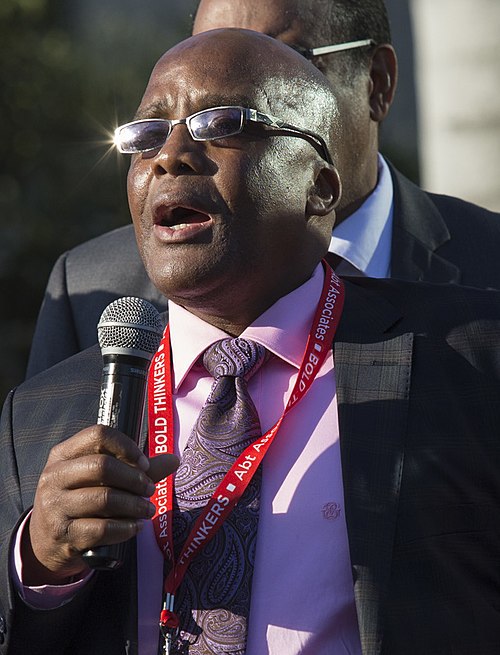
Aaron Motsoaledi
LP; Minister of Home Affairs
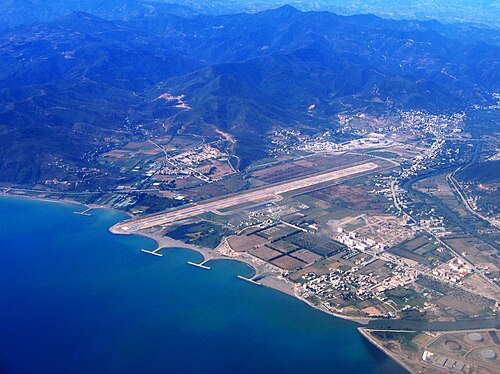
Abane Ramdane†
FLN Leader & Strategist
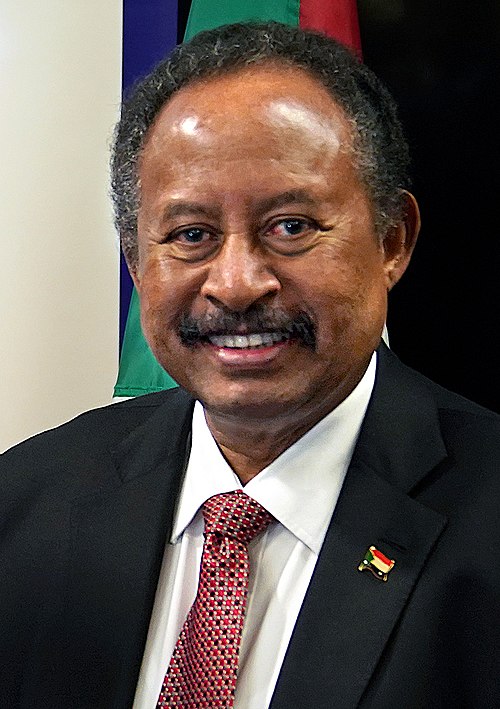
Abdalla Hamdok
Ex-Prime Minister
Abdallah Kigoda
Ex-Minister of Natural Resources