Biography
Introduction: The Architect of Angolan Independence
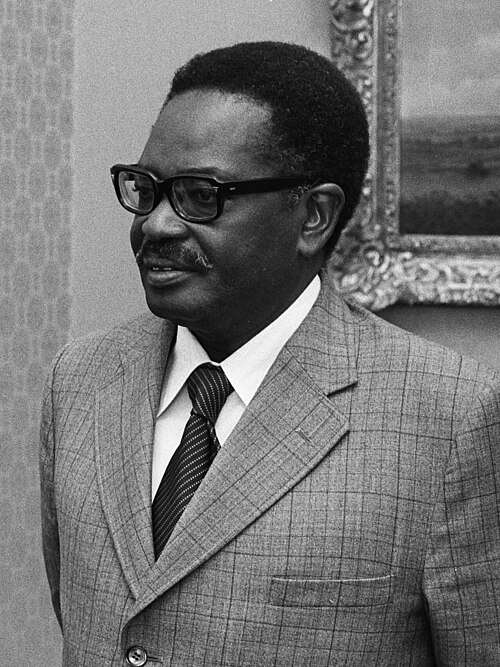
Agostinho Neto† stands as a colossus in modern African history, a unique figure who seamlessly wove together the threads of revolutionary politics and poignant poetry. He is revered as the First President & Poet of the Republic of Angola, serving from its hard-won independence in 1975 until his death in 1979. His life's work was the embodiment of the Liberation Era in Southern Africa, a period marked by the fierce struggle against colonial rule. As the founding president and a leading intellectual, Agostinho Neto† not only led the Movimento Popular de Libertação de Angola (MPLA) to political victory but also articulated the soul of a nation's yearning through his verse. His dual legacy as a statesman and a literary figure makes him a pivotal subject in the categories of Politics & Government and cultural legacy, whose influence continues to shape Angola today.
Early Life & Education: From Mission Village to Medical School
António Agostinho Neto was born on September 17, 1922, in Kaxicane, a village near Bengo, in what was then Portuguese Angola. His father was a Methodist pastor, and his mother was a teacher, embedding in him from an early age a deep respect for education and social service. He completed his secondary education at the Liceu Salvador Correia in Luanda, where his intellectual prowess and early political consciousness began to flourish. In 1947, having earned a scholarship, Agostinho Neto† left Angola to study medicine in Portugal, a journey that would transform him from a promising student into a committed nationalist.
In Lisbon and Coimbra, Neto immersed himself not only in his medical studies but also in the clandestine circles of anti-colonial activists and intellectuals from across the Portuguese empire. It was during this period that he began publishing his first volumes of poetry, including "Colectânea de Poemas" (1952). His verses, which spoke of homeland, identity, and injustice, quickly drew the attention of the authoritarian Estado Novo regime. In 1952, his political activities led to his first arrest and imprisonment. Despite this harassment, he persevered, qualifying as a physician in 1958. His return to Angola in 1959 was short-lived; he was arrested again in 1960 during a peaceful protest by his patients, an event that sparked international outcry and his subsequent deportation to Portugal before being forced into exile.
Career & Major Achievements: Liberation, Leadership, and Nation-Building
The career of Agostinho Neto† is a chronicle of the Angolan liberation struggle. After escaping house arrest in Portugal, he formally ascended to the presidency of the MPLA in 1962. Under his leadership, the MPLA evolved from a dispersed political movement into a formidable guerrilla army, launching the armed struggle for independence on February 4, 1961. For over a decade, Neto directed the war effort from exile, while also serving as a charismatic diplomat, garnering crucial support from African nations, the Soviet Union, and other allies within the context of the Cold War.
The Path to Presidency and Civil War
The collapse of Portugal's dictatorship in the Carnation Revolution of 1974 paved the way for Angolan independence. On November 11, 1975, Agostinho Neto† proclaimed the independence of the People's Republic of Angola in Luanda, becoming its first President. However, his inauguration was immediately overshadowed by the outbreak of a devastating civil war, as rival liberation movements—FNLA and UNITA, backed by foreign powers—contested the MPLA's rule. Neto's government, supported by Cuban troops, successfully defended Luanda and consolidated control over much of the country, but the conflict would persist for decades.
Policies and Vision for Angola
As president, Neto's tenure was defined by the immense challenges of building a nation from the ruins of war. His administration:
- Established a one-party socialist state, aligning with the MPLA's Marxist-Leninist ideology.
- Nationalized key industries, including oil and diamonds, to fund state development.
- Invested heavily in education, launching a massive literacy campaign to address the colonial legacy of widespread illiteracy.
- Pursued a non-aligned but Soviet-leaning foreign policy, supporting liberation movements in Namibia (SWAPO) and South Africa (ANC).
Personal Life, Poetry, and Enduring Legacy
Beyond the political arena, Agostinho Neto† was a man of profound cultural depth. His poetry, written primarily in Portuguese, is considered a cornerstone of Angolan and Lusophone African literature. Collections like Sagrada Esperança (Sacred Hope) and A Renúncia Impossível (The Impossible Renunciation) articulate the collective pain of colonization and the fiery hope for freedom. His verse served as a weapon of cultural resistance, affirming Angolan identity and mobilizing a generation. He married Maria Eugénia da Silva in 1958, and they had several children.
Agostinho Neto's† legacy is complex and omnipresent in Angola. He died on September 10, 1979, in Moscow, while undergoing medical treatment. The nation mourned the loss of its "Founding Father." Today, his image is immortalized on currency, and his name graces the country's largest university, hospitals, and the main airport in Luanda. The Agostinho Neto† Mausoleum in Luanda stands as a national monument. His legacy is dual-faceted: he is celebrated as the indispensable leader of independence, yet his presidency's authoritarian aspects and the unresolved civil war are part of a nuanced historical assessment. As a poet, his work ensures his spirit remains a living voice in Angola's cultural consciousness.
Historical Significance and Posthumous Recognition
While the concept of "net worth" in a modern financial sense is not applicable to a revolutionary leader of his era, the enduring value of Agostinho Neto's† contributions is immeasurable. He did not amass personal commercial wealth; instead, his "capital" was the political and cultural sovereignty of Angola. His life's work was the nation itself. Posthumously, he has been honored with the highest awards, including the Lenin Peace Prize (1975-1976). The preservation of his legacy is a state priority, managed through foundations and cultural institutes dedicated to his memory. For scholars and citizens alike, Agostinho Neto† represents the quintessential figure of the African liberation intellectual—a man whose pen and political will were equally committed to the dream of a free Angola.
Sources & Further Reading: For more information on Agostinho Neto's life and work, credible sources include the Encyclopædia Britannica, historical analyses of the MPLA and the Angolan liberation struggle, and anthologies of Lusophone African poetry. His collected poems, Sacred Hope, remain a primary source for understanding his intellectual and emotional world.
Frequently Asked Questions
What is Agostinho Neto†'s estimated net worth?
Net worth details for Agostinho Neto† are currently being updated.
What is Agostinho Neto†'s role and nationality?
Agostinho Neto† is a First President & Poet from Angola.
How did Agostinho Neto† make their money?
Agostinho Neto† built their fortune primarily through Agostinho Neto was the first President of Angola (1975-1979) and a poet, but he died in 1979. He was a political leader, not a business figure, and his historical wealth was not comparable to modern billionaires..
How old is Agostinho Neto†?
Agostinho Neto† was born in 1922 (104 years old).
Which category is Agostinho Neto† listed under?
Agostinho Neto† is featured under the Politics & Government category on NetWorth Africa.
How is Agostinho Neto†'s net worth calculated?
NetWorth Africa estimates financial valuations using publicly available stock equity holdings, company ownership records, real estate assets, and verified market data.
Net Worth Analysis
Agostinho Neto was the first President of Angola (1975-1979) and a poet, but he died in 1979. He was a political leader, not a business figure, and his historical wealth was not comparable to modern billionaires.
Quick Stats
Related People
Aaron Motsoaledi
LP; Minister of Home Affairs • South Africa
Abane Ramdane†
FLN Leader & Strategist • Algeria
Abdalla Hamdok
Ex-Prime Minister • Sudan
Abdallah Kigoda
Ex-Minister of Natural Resources • Tanzania