Financial Breakdown
Asset Distribution
Assets vs Liabilities
Assets
Disclaimer: These financial estimates are based on publicly available information and should be considered approximate. Last updated: 12/29/2025
Biography
Introduction: A Statesman Forged in Crisis
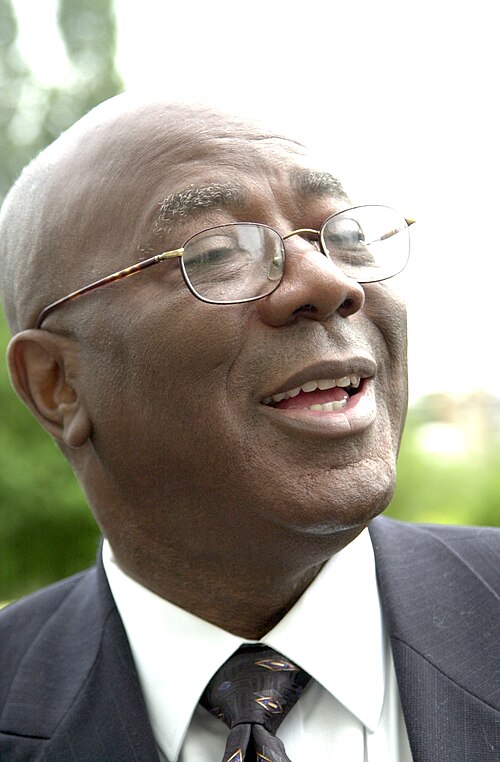
Alhaji Ahmad Tejan Kabbah† stands as a monumental figure in the modern history of Sierra Leone, revered as the president who guided the nation from the brutal depths of civil war towards a fragile but enduring peace. Serving as the nation's Ex-President (1996-2007), his tenure in the Executive Presidency was defined by an unwavering commitment to democratic restoration and national reconciliation. A seasoned economist and diplomat before entering the highest office, Ahmad Tejan Kabbah assumed leadership at a time when the country's very existence was threatened by the Revolutionary United Front (RUF) rebellion. His most notable achievement was overseeing the end of the devastating 11-year civil war in 2002, a feat that earned him the affectionate title "The Peacemaker." This biography explores the life, career, and lasting legacy of the man who became a symbol of hope for Sierra Leone.
Early Life & Education: Foundations of Service
Alhaji Ahmad Tejan Kabbah was born on February 16, 1932, in Pendembu, Kailahun District, in the Eastern Province of Sierra Leone, then a British protectorate. He was raised in a Muslim household and was a member of the Mandingo ethnic group. His early education began at the St. Edward's Primary School in Freetown and later at the prestigious Prince of Wales School (now the King's College). These formative years in the capital exposed him to Sierra Leone's diverse cultural and social fabric.
Kabbah's academic prowess earned him a scholarship to study in the United Kingdom. He attended the University College of Wales, Aberystwyth, where he earned a degree in Economics in 1959. This was followed by legal training; he was called to the Bar at Gray's Inn, London, in 1969. This unique combination of expertise in economics and law equipped him with a profound understanding of governance and development, shaping his pragmatic and principled approach to leadership. Before entering national Politics & Government, he built a distinguished career in the public sector, joining the Sierra Leone Civil Service and later serving with the United Nations Development Programme (UNDP) for over two decades. His international postings across Africa honed his diplomatic skills and provided a pan-African perspective he would later bring to the presidency.
Career & Major Achievements: From War to Peace
Ahmad Tejan Kabbah's path to the presidency was not a conventional one. Returning to Sierra Leone after his UN service, he was invited by the National Advisory Council to lead the Sierra Leone People's Party (SLPP). In a landmark election held in February 1996—conducted amidst ongoing conflict—Kabbah was elected President, securing 59.5% of the vote in a runoff. His victory represented a public mandate for peace.
The Struggle for Peace and the 1999 Lomé Agreement
His first term was immediately consumed by the war. In May 1997, his government was violently overthrown by a military junta, forcing President Kabbah into exile in Guinea. With crucial support from the Economic Community of West African States Monitoring Group (ECOMOG), led by Nigeria, he was restored to power in March 1998. The conflict, however, raged on. His administration's most significant and controversial move was signing the Lomé Peace Agreement on July 7, 1999. This accord, brokered by the international community, granted amnesty to the RUF rebels and brought their leader, Foday Sankoh, into the government in exchange for an end to hostilities. Although fragile and criticized for its concessions, the agreement created a necessary framework for peace, which was ultimately secured by the robust intervention of the United Nations Mission in Sierra Leone (UNAMSIL) and British forces.
Post-War Reconstruction and Democratic Consolidation
With the war officially declared over in January 2002, Ahmad Tejan Kabbah turned his focus to the herculean task of national reconstruction. His major achievements in this period include:
- Disarmament, Demobilization, and Reintegration (DDR): Overseeing the successful disarmament of over 75,000 ex-combatants.
- Restoration of Democratic Governance: Re-establishing civilian authority across the country and rebuilding state institutions.
- Truth and Reconciliation Commission (TRC): Establishing the TRC in 2002 to address the causes and atrocities of the war, promoting national healing.
- Economic Recovery: Initiating reforms to stabilize the economy and attract foreign investment, particularly in the mining sector, with limited success due to the scale of devastation.
Re-elected in 2002 with a landslide 70.1% of the vote, a testament to his popular mandate for peace, his second term focused on consolidating these gains. Constitutionally barred from a third term, he peacefully handed over power to the opposition All People's Congress (APC) candidate, Ernest Bai Koroma, following the 2007 elections—a significant milestone for democratic transfer of power in Sierra Leone.
Personal Life & Legacy: The Man Behind the Office
Outside the intense arena of Politics & Government, Ahmad Tejan Kabbah was known as a devout Muslim, a gentleman, and a man of quiet dignity. He was married to Patricia Kabbah (née Tucker) until her passing in 1998, a personal tragedy that occurred during his exile. He was a father to several children. Known for his signature kaftan and cap, he carried himself with a calm and measured demeanor, even in times of extreme crisis. His personal interests were rooted in reading and intellectual discourse.
The legacy of Ahmad Tejan Kabbah† is inextricably linked to peace. He passed away on March 13, 2014, in Freetown at the age of 82. He is remembered as the anchor who steadied Sierra Leone during its most turbulent storm. While his presidency faced challenges, including persistent poverty and allegations of corruption within his administration, his fundamental achievement remains unchallenged: he ended a war that claimed over 50,000 lives and displaced more than two million people. His commitment to a peaceful, democratic process laid the essential foundation upon which subsequent governments have built. In the annals of Sierra Leonean history, his name is synonymous with resilience and reconciliation.
Net Worth & Business Ventures
Unlike many political figures, Ahmad Tejan Kabbah was not known for significant personal wealth or extensive private business ventures. His professional life was predominantly spent in public service, first within the Sierra Leonean civil service and then in international development with the United Nations, roles that provided a stable income but were not avenues for amassing substantial personal fortune. His financial profile was consistent with that of a career civil servant and diplomat.
Upon becoming Ex-President (1996-2007), he was entitled to a state pension and benefits accorded to former heads of state in Sierra Leone. There is no public record or credible estimation of a significant net worth, and he lived a relatively modest life post-presidency. His primary "venture" was the nation itself, with his energy and efforts invested in the non-lucrative but historically critical business of peacebuilding and national recovery. His wealth was measured more in the political capital of public trust and his legacy as a peacemaker than in monetary terms.
Sources & Further Reading: Key information in this biography is drawn from reputable historical and news archives, including the United Nations records, the BBC's obituary for Ahmad Tejan Kabbah, and the official State House website of Sierra Leone. Academic analyses of the Sierra Leone civil war and the Lomé Peace Agreement also provide critical context for understanding his presidency.
Frequently Asked Questions
What is Ahmad Tejan Kabbah†'s estimated net worth?
Ahmad Tejan Kabbah† has an estimated net worth of $5.0 Million.
What is Ahmad Tejan Kabbah†'s role and nationality?
Ahmad Tejan Kabbah† is a Ex-President (1996-2007) from Sierra Leone.
How did Ahmad Tejan Kabbah† make their money?
Ahmad Tejan Kabbah† built their fortune primarily through As a former public servant and president of Sierra Leone, his wealth was not from major business ventures, and he was not a billionaire; estimates for such figures are typically in the low millions based on public service pensions and assets..
How old is Ahmad Tejan Kabbah†?
Ahmad Tejan Kabbah† was born in 1932 (94 years old).
Which category is Ahmad Tejan Kabbah† listed under?
Ahmad Tejan Kabbah† is featured under the Politics & Government category on NetWorth Africa.
How is Ahmad Tejan Kabbah†'s net worth calculated?
NetWorth Africa estimates financial valuations using publicly available stock equity holdings, company ownership records, real estate assets, and verified market data.
Net Worth Analysis
As a former public servant and president of Sierra Leone, his wealth was not from major business ventures, and he was not a billionaire; estimates for such figures are typically in the low millions based on public service pensions and assets.
Quick Stats
Related People
Aaron Motsoaledi
LP; Minister of Home Affairs • South Africa
Abane Ramdane†
FLN Leader & Strategist • Algeria
Abdalla Hamdok
Ex-Prime Minister • Sudan
Abdallah Kigoda
Ex-Minister of Natural Resources • Tanzania