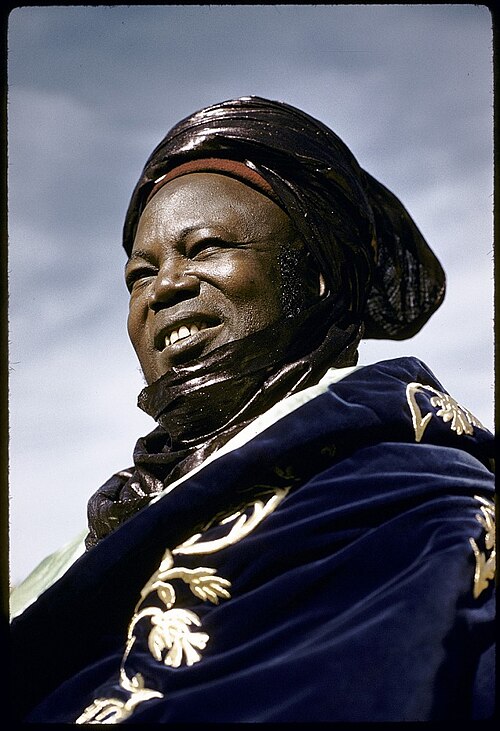
Biography
Introduction: A Colossus of Nigerian Politics
Alhaji Sir Ahmadu Bello†, the revered Sardauna of Sokoto, stands as one of the most pivotal and influential figures in the history of Nigeria. As the first and only Premier of Northern Nigeria from 1954 until his tragic death in 1966, he was the principal architect of the region's development policy and political identity in the crucial decade leading to and following independence. A descendant of Usman dan Fodio, founder of the Sokoto Caliphate, Ahmadu Bello† skillfully blended traditional authority with modern governance. His key achievement was his unwavering leadership of the Northern People's Congress (NPC), which dominated the federal government at independence, and his relentless drive to "catch up" the North educationally and economically with the southern regions. His vision, policies, and political philosophy continue to profoundly shape the dynamics of Politics & Government in Nigeria today.
Early Life & Education: Forging a Leader from Noble Lineage
Ahmadu Bello† was born in June 1910 in Rabah, present-day Sokoto State, into the aristocratic lineage of the Sokoto Caliphate. His grandfather, Sultan Muhammadu Bello, was the son of Usman dan Fodio, cementing his place within the highest echelons of traditional Northern Leadership. This heritage imbued in him a deep sense of responsibility and connection to the people and institutions of the North.
His early education was rooted in Islamic studies, but he soon entered the Western-style educational system that was being introduced. He attended the Sokoto Provincial School and later the prestigious Katsina Training College (1926-1931), a teacher training institution that produced a generation of Northern elites, including his future political rival, Abubakar Tafawa Balewa. After graduating, he took up a profession as a teacher in Sokoto Middle School, where he began to hone his administrative skills. His royal blood and early performance did not go unnoticed. In 1934, at just 24, he was offered the traditional title of Sardauna of Sokoto (a military title meaning "Warlord"), a role that positioned him as a key counselor and heir-apparent within the Sultanate's traditional hierarchy. This unique blend of Western education and deep-rooted traditional authority became the bedrock of his future political career.
Career & Major Achievements: Premier, Visionary, and Nation Builder
The political career of Ahmadu Bello† accelerated with Nigeria's constitutional developments post-World War II. He served as a member of the Northern Region's House of Assembly and later the House of Representatives. His defining moment came in 1954 when he was elected President-General of the Northern People's Congress (NPC) and subsequently became the first Premier of the Northern Region, a position he held with immense influence for 12 years.
Championing Northern Development and Education
As Premier, Ahmadu Bello† embarked on an ambitious mission to modernize the vast Northern Region. His government's cornerstone was a massive investment in education to bridge the gap with the South. He established the Northern Nigeria Development Corporation (NNDC) and the Bank of the North to spur economic growth and indigenous entrepreneurship. Landmark institutions like the Ahmadu Bello University (ABU) in Zaria, founded in 1962, remain his most enduring physical legacy, conceived as a catalyst for advanced learning and human capital development in the North.
Federal Politics and the Path to Independence
On the national stage, Ahmadu Bello† chose to remain Premier of the North, delegating the federal Prime Minister role to his trusted lieutenant, Sir Abubakar Tafawa Balewa. This strategic move allowed him to consolidate his regional base while wielding immense federal influence through the NPC, which became the largest party in the federal parliament. He played a critical role in the constitutional conferences that led to Nigeria's independence on October 1, 1960. His philosophy was one of gradual, conservative progress, emphasizing unity within the North and a firm but cooperative stance in a united Nigeria.
Key Policies and Infrastructure Legacy
Under his leadership, the Northern Region witnessed unprecedented infrastructural development. His administration:
- Built numerous roads, hospitals, and government institutions.
- Established the New Nigerian Development Company (NNDC) to manage commercial and industrial projects.
- Pursued an agricultural revolution, improving cash crop production and marketing.
- Fostered a policy of "Northernization" in the regional civil service to increase indigenous participation.
Personal Life, Philanthropy & Lasting Legacy
Despite his towering political status, Ahmadu Bello† was known for a personal life marked by piety, simplicity, and a strong commitment to his family and community. A devout Muslim, he performed the Hajj pilgrimage and was knighted by Queen Elizabeth II in 1959, becoming Sir Ahmadu Bello†. He was a prolific writer, authoring an autobiography, "My Life," which provides invaluable insight into his philosophy and journey.
His philanthropic efforts were largely channeled through community support and the developmental projects of his government. His legacy is multifaceted and powerful. He is revered across Northern Nigeria as a symbol of pride, identity, and development—often referred to as "Baba" (Father). His portrait remains on Nigeria's 200 Naira banknote, a national tribute. The circumstances of his death—assassinated in the January 15, 1966, military coup—cemented his status as a martyr in the eyes of many. His political ideas continue to influence the structure of Nigerian federalism and the concept of Northern Leadership, making him a perpetual reference point in the nation's political discourse.
Net Worth & Business Ventures
Quantifying the personal net worth of Sir Ahmadu Bello† in modern terms is challenging, as his era predated contemporary declarations of assets. His wealth was intrinsically linked to his position as a traditional aristocrat and head of government. He was not known for personal business ventures in the private commercial sense; instead, his focus was on state-driven economic development. His "wealth" was manifested in the vast trust and political capital he held, and in the public institutions he built. The companies he championed, like the Northern Nigeria Development Corporation (NNDC), were public entities aimed at regional economic empowerment rather than personal enrichment. His primary legacy is one of political and institutional capital, having overseen the investment of public funds into projects that laid the foundation for the Northern Nigerian economy, the value of which far exceeds any personal fortune.
Sources & Further Reading: For more information on this pivotal figure in Nigerian history, credible sources include the Encyclopaedia Britannica, official archives of the Ahmadu Bello University, and his autobiography, My Life (Cambridge University Press, 1962).
Net Worth Analysis
Sir Ahmadu Bello, the Sardauna of Sokoto and former Premier of Northern Nigeria, was assassinated in 1966, so he has no net worth in 2024.
Quick Stats
Related People
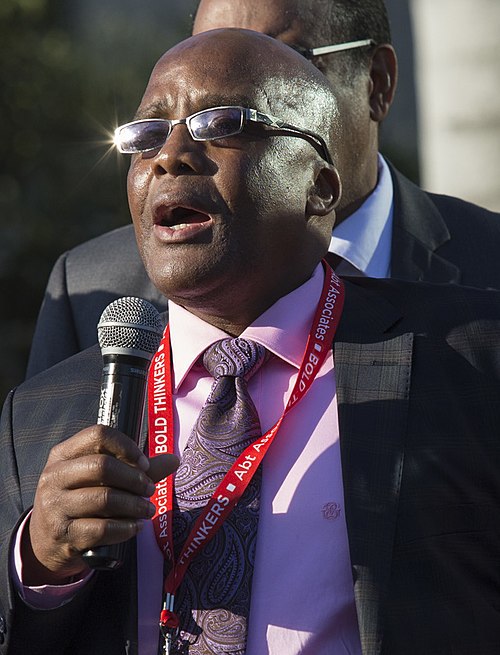
Aaron Motsoaledi
LP; Minister of Home Affairs
Abane Ramdane†
FLN Leader & Strategist
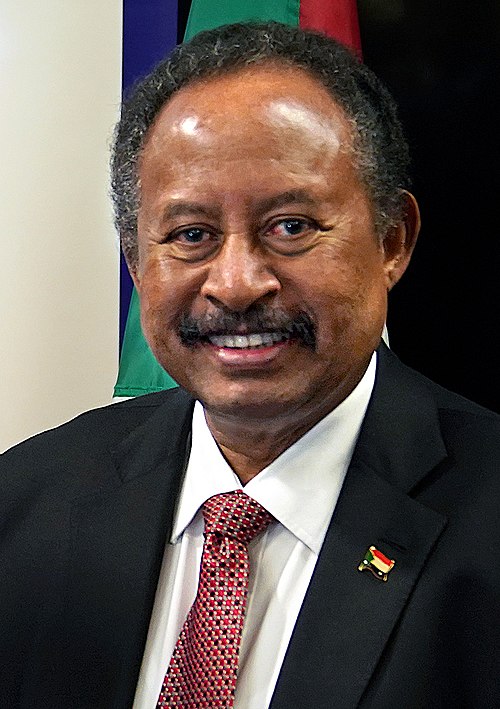
Abdalla Hamdok
Ex-Prime Minister
Abdallah Kigoda
Ex-Minister of Natural Resources