$50M
Estimated Net Worth
As of 2024 • low confidence
Financial Breakdown
Asset Distribution
Assets vs Liabilities
Assets
Disclaimer: These financial estimates are based on publicly available information and should be considered approximate. Last updated: 12/29/2025
Biography
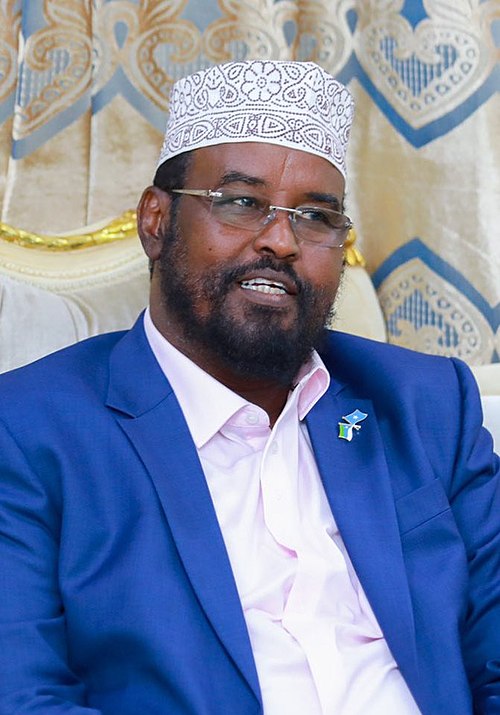
In the complex and often turbulent landscape of Somali federalism, Ahmed Madobe stands as a defining figure. Officially known as Ahmed Mohamed Islam, but widely recognized by his nickname "Madobe," he has served as the President of Jubaland, one of Somalia's most critical Federal Member States, since 2013. His journey from a military commander in the Somali Civil War to a pivotal political leader encapsulates the nation's struggle for stability and decentralized governance. As a key architect of Jubaland's establishment, Ahmed Madobe has played an indispensable role in combating extremist insurgencies, notably Al-Shabaab, and in fostering a functional, albeit challenging, model of regional autonomy within the Somali Republic. His leadership continues to shape not only Jubaland's destiny but also the broader dynamics of Politics & Government in the Horn of Africa.
Early Life and Formative Experiences
Ahmed Madobe was born in 1962 in the southern Somali region that would later become Jubaland. He hails from the Ogaden sub-clan of the larger Darod clan family, a significant demographic and political group in the area. His early years were shaped by the nomadic and agrarian culture of the Juba River valley, an experience that ingrained in him a deep understanding of the region's socio-economic dynamics and inter-clan relations.
Education and Early Influences
Details of Ahmed Madobe's formal education are sparse, as is common for many Somalis of his generation who came of age during the Siad Barre regime. His formative education was likely a mix of traditional Islamic schooling and local primary education. The political consciousness of the time, marked by Barre's increasingly centralized and oppressive rule, particularly against certain clans, served as a crucial political education. This environment fostered a sense of regional and clan-based grievance that would later fuel various opposition movements, with Ahmed Madobe eventually becoming a prominent participant.
The Path to Military Engagement
The outbreak of the Somali Civil War in 1991, which led to the collapse of the central government, was the defining catalyst for Madobe's career. He joined the Somali Patriotic Movement (SPM), a faction primarily drawn from his Ogaden clan, which was fighting against the Barre regime and later involved in the complex web of inter-factional conflict. His resilience and tactical acumen saw him rise through the ranks, earning the nickname "Madobe." By the late 1990s and early 2000s, he had become a notable military commander in the power vacuum of southern Somalia.
Career and Major Achievements in Somali Politics
The career of Ahmed Madobe is a testament to Somalia's transition from outright warlordism to a fragile federal system. His path reflects the evolution of armed faction leaders into political administrators within the framework of the Federal Government of Somalia (FGS).
From Warlord to Interim Leader
In the 2000s, Ahmed Madobe became a key figure in the Juba Valley Alliance (JVA), a coalition that controlled the strategic port city of Kismayo. His fortunes shifted dramatically in 2006 when he allied with the Transitional Federal Government (TFG) and Ethiopian forces to oust the Islamic Courts Union (ICU) from Kismayo. However, he was later captured by ICU splinter group Al-Shabaab in 2008 and held for over two years before a dramatic escape in 2010. This period of captivity seemingly hardened his resolve against the extremist group.
Architect of Jubaland State and Presidency
His most significant achievement began in 2013. Following a concerted effort by local elites, clans, and militias to create a stable regional entity, Ahmed Madobe was elected as the first President of the newly established Jubaland State of Somalia in a conference in Kismayo on May 15, 2013. This process, though contested by the federal government in Mogadishu at the time, was crucial for several reasons:
- Counter-Al-Shabaab Frontline: Under his leadership, Jubaland forces, integrated into the Somali National Army (SNA) as the Jubaland Darawish, became a primary ground force in liberating towns and territories from Al-Shabaab, securing the vital Kenya-Somalia border region.
- Institutional Foundation: He oversaw the drafting of a state constitution, the formation of a state parliament, and the establishment of basic administrative structures in a region that had known only conflict for decades.
- Political Consolidation: Despite ongoing disputes with Mogadishu over resource-sharing and political autonomy, Madobe has consolidated power, winning re-election in 2019 and again in August 2023 for a third term, demonstrating his enduring political influence.
Impact on Somali Federalism
Ahmed Madobe's tenure has profoundly impacted Somali Politics & Government. He is seen as a staunch defender of federalism, often pushing for greater regional autonomy as envisioned in Somalia's provisional constitution. His alliance with other regional presidents, like those of Puntland, has created a powerful bloc that negotiates with the FGS from a position of strength. This dynamic has been instrumental in shaping national policies on security, elections, and resource distribution. His control of Kismayo port, a major economic hub, provides Jubaland with significant financial leverage, fueling both development and political contention.
Personal Life, Legacy, and Lasting Impact
Outside the political arena, Ahmed Madobe is known as a devout Muslim and a patriarch within his clan structure. He maintains a low-profile personal life, with his family largely kept out of the public spotlight—a common practice for Somali leaders facing security threats. His interests are deeply intertwined with his political mission: securing Jubaland and fostering its development.
While not widely publicized as a philanthropist in the formal sense, his legacy is being built through the relative stability he has brought to Jubaland. The establishment of functional markets, the reopening of schools and hospitals in secured areas, and the gradual return of displaced persons to their homes are attributed to the security framework his administration has prioritized. His lasting impact will likely be judged on two fronts: his success as a military leader against Al-Shabaab and his effectiveness as a political founder of a federal state.
Historically, Ahmed Madobe will be remembered as a pivotal figure in Somalia's post-1991 reconstruction. He represents the generation of leaders who transitioned from the battlefield to the political office, navigating the immense challenges of building institutions amid ongoing insurgency and complex clan politics. Whether Jubaland evolves into a stable, prosperous federal unit or remains a contested region will be the ultimate test of his legacy.
Financial Standing and Business Context
As with most Somali politicians, the precise net worth of Ahmed Madobe is not publicly verifiable and remains a subject of speculation. Somalia's informal economy and the blending of public resources, private business, and clan assets make accurate financial assessment difficult. However, it is widely understood that his political power is underpinned by significant economic influence.
His administration's control over the seaport of Kismayo and its revenue streams is a primary source of both state income and political patronage. It is believed that Ahmed Madobe and his close associates have interests in various sectors critical to Jubaland's economy, including:
- Port operations and logistics
- Telecommunications
- Real estate and construction in Kismayo and other urban centers.
- The lucrative charcoal trade, although this has been subject to UN Security Council bans due to its environmental impact and potential financing of militants.
This economic control is essential for maintaining the loyalty of militias, clan elders, and political allies. Therefore, while a specific net worth figure cannot be cited, Ahmed Madobe's financial success is intrinsically linked to his political success and his ability to manage Jubaland's key economic assets.
Net Worth Analysis
As a regional political leader in Somalia, his wealth is not publicly documented on international rich lists; estimate is based on typical wealth accumulation from political office and clan leadership in the Somali context.
Quick Stats
Related People
Aaron Motsoaledi
LP; Minister of Home Affairs
Abane Ramdane†
FLN Leader & Strategist
Abdalla Hamdok
Ex-Prime Minister
Abdallah Kigoda
Ex-Minister of Natural Resources