Financial Breakdown
Asset Distribution
Assets vs Liabilities
Assets
Liabilities
Disclaimer: These financial estimates are based on publicly available information and should be considered approximate. Last updated: 12/30/2025
Biography
Introduction: The Defiant President
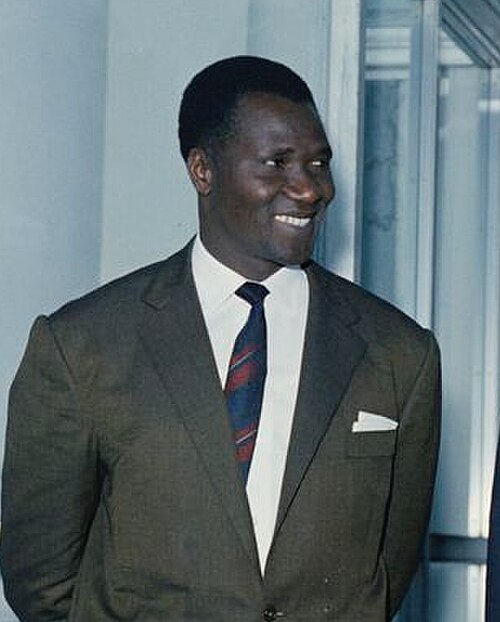
Ahmed Sékou Touré† stands as one of the most consequential and controversial figures in modern African history. As the first President of the Republic of Guinea, he etched his name into the annals of the 20th century by leading his nation to a landmark independence in 1958, becoming the first French colony in Africa to decisively break from colonial rule. His famous, defiant "No" to Charles de Gaulle's offer of continued community with France was a seismic event that accelerated the decolonization process across the continent. A fiery orator, a committed Pan-Africanist, and a complex statesman, Ahmed Sékou Touré ruled Guinea with an iron fist for 26 years, from 1958 until his death in 1984. His legacy is a profound tapestry of fierce nationalist pride, socialist experimentation, and a political reign marked by both revolutionary zeal and severe repression.
Early Life & Education: The Forge of a Revolutionary
Ahmed Sékou Touré was born on January 9, 1922, in Faranah, French Guinea, into a modest Mandinka family. He claimed direct descent from the legendary 19th-century resistance leader Samori Touré, who fought against French conquest—a lineage that would deeply inform his own anti-colonial stance. His early education was in Quranic and French colonial schools, but his formal schooling was cut short after he was expelled at age 15 from a technical school in Conakry for leading a food protest. This early act of rebellion foreshadowed his future path.
Forced into the workforce, Ahmed Sékou Touré immersed himself in self-education while taking on clerical jobs in the colonial administration and the private sector. This experience exposed him firsthand to the inequities of the colonial system. His true political education began within the labor movement. In 1945, he co-founded the Post and Telecommunications Workers' Union and quickly rose to become a prominent trade union leader. He organized Guinea's first successful strike in 1946 and later became a key figure in the Confédération Générale du Travail (CGT), the French communist-linked trade union. Through union activism, Touré honed his organizational skills, mobilized mass support, and connected with global anti-colonial and socialist ideologies, setting the stage for his entry into electoral Politics & Government.
Career & Major Achievements: From Activist to President
Ahmed Sékou Touré's political career accelerated in the post-World War II era, as France attempted to reform its colonial empire. He was a founding member of the Rassemblement Démocratique Africain (RDA) in 1946, the first major African cross-territorial political party. He led its Guinean branch, the Parti Démocratique de Guinée (PDG), transforming it into a potent, grassroots political machine that united peasants, workers, and traders against the colonial establishment and the traditional chiefs who supported it.
The Historic "No" and Independence
His defining moment came in 1958. French President Charles de Gaulle offered colonies a referendum: immediate independence with a total break from France, or autonomy within a French-led "French Community." While other African leaders hesitated, Ahmed Sékou Touré campaigned vigorously for independence. In a legendary speech in Conakry on August 25, 1958, he declared, "We prefer poverty in liberty to riches in slavery." On September 28, 1958, an overwhelming 95% of Guineans voted "No" to the Community. On October 2, 1958, Guinea became an independent republic, with Ahmed Sékou Touré as its President.
Pan-African Leadership and Socialist Policy
As President, Touré pursued a radical path. He aligned Guinea with the Eastern Bloc, receiving early support from the USSR and Ghana's Kwame Nkrumah, with whom he dreamed of a "Union of African States." He was a leading voice in the Organization of African Unity (OAU) and a staunch supporter of liberation movements across Africa, providing training and bases for fighters from Angola to South Africa. Domestically, he implemented a socialist agenda, nationalizing key industries and creating a state-controlled planned economy. He promoted a cultural revolution centered on "authenticity," reviving African names, music, and traditions to combat the psychological legacy of colonialism.
The Dark Side: Authoritarian Rule
Touré's achievements were shadowed by his authoritarian governance. Facing real external threats (including attempted destabilization by France and Portugal) and internal plots, he developed a pervasive security state. His regime was infamous for the Camp Boiro detention center, where thousands of perceived political opponents were imprisoned, tortured, or executed. An estimated 50,000 people were killed, and hundreds of thousands fled into exile, creating a vast diaspora. The economy, despite initial promise, stagnated under centralized control and isolation, leaving Guinea one of the world's poorest nations by the early 1980s.
Personal Life & Legacy: The Complex Icon
Ahmed Sékou Touré was a charismatic and intellectually vigorous leader, known for his lengthy, spellbinding speeches. He was a prolific writer on political theory, producing many volumes on his ideology of "Marxism applied to the African reality." He was married and had children. His personal interests were deeply tied to his political vision, emphasizing Guinean cultural arts as a pillar of national identity. While he did not engage in philanthropy in a conventional sense, his government invested heavily in education and literacy campaigns in the early years, significantly raising school enrollment rates.
The legacy of Ahmed Sékou Touré is fiercely debated. He is revered by many as a fearless liberator and a symbol of African dignity and uncompromising sovereignty. His bold stand in 1958 inspired independence movements across the continent. Conversely, he is condemned as a brutal dictator whose policies led to economic ruin and immense human suffering. This duality makes him a quintessential figure of post-colonial Africa: a leader who successfully broke the chains of colonialism but then forged new ones. In Guinea today, he remains a potent national symbol, his image on currency and his mausoleum a major site in Conakry, reflecting a legacy that the nation continues to grapple with and interpret.
Net Worth & Business Ventures
Assessing the personal net worth of Ahmed Sékou Touré is challenging due to the nature of his regime and the state-controlled economy he oversaw. Unlike some independence leaders, Touré did not amass a vast, publicly known personal fortune in the manner of a traditional business magnate. His "wealth" was intrinsically tied to state power. Under his socialist policies, all major industries—including bauxite mining (Guinea's most valuable resource), agriculture, and trade—were nationalized. This meant that economic control was centralized under the state and the Parti Démocratique de Guinée (PDG), blurring the lines between state assets and the ruling party's resources.
While he lived a lifestyle commensurate with a head of state, there are no documented significant private business ventures or holdings in his name. His financial legacy is more accurately reflected in the economic condition of Guinea at the end of his rule: a nation rich in resources but with a bankrupt treasury, massive debt, and a impoverished population. Any discussion of wealth in the context of Ahmed Sékou Touré is therefore primarily a discussion of political and economic control rather than personal liquid assets or corporate ownership.
Key Facts & Timeline
- Born: January 9, 1922, Faranah, French Guinea.
- Key Achievement: Led Guinea to become the first French African colony to gain independence on October 2, 1958.
- Political Party: Founder and Secretary-General of the Parti Démocratique de Guinée (PDG).
- Presidency: Served as President from 1958 until his death on March 26, 1984, in Cleveland, Ohio, USA.
- Pan-African Role: Close ally of Kwame Nkrumah; advocated for a "United States of Africa."
- Notable Policy: Implemented "African Socialism" and a cultural policy of "Authenticity."
- Controversy: His regime is associated with severe human rights abuses at the Camp Boiro detention center.
For further reading on the historical context of African decolonization, refer to resources like Encyclopædia Britannica or academic works on Pan-Africanism.
Frequently Asked Questions
What is Ahmed Sékou Touré†'s estimated net worth?
Net worth details for Ahmed Sékou Touré† are currently being updated.
What is Ahmed Sékou Touré†'s role and nationality?
Ahmed Sékou Touré† is a Independence Leader from Guinea.
How did Ahmed Sékou Touré† make their money?
Ahmed Sékou Touré† built their fortune primarily through Ahmed Sékou Touré was the first President of Guinea (1958-1984) and was not a business figure; his wealth was not publicly documented and he is not on any billionaire list..
How old is Ahmed Sékou Touré†?
Ahmed Sékou Touré† was born in 1922 (104 years old).
Which category is Ahmed Sékou Touré† listed under?
Ahmed Sékou Touré† is featured under the Politics & Government category on NetWorth Africa.
How is Ahmed Sékou Touré†'s net worth calculated?
NetWorth Africa estimates financial valuations using publicly available stock equity holdings, company ownership records, real estate assets, and verified market data.
Net Worth Analysis
Ahmed Sékou Touré was the first President of Guinea (1958-1984) and was not a business figure; his wealth was not publicly documented and he is not on any billionaire list.
Quick Stats
Related People
Aaron Motsoaledi
LP; Minister of Home Affairs • South Africa
Abane Ramdane†
FLN Leader & Strategist • Algeria
Abdalla Hamdok
Ex-Prime Minister • Sudan
Abdallah Kigoda
Ex-Minister of Natural Resources • Tanzania