Biography
Introduction: A Voice Unsilenced
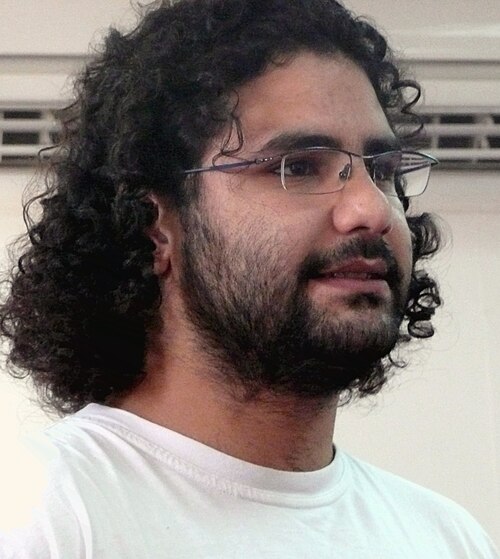
In the intersecting worlds of Entertainment, digital culture, and human rights, few figures are as consequential or as tragically emblematic as Alaa Abd El-Fattah. Born in Egypt in 1981, Abd El-Fattah rose from being a pioneering Blogger and software developer to becoming one of the Arab world's most prominent advocates for digital freedom and social justice. His key achievement lies not in a single act, but in his relentless commitment to using technology as a tool for liberation, a commitment that transformed him into a Political Prisoner and a global symbol of resistance against authoritarianism. For over a decade, his imprisonment has sparked international outcry, making his personal struggle a litmus test for human rights and free expression in the digital age. The story of Alaa Abd El-Fattah is the story of modern Egypt itself—its hopes, its revolutions, and its repressions.
Early Life & Education: The Making of an Activist
Alaa Abd El-Fattah was born into a family deeply entrenched in activism and intellectual pursuit. His father, Ahmed Seif El-Islam, was a celebrated human rights lawyer and a former political prisoner, while his mother, Laila Soueif, is a renowned professor of mathematics and a steadfast activist. This environment of principled dissent and critical thought profoundly shaped young Alaa. He was immersed in discussions about politics, justice, and social change from an early age, witnessing firsthand the cost and necessity of standing up to power.
His educational path was unconventional. A gifted and curious mind, Abd El-Fattah demonstrated an early affinity for computers and technology. He enrolled at the Faculty of Engineering at Cairo University but left before completing his degree, finding the formal structure limiting. Instead, he became largely self-taught, diving into the worlds of software development and the nascent internet. This autodidactic journey proved pivotal. In the late 1990s and early 2000s, as the internet began to connect the world, Abd El-Fattah recognized its revolutionary potential as a space for unfettered expression and organization—a realization that would define his life's work. He was part of a generation that saw beyond the entertainment value of the web, viewing it as the new public square for the Arab world.
Career & Major Achievements: From Blogger to Political Prisoner
The career of Alaa Abd El-Fattah is a chronicle of digital activism intersecting with on-the-ground mobilization. In the early 2000s, he co-founded Omraneya, a groundbreaking software development company, and more importantly, became a central figure in Egypt's burgeoning blogosphere. His blog, "Manalaa," established around 2004, was a dynamic mix of technical insight, political commentary, and cultural critique. It quickly became a must-read hub, attracting a wide audience and establishing him as a leading Blogger. He was instrumental in developing the Arabic-language blogging platform Manalaa.net, which empowered countless Egyptians to share their voices online.
The 2011 Revolution and Its Aftermath
Abd El-Fattah's role catapulted to international prominence during the 2011 Egyptian Revolution. He was not just a commentator but a key organizer and technologist. He used his skills to help activists communicate securely, document police brutality, and circumvent internet shutdowns ordered by the Mubarak regime. His family's home became a strategic planning center for the revolution. This period marked the peak of his influence as a digital rights enabler, showcasing how online tools could fuel real-world democratic change.
A Cycle of Imprisonment
The fall of Hosni Mubarak did not bring the freedom Abd El-Fattah fought for. Instead, he entered a relentless cycle of arrest and imprisonment under successive authorities. His first major incarceration came in 2011, detained for allegedly inciting violence against the military. This set a pattern that would repeat for over a decade. In 2013, following the military's ouster of President Mohamed Morsi, he was arrested again for organizing an unauthorized protest. In a highly controversial trial in 2015, he was sentenced to five years in prison on charges of violating a protest law.
After a brief period of conditional release in 2019, he was arrested again in September 2019 in a sweeping crackdown. In December 2021, following a mass trial widely condemned by human rights groups, Alaa Abd El-Fattah was sentenced to five more years in prison on charges of "spreading false news." His case took a dire turn in April 2022 when he escalated a months-long hunger strike, and in June, he announced he would cease drinking water to coincide with the COP27 UN climate summit in Egypt, bringing unprecedented global attention to his plight. As of 2024, he remains a Prisoner, his health a constant concern to his family and supporters worldwide.
Impact and Recognition
Despite—or because of—his imprisonment, Abd El-Fattah's impact has only grown. His writings from prison, smuggled out and published, offer profound reflections on freedom, power, and hope. He has received numerous international awards, including being named one of TIME magazine's 100 most influential people in 2023. His case is routinely raised by world leaders, parliamentarians, and human rights organizations, symbolizing the broader struggle for Digital Rights in authoritarian contexts.
Personal Life & Legacy: The Human Cost and Enduring Influence
Behind the iconic status is a man defined by deep familial bonds and personal passions. Alaa Abd El-Fattah is married to human rights lawyer Manal Bahey El-Din Hassan, and together they have a son, Khaled. His family has been the backbone of his defense and the primary channel for communicating with the outside world during his imprisonments. His interests, as reflected in his writings, span philosophy, science fiction, and technology. He is known for his sharp wit, intellectual rigor, and unwavering moral compass, even in the face of immense personal suffering.
The legacy of Alaa Abd El-Fattah is multifaceted. He is a martyr for digital freedom, demonstrating the extreme risks and vital importance of online activism. He inspired a generation of Arab tech activists to see coding and blogging as acts of political courage. Furthermore, his treatment has become a central case study in the global discussion on the weaponization of the judiciary against dissent. His ongoing imprisonment serves as a powerful indictment of Egypt's human rights record and a rallying cry for advocates of free speech everywhere. His story ensures that the issues of digital surveillance, internet sovereignty, and the right to encryption remain at the forefront of human rights advocacy.
Net Worth & Business Ventures: The Economy of Dissent
Discussing the net worth of Alaa Abd El-Fattah in conventional financial terms is not only difficult but largely irrelevant to his story. His primary "venture," the software company Omraneya, was oriented more towards enabling open-source projects and activist tools than generating significant personal wealth. His true capital has always been intellectual and social. The financial impact of his activism has been profound in the opposite direction: immense legal costs for his defense, funded largely by his family and supporters, and the lost economic potential of a brilliant technologist spending his prime years behind bars.
Any estimation of his personal finances would be speculative. However, it is clear that Abd El-Fattah consciously chose a path of activism over commercial success. His "business" was building digital infrastructure for civil society. The value he created is immeasurable in currency but evident in the robust networks of activists and the awareness he raised globally. The economic narrative surrounding Alaa Abd El-Fattah is one of sacrifice—the forfeiture of personal fortune and freedom for the principle that in the 21st century, Digital Rights are human rights.
Frequently Asked Questions
What is Alaa Abd El-Fattah's estimated net worth?
Net worth details for Alaa Abd El-Fattah are currently being updated.
What is Alaa Abd El-Fattah's role and nationality?
Alaa Abd El-Fattah is a Blogger; Blogger & Political Prisoner; Prisoner from Egypt.
How did Alaa Abd El-Fattah make their money?
Alaa Abd El-Fattah built their fortune primarily through Alaa Abd El-Fattah is a political activist and blogger imprisoned in Egypt, not a business figure; his prominence stems from activism, not wealth..
How old is Alaa Abd El-Fattah?
Alaa Abd El-Fattah was born in 1981 (45 years old).
Which category is Alaa Abd El-Fattah listed under?
Alaa Abd El-Fattah is featured under the Entertainment category on NetWorth Africa.
How is Alaa Abd El-Fattah's net worth calculated?
NetWorth Africa estimates financial valuations using publicly available stock equity holdings, company ownership records, real estate assets, and verified market data.
Net Worth Analysis
Alaa Abd El-Fattah is a political activist and blogger imprisoned in Egypt, not a business figure; his prominence stems from activism, not wealth.
Quick Stats
Related People

2Baba (Innocent Idibia)
Veteran Artist & Activist • Nigeria
Aar Maanta
Singer & Composer • Somalia

Abdel Aziz al-Mubarak
Oud Master • Sudan
Abdel Halim Hafez†
Legend; “Nightingale”; “The Dark-Skinned Nightingale” • Egypt