$10M
Estimated Net Worth
As of 2024 • medium confidence
Financial Breakdown
Asset Distribution
Assets vs Liabilities
Assets
Disclaimer: These financial estimates are based on publicly available information and should be considered approximate. Last updated: 12/31/2025
Biography
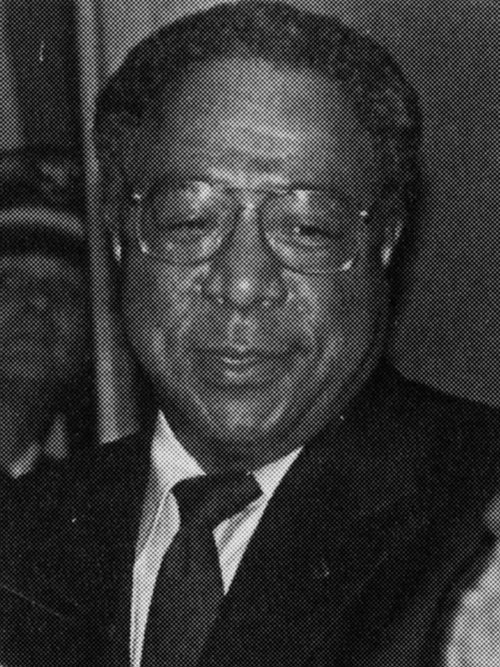
In the pantheon of American literature, few works have resonated with the seismic force of Alex Haley†'s Roots: The Saga of an American Family. Published in 1976, this monumental novel did more than top bestseller lists; it catalyzed a global conversation about identity, heritage, and the brutal institution of slavery. Alex Haley†, an author and journalist, achieved a singular feat: he traced his own family lineage back through the Civil War and the horrors of the Middle Passage to a specific village in Gambia, West Africa. This twelve-year odyssey of research and writing earned him a special Pulitzer Prize and the National Book Award, cementing his place as a transformative figure in Arts & Culture. His work gave millions of African Americans a tangible connection to a pre-slavery past and reshaped the world's understanding of the African diaspora.
Early Life & Education: From Ithaca to the Coast Guard
Alexander Murray Palmer Haley was born on August 11, 1921, in Ithaca, New York, but was raised in the small town of Henning, Tennessee. His childhood was steeped in oral history. On the front porch of his grandmother's home, he listened to vivid stories of the "furthest-back person," an ancestor named Kunta Kinte, who was said to have been taken from Africa. These narratives, told by elders like his grandmother Cynthia, planted the seed that would later blossom into Roots. Haley's father, a professor of agriculture, instilled a discipline for learning, but young Alex was initially a mediocre student with a penchant for daydreaming.
His formal education culminated in a two-year degree from Elizabeth City State College in North Carolina. At age 18, seeking structure and opportunity, Haley enlisted in the U.S. Coast Guard in 1939. It was during his long, lonely sea voyages that he discovered his passion for writing. He began by crafting love letters for his shipmates and gradually progressed to writing adventure stories. His persistence paid off; after 15 years of service, he persuaded the Coast Guard to create a new rating for him—Chief Journalist—making him the first to hold this position. This unique career path served as his de facto apprenticeship, honing his writing skills and work ethic before he retired from military service in 1959 to pursue a full-time writing career.
Career & Major Achievements: From Playboy to Pulitzer
Journalistic Breakthrough and The Autobiography of Malcolm X
After leaving the Coast Guard, Alex Haley† struggled initially but soon found success as a journalist. His big break came with a series of in-depth interviews for Playboy magazine, where he profiled iconic figures like Miles Davis, Martin Luther King Jr., and most significantly, Malcolm X. This led to his landmark collaboration with the civil rights leader. Haley spent nearly two years conducting intense interviews to produce The Autobiography of Malcolm X (1965). The book, published shortly after Malcolm X's assassination, became an international classic and essential text on Black nationalism and conversion. It established Haley as a serious author with a profound ability to channel a powerful voice onto the page.
The Epic Quest for Roots
Flush with this success, Haley embarked on the project that would define his life. Inspired by the family stories from Henning, he dedicated himself to tracing his lineage. This involved:
- Years of archival research in the United States, combing through census records, slave bills of sale, and plantation documents.
- A pivotal journey to the village of Juffure in Gambia, where a griot (oral historian) recounted the story of Kunta Kinte, who was taken away in the 1760s—a story that matched Haley's family lore.
- An arduous writing process, during which he famously wrote in the hold of a ship to simulate the Middle Passage experience.
Accolades and Controversies
Alex Haley† received numerous honors, including the NAACP's Spingarn Medal and over 200 other awards. The Pulitzer Prize Board awarded him a special citation in 1977 for his work. However, his triumph was not without controversy. Haley later settled two plagiarism lawsuits out of court, acknowledging that passages in Roots were copied from Harold Courlander's The African. Some historians also questioned the literal accuracy of his genealogical claims. Haley defended his work as a synthesis of historical fact and fictionalized narrative—a "symbolic history" of a people. Despite these challenges, the cultural and social significance of Roots remains indisputable.
Personal Life, Legacy, and Lasting Impact
Alex Haley† was married three times and had three children. He was known for his gentle, storytelling demeanor, a stark contrast to the intense subjects of his work. In his later years, he settled in Tennessee, where he continued to write and plan new projects. His legacy is multifaceted and enduring. He is credited with:
- Popularizing genealogy, especially among African Americans.
- Providing a foundational narrative for the African American identity movement.
- Inspiring a generation of writers, historians, and filmmakers to explore themes of heritage and slavery.
- Forging a powerful cultural link between America and Gambia, where he is revered and Juffure has become a site of historical pilgrimage.
Alex Haley† passed away on February 10, 1992, in Seattle, Washington. His final book, Queen, the story of his father's side of the family, was completed by David Stevens and published posthumously. Today, statues of Haley stand in Annapolis, Tennessee, and Gambia, and his work continues to be taught and debated, a testament to its enduring power in global Arts & Culture.
Financial Success and Later Ventures
The monumental success of Roots transformed Alex Haley† from a respected journalist into a wealthy literary icon. The book's sales, which numbered in the millions of copies worldwide, generated enormous royalties. The television rights to the miniseries, while not as lucrative for him personally as the book sales, further cemented the property's value and his financial standing. At the peak of his fame in the late 1970s and 1980s, Haley's net worth was estimated to be in the multi-millions of dollars. He invested in real estate, including a farm in Tennessee, and commanded high fees for speaking engagements. He also embarked on ambitious projects like the Roots sequel miniseries and planned a series of books exploring different ethnic lineages. While later legal settlements incurred costs, Alex Haley† achieved a level of financial success that allowed him to focus on his writing and legacy, solidifying his status as one of the most influential authors of the 20th century.
Net Worth Analysis
Alex Haley passed away in 1992; his estate's value is based on posthumous royalties and legacy from 'Roots', but he was not a billionaire.
Quick Stats
Related People
Abasse Ndione
Novelist & Playwright
Abdel Rahman al-Abnudi†
Poet (Egypt-Sudan)
Abdelkrim Ghallab†
Novelist & Journalist

Abdellah Taïa
Novelist & Filmmaker