$50M
Estimated Net Worth
As of 2024 • medium confidence
Financial Breakdown
Asset Distribution
Assets vs Liabilities
Assets
Liabilities
Disclaimer: These financial estimates are based on publicly available information and should be considered approximate. Last updated: 12/30/2025
Biography
Introduction: A Technocrat in the Tempest of Revolution
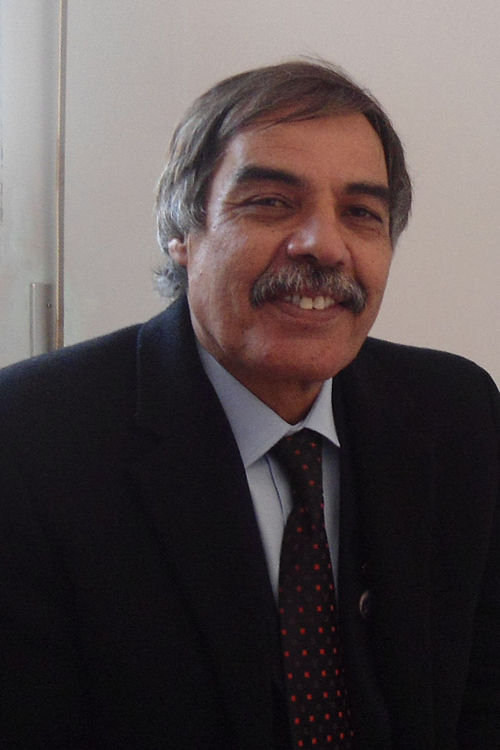
Ali al-Tarhouni stands as a pivotal figure in modern Libyan history, a respected economist and academic who was thrust from a quiet life in exile into the heart of a nation's rebirth. Best known as the Ex-Finance Minister and interim Oil Minister for Libya's National Transitional Council (NTC) during the 2011 revolution, Ali al-Tarhouni played a critical role in securing and managing the country's financial resources against the Gaddafi regime. His notable achievement was orchestrating the unfreezing of billions of dollars in Libyan state assets held abroad, providing the lifeline of funds necessary for the revolutionary forces to sustain their uprising and begin governing. This biography explores the journey of Ali al-Tarhouni from university professor to a key architect of Libya's fragile post-Gaddafi financial infrastructure, a testament to his expertise in the intersecting worlds of Politics & Government and finance.
Early Life & Education: Foundations of an Exile
Ali al-Tarhouni was born in 1951 in Libya, a kingdom on the cusp of monumental change. He came of age during the early years of Muammar Gaddafi's rule, which began with a coup in 1969. The political climate under Gaddafi's increasingly authoritarian regime pushed many educated Libyans, including Ali al-Tarhouni, to seek opportunities abroad. This formative experience of exile would shape his worldview and future path.
Pursuing higher education, al-Tarhouni left Libya and earned a Bachelor's degree in Economics. His academic journey then took him to the United States, where he secured a Master's degree, followed by a Ph.D. in Economics from Michigan State University in 1985. His doctoral dissertation focused on "The Demand for International Reserves and Monetary Equilibrium: The Case of Oil Exporting Countries," a topic that would prove eerily prescient for his future role. For over two decades, Ali al-Tarhouni built a distinguished career as a senior lecturer at the University of Washington's Foster School of Business in Seattle. There, he taught courses in macroeconomics and the economies of the Middle East, all while maintaining active ties with the Libyan dissident community, dreaming of a democratic future for his homeland.
Career & Major Achievements: From Classroom to Cabinet
The Arab Spring of 2011 dramatically altered the course of Ali al-Tarhouni's life. As protests in Libya escalated into a full-scale armed rebellion and the formation of the National Transitional Council (NTC), the revolution needed legitimacy and, crucially, access to money. In March 2011, al-Tarhouni answered the call, returning to a Libya in chaos to offer his economic expertise.
Securing Libya's Financial Lifeline
Appointed as the NTC's Finance Minister and Deputy Prime Minister, Ali al-Tarhouni faced an immediate, monumental task: the Gaddafi regime had an estimated $170 billion in assets frozen by United Nations Security Council resolutions. Al-Tarhouni led the diplomatic and technical charge to unlock these funds. His credible academic background and technocratic demeanor were instrumental in persuading international powers. By July 2011, the UN and key nations like the United States began releasing billions of dollars to the NTC. This financial breakthrough was arguably the revolution's most significant non-military victory, allowing the NTC to pay salaries, import essential goods, and fund humanitarian efforts.
Stewarding the Oil Sector and Interim Leadership
In August 2011, as the conflict reached its peak, Ali al-Tarhouni also took on the role of interim Oil Minister. Libya's oil production had collapsed from 1.6 million barrels per day to near zero. He worked to restart production and protect energy infrastructure, understanding that oil revenues were the future bedrock of the Libyan economy. Following the fall of Tripoli and the death of Gaddafi, al-Tarhouni briefly served as the de facto prime minister of the interim government in October-November 2011, overseeing the delicate transition of authority in the capital.
Challenges and Resignation
The post-liberation phase proved immensely challenging. Ali al-Tarhouni, a technocrat at heart, found himself navigating the complex and often fractious landscape of Libyan Politics & Government. He was a vocal critic of the persistent influence of militia groups and the failure to establish unified state security institutions. Frustrated by the political infighting and the direction of the transition, Ali al-Tarhouni resigned from his ministerial posts in November 2011, just weeks after Libya was declared liberated. He later served briefly as a deputy prime minister in 2012 but left government permanently, returning to academia disillusioned with the political trajectory of the country he helped free.
Personal Life & Legacy: The Academic's Return
Known for his modest and straightforward style, Ali al-Tarhouni stood in stark contrast to the flamboyant leaders common in the region. His personal life, both before and after his government service, has been largely private, centered around his family and academic pursuits. Following his resignation, he returned to the United States and resumed his teaching position at the University of Washington, distancing himself from frontline politics in Libya.
The legacy of Ali al-Tarhouni is complex. He is widely credited with a masterful, successful performance during the acute crisis of the revolution, where his actions directly enabled the survival of the rebellion. Historians and economists point to his management of the frozen assets as a case study in effective transitional financial policy. However, his legacy is also tinged with the unfulfilled promise of the revolution he served. His subsequent criticisms highlight the deep-seated problems of militia dominance and institutional fragmentation that have plagued Libya since 2011. Ali al-Tarhouni remains a symbol of the capable, expert leadership that emerged during Libya's revolution, and his story is a poignant chapter in the nation's ongoing struggle for stable and unified governance.
Net Worth & Business Ventures
Unlike many figures in Politics & Government, there is no public information or credible estimates suggesting that Ali al-Tarhouni amassed significant personal wealth through his government service or business ventures. His career before 2011 was exclusively academic, a field not typically associated with vast fortunes. His brief tenure in the Libyan government was during a period of revolution and state-building, not personal enrichment. Since returning to academia, he has maintained a low profile. Any discussion of the net worth of Ali al-Tarhouni must conclude that he appears to be a career economist and professor whose primary contribution was technical and patriotic, rather than financial or business-oriented. His "wealth" lies in his expertise and his historic role in unlocking Libya's financial sovereignty at its most critical hour.
Key Facts & Timeline
- 1951: Born in Libya.
- 1985: Earns Ph.D. in Economics from Michigan State University.
- 1986-2011: Serves as Senior Lecturer at University of Washington, Foster School of Business.
- March 2011: Returns to Libya, joins the NTC as Finance Minister and Deputy Prime Minister.
- July-August 2011: Successfully secures the release of billions in frozen Libyan assets.
- August 2011: Assumes additional role as Interim Oil Minister.
- October-November 2011: Acts as de facto prime minister in Tripoli; resigns from all posts by month's end.
- Post-2011: Returns to academic life in the United States.
Net Worth Analysis
Ali al-Tarhouni is a former academic and politician, not a business figure; his wealth is estimated based on his public sector roles and is not on any billionaire list.
Quick Stats
Related People
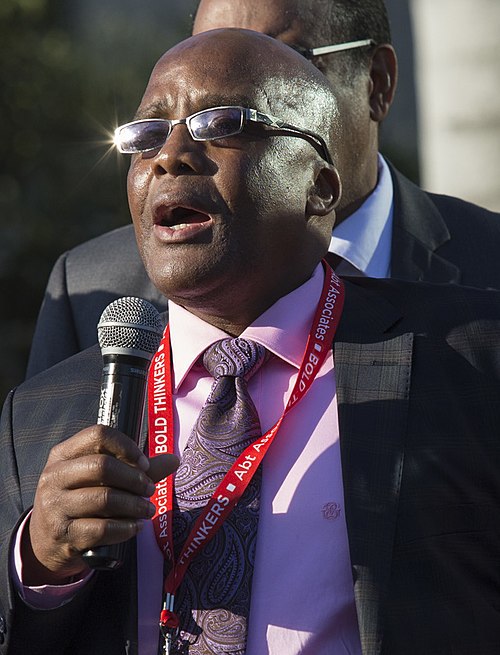
Aaron Motsoaledi
LP; Minister of Home Affairs
Abane Ramdane†
FLN Leader & Strategist
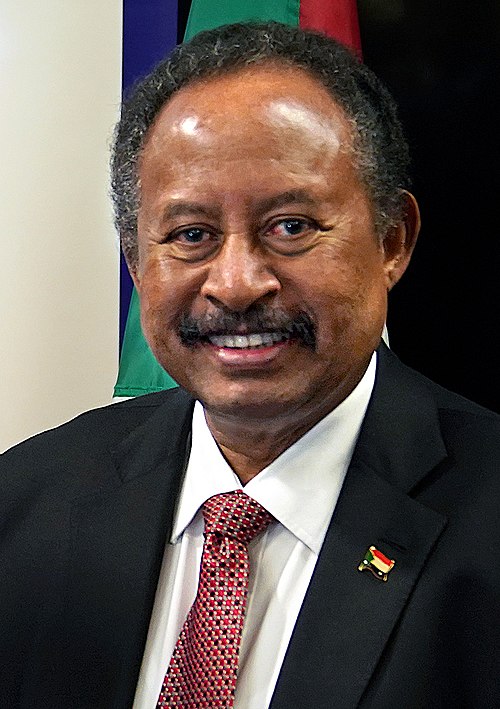
Abdalla Hamdok
Ex-Prime Minister
Abdallah Kigoda
Ex-Minister of Natural Resources