$1B
Estimated Net Worth
As of 2024 • medium confidence
Financial Breakdown
Asset Distribution
Assets vs Liabilities
Assets
Disclaimer: These financial estimates are based on publicly available information and should be considered approximate. Last updated: 12/29/2025
Biography
Introduction: The Scion of a Political Dynasty
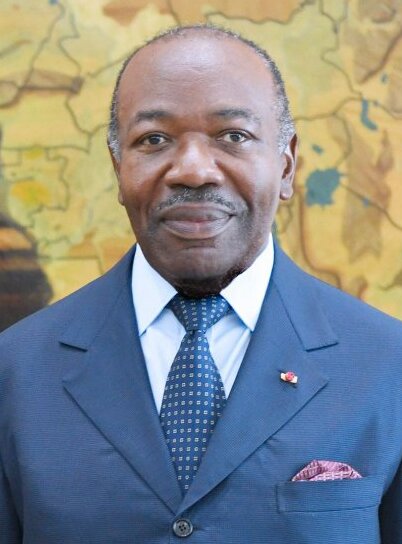
Ali Bongo Ondimba is a central figure in modern African Politics & Government, having served as the President of Gabon from October 2009 until August 2023. As the son of Omar Bongo Ondimba, who ruled Gabon for over four decades, Ali Bongo's ascent to the executive presidency represented both a continuation of a political dynasty and a promise of modernization. His tenure was marked by ambitious national development plans, efforts to diversify the oil-dependent economy, and significant infrastructure projects. However, his rule was also characterized by intense political controversy, allegations of electoral fraud, and a contested legitimacy that culminated in a military coup ending his presidency. Understanding the life and career of Ali Bongo Ondimba is essential to understanding the complex political landscape of contemporary Central Africa.
Early Life and Education: Formative Years in the Shadow of Power
Born Alain Bernard Bongo on February 9, 1959, in Brazzaville, Republic of the Congo, he was the eldest son of Omar Bongo, who would become Gabon's longest-serving president. His early life was inextricably linked to the highest echelons of power. In 1966, his father converted the family to Islam, and Alain Bernard changed his name to Ali. He was raised with an acute awareness of statecraft and diplomacy from a young age.
Ali Bongo Ondimba's education was elite and international. He attended primary school in Gabon before pursuing secondary studies in France. He later graduated with a law degree from the Sorbonne University in Paris. His formative experiences were not solely academic; he was deeply immersed in his father's political machinery. Fluent in French, English, and several local languages, he was groomed for leadership, combining Western education with direct exposure to the realities of governing a resource-rich African nation. This unique blend of influences shaped his worldview and future political approach.
Career and Major Achievements: From Minister to President
Ali Bongo Ondimba's political career began long before he assumed the presidency. He held several ministerial positions under his father's government, building a reputation as a modernizer within the established regime.
Ministerial Tenure and Political Rise
His first major post was as Minister of Foreign Affairs from 1989 to 1991, making him, at age 30, one of the world's youngest foreign ministers. He later served as Minister of National Defense from 1999 until his presidential election in 2009. In this role, he oversaw military reforms and played a key part in regional security initiatives. Concurrently, he was a high-ranking figure within the Gabonese Democratic Party (PDG), the dominant political institution founded by his father.
Ascension to the Executive Presidency
Following the death of Omar Bongo in June 2009, Ali Bongo Ondimba emerged as the PDG's presidential candidate. In the August 2009 election, he was declared the winner with 41.73% of the vote. The opposition fiercely contested the results, alleging widespread fraud, leading to violent protests in Port-Gentil. Nevertheless, he was inaugurated on October 16, 2009, beginning his first term as President of Gabon.
Policies and National Development Plans
President Bongo Ondimba launched "Gabon Emergent," a strategic development plan with three pillars: Green Gabon (sustainable development and conservation), Industrial Gabon (economic diversification), and Services Gabon (improving human capital and services). Key achievements and initiatives included:
- Infrastructure: Major investments in roads, railways (the Transgabonais), and a new deep-water port at Owendo.
- Economic Diversification: Efforts to move beyond oil by promoting forestry, mining (manganese), and tourism, notably through 13 national parks.
- Urban Development: Large-scale projects in the capital, Libreville, and the construction of a new city, "Gabon La Cité de la Démocratie."
- International Profile: Hosting major events like the 2012 Africa Cup of Nations and the 2017 African Union Summit, and maintaining close ties with France while also engaging with new partners like China and Morocco.
Contested Elections and Political Challenges
His re-election in 2016 was marred by even greater controversy. He defeated opponent Jean Ping by a razor-thin margin of 5,594 votes. The opposition again cried foul, and the subsequent violent crackdown on protests drew international condemnation. A serious stroke in 2018 sidelined him for nearly a year, leading to an attempted coup in January 2019 and raising questions about his health and the stability of his government. Despite these challenges, he won a third term in the August 2023 election, which was swiftly annulled by the military, ending his 14-year rule.
Personal Life, Legacy, and Philanthropy
Outside of Politics & Government, Ali Bongo Ondimba cultivated an image as a man of culture. A known music enthusiast and amateur guitarist, he even released a funk album under the pseudonym "Ary" in the 1970s. He was married to Sylvia Valentin, a former Miss Gabon, and they have several children. The Bongo family is also known for philanthropic activities, primarily through the Omar Bongo Ondimba Foundation, which focuses on education, health, and environmental causes, though these are often viewed through the lens of the family's vast wealth and political influence.
The legacy of Ali Bongo Ondimba is profoundly complex and contested. Supporters point to his infrastructure drive, environmental advocacy (with Gabon becoming a significant carbon sink), and attempts to modernize the economy. Critics, however, argue his rule was defined by authoritarian tendencies, a failure to adequately address poverty and inequality, and the perpetuation of a system of patronage. His presidency ultimately underscores the challenges of political succession, resource management, and democratic consolidation in Africa. The coup that removed him in 2023 marked a dramatic close to the Bongo family's 55-year hold on power, leaving his ultimate historical impact still to be fully determined.
Net Worth and Business Ventures
The financial affairs of the Bongo family have long been a subject of intense scrutiny and investigation. While an exact, verified figure for Ali Bongo Ondimba's personal net worth is not publicly available, he is widely considered to be among the wealthiest heads of state in Africa during his tenure. Estimates from various international NGOs and media investigations, such as those by the French judiciary and organizations like Transparency International, have suggested the Bongo family's total assets could amount to hundreds of millions of dollars. This wealth is alleged to be held in a complex network of real estate, luxury assets, and bank accounts, particularly in France. The family's fortune is intrinsically linked to the oil wealth of Gabon and the political control of the state's resources over decades. Official sources within Gabon have consistently denied allegations of illicit wealth accumulation, framing family assets as legally acquired. The controversy over the Bongo family's finances remains a defining aspect of the political discourse surrounding the former president's era.
Net Worth Analysis
As a long-serving president of an oil-rich nation, his family's wealth is widely reported to be in the billions, though no precise verified public figure exists from sources like Forbes.
Quick Stats
Related People

Aaron Motsoaledi
LP; Minister of Home Affairs

Abane Ramdane†
FLN Leader & Strategist

Abdalla Hamdok
Ex-Prime Minister

Abdallah Kigoda
Ex-Minister of Natural Resources