$1M
Estimated Net Worth
As of 2024 • medium confidence
Financial Breakdown
Asset Distribution
Assets vs Liabilities
Assets
Disclaimer: These financial estimates are based on publicly available information and should be considered approximate. Last updated: 12/31/2025
Biography
Introduction: A Literary Luminary of Conscience
In the pantheon of Arts & Culture from West Africa, Alioum Fantouré stands as a novelist of profound courage and intellectual rigor. Born in 1938 in Guinea, Fantouré carved a unique niche in Literature by wielding his pen as a formidable instrument of social and political critique. While many authors from the continent gained fame, Alioum Fantouré chose a path of searing honesty, often publishing under a pseudonym to protect himself from reprisal. His key achievement lies in his seminal novel, Le Cercle des Tropiques (The Circle of the Tropics), which earned the prestigious Grand prix littéraire d'Afrique noire in 1972. This work, alongside others, establishes him as an essential chronicler of post-colonial disillusionment and the complex realities of African governance.
His writing transcends mere storytelling; it is a meticulous dissection of power, corruption, and the human spirit's resilience. For scholars and readers of Francophone African Literature, the name Alioum Fantouré is synonymous with unwavering integrity and a commitment to speaking truth to power, making him a pivotal figure in 20th-century African intellectual history.
Early Life & Education: Forging a Critical Mind
Alioum Fantouré was born in 1938 in Forécariah, a coastal town in the then-French colony of Guinea. His early years were shaped by the cultural and political ferment of a region on the cusp of monumental change. The experiences of colonial rule and the burgeoning movements for independence would later form the bedrock of his literary themes. Details of his precise familial background are sparing, a reflection of his overall preference for his work to speak louder than his personal biography.
His educational journey, however, points to a brilliant and disciplined mind. Alioum Fantouré excelled academically, which led him to pursue higher studies in France—a common path for the African elite of his generation. He attended the prestigious Institut d'Études Politiques de Paris (Sciences Po), a breeding ground for future diplomats and policymakers. This education in political science, rather than literature, is crucial to understanding his authorship. It equipped him with the analytical tools to deconstruct systems of power, bureaucracy, and ideology, which he would masterfully translate into narrative fiction.
This formative period in the 1960s placed him at the intersection of high-level academic theory and the gritty realities of newly independent African nations, including his own Guinea under the authoritarian regime of Sékou Touré. The dissonance between the ideals of liberation and the emerging realities of one-party states and personal dictatorships provided the urgent material for his writing.
Career & Major Achievements: The Pen as a Political Instrument
The career of Alioum Fantouré is defined not by volume, but by the devastating impact of each publication. He worked for a time as an international civil servant, an experience that granted him an insider's view of large, often inefficient bureaucratic machines—a perspective that heavily influenced his satire.
Breakthrough with "Le Cercle des Tropiques"
His literary arrival was seismic. In 1972, under the pseudonym Alioum Fantouré, he published Le Cercle des Tropiques. The novel is a fierce allegorical satire of a newly independent African nation descending into tyranny, guided by a despotic ruler. Its critical portrayal of corrupt leadership was a brave and dangerous act, especially considering the political climate in many African countries at the time. The novel's excellence and bravery were immediately recognized with the Grand prix littéraire d'Afrique noire in 1972, one of the highest honors in Francophone African Literature. This award catapulted his name into literary prominence and cemented his role as a critical voice.
A Consistent Literary Mission
Fantouré continued this mission with subsequent novels, each deepening his critique. Tropical Circle (an English translation) further disseminated his ideas. His other significant works include L'Homme du troupeau du Sahel (1979), which explores themes of exile and displacement, and Le Récit du cirque de la vallée des morts (1985), a complex narrative often interpreted as a parable on the end of a corrupt political cycle. His writing style is known for its density, rich symbolism, and a blend of realism with almost mythical allegory.
His major achievements can be summarized as follows:
- Grand prix littéraire d'Afrique noire (1972): The definitive recognition of his literary prowess and courage.
- Pioneering Political Fiction: He helped define a subgenre of African literature focused on critiquing post-colonial political structures from within, influencing later writers.
- International Academic Study: His works are staple subjects in university courses on African literature, post-colonial studies, and political fiction worldwide.
- Preservation of Truth: Through fiction, he documented the psychological and social realities of authoritarianism, creating a lasting historical testimony.
Personal Life & Legacy: The Private Intellectual
True to his guarded nature, Alioum Fantouré has kept his personal life remarkably private. He has largely avoided the public spotlight, granting few interviews and letting his novels stand as his primary interface with the world. This deliberate choice underscores his belief in the supremacy of the text and may also have been a strategy for personal safety given the critical nature of his work. He is known to have lived for extensive periods abroad, including in France and possibly working for international organizations.
His legacy is firmly entrenched in the annals of African and world literature. Alioum Fantouré is remembered as a writer who refused to be co-opted, who challenged both colonial and native authoritarianism with equal force. He demonstrated that the novel could be a sophisticated tool for political analysis and social warning. For contemporary readers in Guinea and across Africa, his books remain painfully relevant, offering a mirror to ongoing struggles with governance and democracy.
His influence extends to a generation of writers and thinkers who value intellectual independence. He proved that one could critique a homeland from a place of deep concern and love, not alienation. The legacy of Alioum Fantouré is thus a legacy of conscience—a reminder that literature holds the power to confront power, to name injustice, and to preserve the dignity of the human story against the distortions of ideology.
Literary Estate & Impact
Discussing net worth in the traditional sense is not particularly relevant for a figure like Alioum Fantouré. His value is not quantifiable in commercial terms but in cultural and intellectual capital. As a novelist operating within the niche of serious literary and political fiction, his primary "business" was the production of transformative ideas. There is no public record of significant business ventures outside of his writing and professional civil service work.
His financial success is best understood through the academic and publishing ecosystem. The continued publication, translation, and study of his works by academic presses (such as Présence Africaine and others) ensure his ideas generate scholarly and cultural value. Royalties from these editions, along with the prestigious prizes he has won, constitute the economic framework of his career. The true wealth of Alioum Fantouré lies in the enduring presence of his novels on syllabi, in literary critiques, and in the hands of readers seeking to understand the complex political soul of modern Africa. His work is an invaluable asset to the cultural heritage of Guinea and Francophone Africa, a contribution that far surpasses monetary valuation.
For further reading on his work and context, reputable sources include the Encyclopedia Britannica's coverage of African literature, academic databases like JSTOR for critical essays, and catalogs from publishers specializing in African Arts & Culture.
Net Worth Analysis
Alioum Fantouré is a respected but not commercially blockbuster novelist from Guinea, where literary arts typically do not generate vast personal wealth.
Quick Stats
Related People
Abasse Ndione
Novelist & Playwright
Abdel Rahman al-Abnudi†
Poet (Egypt-Sudan)
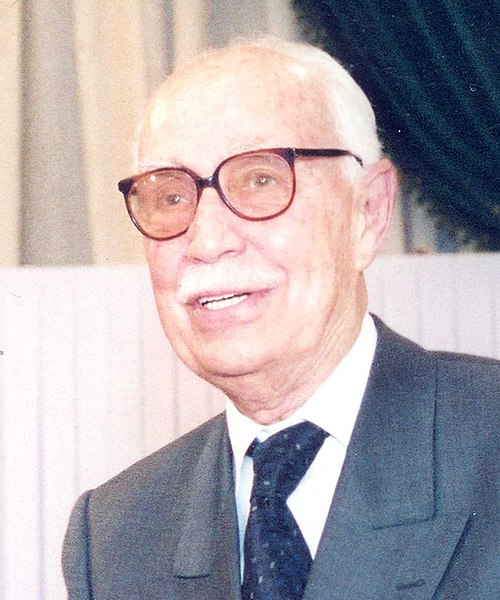
Abdelkrim Ghallab†
Novelist & Journalist
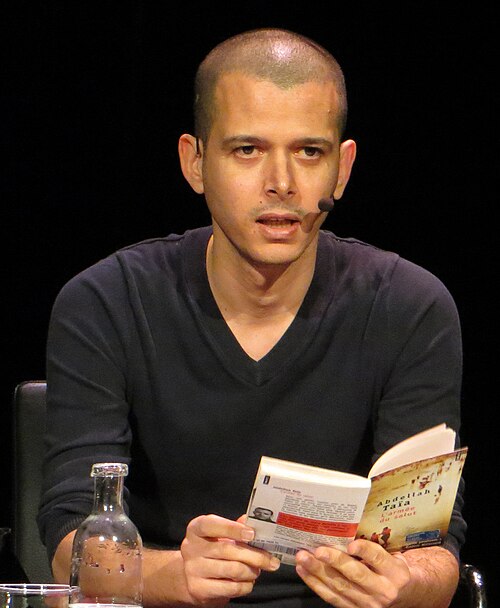
Abdellah Taïa
Novelist & Filmmaker