$50M
Estimated Net Worth
As of 2024 • low confidence
Financial Breakdown
Asset Distribution
Assets vs Liabilities
Assets
Liabilities
Disclaimer: These financial estimates are based on publicly available information and should be considered approximate. Last updated: 12/29/2025
Biography
Introduction: The Veteran Opposition Leader Turned President
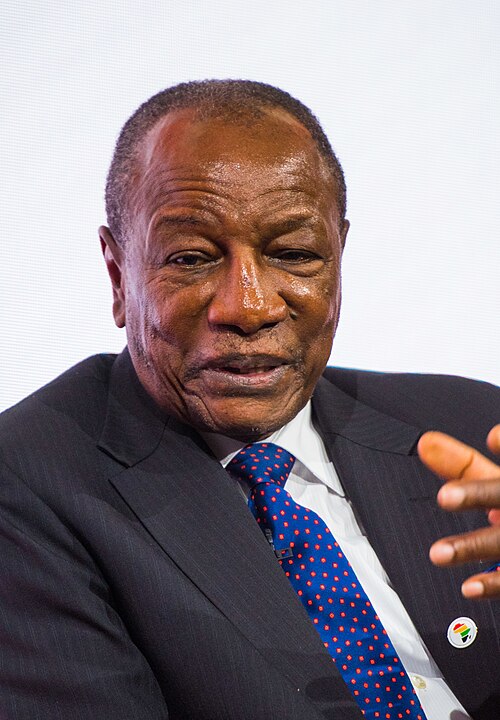
Alpha Condé is a defining figure in modern Guinean Politics & Government, whose journey from a decades-long opposition leader to the nation's first democratically elected president encapsulates the turbulent political evolution of the West African nation. Born in 1938, Condé rose to prominence as a fierce critic of authoritarian regimes before making history in 2010 by winning Guinea's inaugural free and fair presidential election. His tenure as the Ex-President of Guinea (2010-2021) was marked by ambitious infrastructure projects, economic reforms, and a controversial third-term bid that ultimately led to his ousting in a military coup. His story is one of resilience, democratic promise, and the complex challenges of governance in a resource-rich yet politically volatile country.
Early Life & Education: Formative Years in Exile and Academia
Alpha Condé was born on March 4, 1938, in Boké, French Guinea, into a prominent Malinké family. His early education took place in Guinea and Côte d'Ivoire before he moved to France for higher studies. This period proved formative, immersing him in the intellectual and political ferment of the African diaspora in Paris during the era of decolonization.
Academic Foundations and Political Awakening
Condé excelled academically, earning degrees in law and political science from the prestigious University of Paris 1 Panthéon-Sorbonne. He later became a professor of public law and political sociology at the same institution. It was in Paris that his political consciousness fully crystallized. He became deeply involved in student activism, advocating for African independence and democracy. In 1977, he founded the Guinean People's Assembly (RPG), a political party in exile dedicated to opposing the oppressive regime of Guinea's first president, Ahmed Sékou Touré. This early commitment to opposition politics established Condé's reputation as a persistent and courageous figure willing to challenge authoritarianism, even at great personal risk.
Career & Major Achievements: From Prisoner to President
The political career of Alpha Condé is a saga of perseverance. For over four decades, he operated primarily as an opposition figure, often from exile. His return to Guinea in the early 1990s to contest elections saw him repeatedly blocked, harassed, and imprisoned by the ruling regimes of Lansana Conté.
The Path to the Presidency
His defining moment came after the death of Conté in 2008 and a subsequent military junta. In 2010, Guinea held its first truly democratic presidential election. Condé, then 72 years old, emerged victorious in a runoff against Cellou Dalein Diallo, making history. His election was hailed internationally as a breakthrough for democracy in the region. Upon taking office in December 2010, Alpha Condé faced the monumental task of rebuilding a nation ravaged by decades of dictatorship and economic mismanagement.
Presidential Accomplishments and Economic Focus
As the Ex-President of Guinea, Condé's administration pursued several key initiatives:
- Economic & Infrastructure Reforms: He prioritized unlocking Guinea's immense mineral wealth, particularly its vast iron ore and bauxite reserves. His government renegotiated mining contracts with major international firms, aiming to secure better terms for the state. He also launched significant infrastructure projects, including the construction of new roads, dams for electricity, and the modernization of Conakry's airport.
- Public Health Leadership: During the devastating 2014-2016 Ebola virus epidemic in West Africa, Condé's government, with international support, played a critical role in mobilizing a national response to contain the outbreak.
- Political and Institutional Reforms: Early in his tenure, he initiated efforts to reform the military and security sectors and to combat widespread corruption, though critics argued progress was slow and uneven.
He was re-elected in 2015 for a second term, which was constitutionally mandated to be his last. However, his push for a new constitution and a controversial third term in 2020 became the most contentious chapter of his presidency, leading to widespread protests and a violent crackdown.
Personal Life & Legacy: The Complex Imprint of a Political Survivor
Outside of the political arena, Alpha Condé is known as an intellectual with a deep love for literature and debate. His personal life, including his marriage to Djènè Condé, has generally been kept private. His legacy is profoundly complex and subject to intense debate within Guinea and among observers of African Politics & Government.
A Contested Historical Footprint
Supporters view him as a democratic pioneer who broke the cycle of military and authoritarian rule, invested in national infrastructure, and gave Guinea a stronger voice on the international stage, including within the African Union where he served as Chairman in 2017. Detractors point to his authoritarian tendencies in later years, the violent repression of protests, the failure to reconcile the country's deep ethnic divisions, and the constitutional manipulation for a third term that triggered the 2021 coup. His ousting by Colonel Mamady Doumbouya on September 5, 2021, underscored the fragile nature of democratic gains in the region. Today, Alpha Condé remains a polarizing symbol of both democratic aspiration and the perils of prolonged power.
Financial Standing and Business Engagements
As with many high-profile political figures in resource-rich nations, the net worth and business interests of Alpha Condé have been a topic of speculation but are not officially documented with transparency. During his long years in opposition and academia, he was not known for significant personal wealth. However, upon assuming the presidency of a country holding the world's largest bauxite reserves, his administration oversaw multi-billion dollar mining deals with international consortia. Critics and political opponents have often alleged corruption and illicit enrichment during his tenure, though concrete, independently verified figures remain elusive. Since his removal from power, the subject of his assets has been part of the legal and political proceedings initiated by the current ruling junta. It is a reminder of the intricate and often opaque links between political power, natural resource governance, and personal fortune in the context of Guinea's political economy.
Net Worth Analysis
No credible public net worth estimate exists; valuation is based on his long political career and typical wealth accumulation for a former head of state in Guinea, but allegations of corruption are unverified.
Quick Stats
Related People
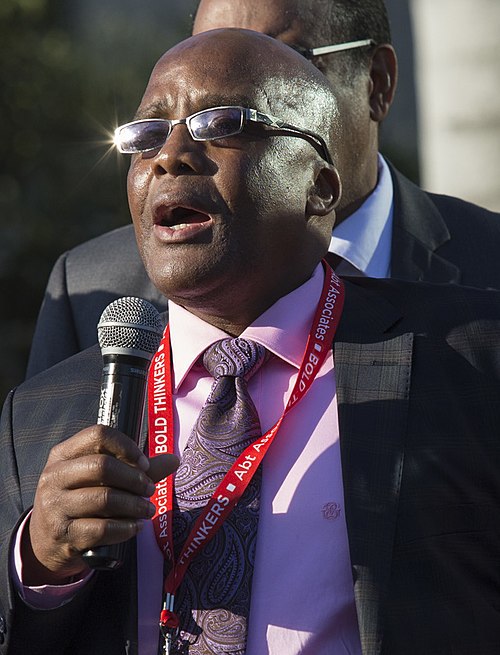
Aaron Motsoaledi
LP; Minister of Home Affairs
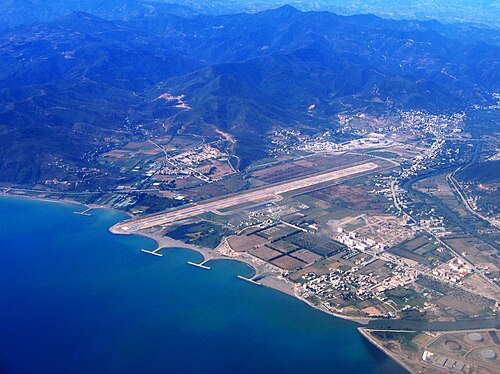
Abane Ramdane†
FLN Leader & Strategist
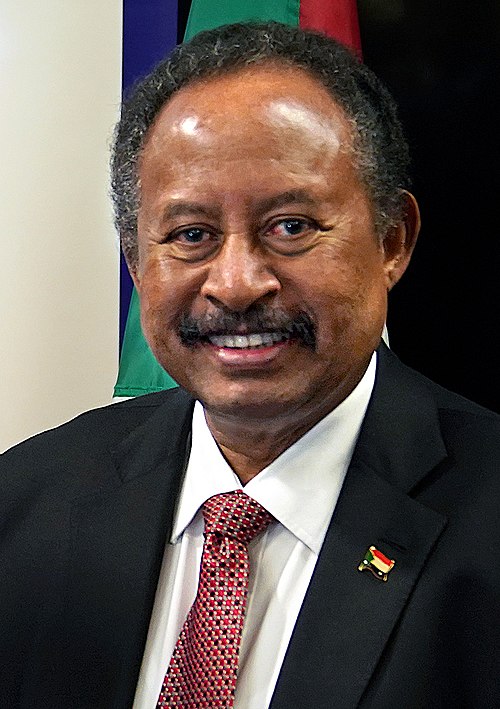
Abdalla Hamdok
Ex-Prime Minister
Abdallah Kigoda
Ex-Minister of Natural Resources