Financial Breakdown
Asset Distribution
Assets vs Liabilities
Assets
Disclaimer: These financial estimates are based on publicly available information and should be considered approximate. Last updated: 12/29/2025
Biography
Introduction: A Pillar of Malian Stability
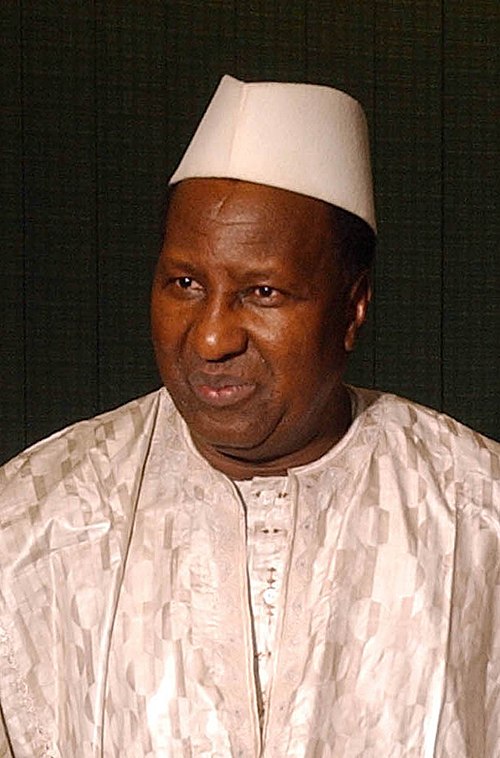
Alpha Oumar Konaré stands as a seminal figure in the modern political history of Mali and West Africa. Serving as the Ex-President of Mali from 1992 to 2002, he is widely celebrated for steering the nation through a peaceful transition to a stable, multi-party democracy following the tumultuous 1991 coup that overthrew the 23-year dictatorship of Moussa Traoré. His presidency, marked by a commitment to decentralization, cultural revival, and regional diplomacy, laid the foundational pillars for Mali's contemporary political system. As a historian and intellectual deeply engaged in Politics & Government, Konaré's leadership was defined by a vision that sought to reconcile democratic governance with Mali's rich historical and cultural heritage, earning him respect both domestically and on the international stage.
Early Life & Education: The Making of an Intellectual Leader
Alpha Oumar Konaré was born on February 2, 1946, in Kayes, a city in western Mali then part of French Sudan. His early life was steeped in the diverse cultural and political currents of a nation on the cusp of independence. This environment fostered a deep appreciation for Malian history and social structures from a young age. Konaré pursued his higher education with vigor, first at the École Normale Supérieure in Bamako, and later abroad. He earned a degree in history and geography from the University of Warsaw in Poland, followed by a doctorate in archaeology from the University of Warsaw, showcasing an early academic focus that would later profoundly influence his political philosophy.
His formative experiences were not confined to the classroom. Before entering high office, Alpha Oumar Konaré built a distinguished career as a teacher, historian, and political activist. He served as Mali's Minister of Youth, Sports, Arts, and Culture in the late 1970s but resigned in protest against the authoritarian methods of the Traoré regime. This act cemented his reputation as a principled opponent of dictatorship. Throughout the 1980s, he worked as a UNESCO consultant and was instrumental in founding cultural institutions and newspapers, including the influential daily Les Échos. These experiences in education, culture, and dissent against autocracy directly shaped his democratic convictions and his future approach to governance.
Career & Major Achievements: Steering Mali's Democratic Path
Following the 1991 coup and the establishment of a transitional council, Mali prepared for its first democratic presidential election. Running as the candidate for the Alliance for Democracy in Mali (ADEMA), Alpha Oumar Konaré emerged victorious in the 1992 election, winning 69% of the vote in the second round. His election marked a definitive break from three decades of military and one-party rule.
Presidential Tenure and Domestic Reforms
President Konaré's two-term presidency (1992-2002) was defined by ambitious reforms aimed at consolidating democracy. His major achievements include:
- Decentralization: He championed a groundbreaking process of devolving power from the central government in Bamako to locally elected officials. This led to the creation of 703 communes, empowering communities and aiming to bring governance closer to the people.
- Cultural Renaissance: True to his roots, Konaré launched major cultural projects, most notably the rehabilitation of the legendary Timbuktu manuscripts and the construction of the National Museum of Mali. He viewed culture as a vital component of national identity and development.
- Economic and Social Challenges: His tenure faced significant hurdles, including a crippling economy inherited from the previous regime, structural adjustment demands from international creditors, and persistent poverty. While progress was mixed, his administration maintained social peace and democratic freedoms.
- Constitutional Adherence: In a region plagued by military interventions, Konaré's commitment to constitutional term limits was paramount. He respected the two-term limit mandated by the 1992 constitution and did not seek a third term, setting a powerful precedent for peaceful, constitutional succession in Mali.
Regional and International Diplomacy
Beyond Mali's borders, Alpha Oumar Konaré became a respected voice for African integration and conflict resolution. After leaving the presidency, his continental influence grew significantly when he was elected as the Chairperson of the Commission of the African Union (AU) in 2003, a position he held until 2008. During his AU tenure, he grappled with some of the continent's most intractable crises, including the conflict in Darfur, Sudan. He advocated for stronger African-led peacekeeping mechanisms and greater continental unity, leaving a lasting imprint on the AU's institutional development.
Personal Life, Legacy, and Lasting Impact
Alpha Oumar Konaré is married to Adame Ba Konaré, a renowned historian and author in her own right. Their partnership is a unique fusion of intellectual and political life, with Adame being a steadfast advocate for social issues and women's rights during her tenure as First Lady. Together, they have authored several books and remain influential voices in Malian civil society. Personally, Konaré is known for his modest lifestyle, intellectual depth, and unwavering dedication to Pan-African ideals.
The legacy of Alpha Oumar Konaré is complex and multifaceted. He is universally credited as the father of Mali's Third Republic, the architect of its democratic institutions, and a guardian of its cultural patrimony. His peaceful transfer of power in 2002 remains a high point in Malian political history. However, later years have seen his legacy scrutinized in light of Mali's subsequent crises, including the 2012 coup, the northern conflict, and a second coup in 2020. Some critics argue that his decentralization policies inadvertently strengthened ethnic and regional divisions, while others point to unresolved economic issues. Nevertheless, his foundational role in establishing a democratic culture is indisputable. His life's work underscores the profound impact an intellectual can have on the practical arena of Politics & Government, striving to build a state rooted in participation, history, and the rule of law.
Net Worth, Post-Presidency, and Business Ventures
Unlike many former heads of state, Alpha Oumar Konaré has maintained a reputation for personal financial integrity. There are no credible reports of significant personal wealth or business empires amassed during or after his presidency. His post-presidential life has been dedicated to public service on the continental stage through his AU role and to intellectual pursuits. Any financial compensation would be derived from state pensions for former presidents, salaries from his international positions, and likely royalties from his historical publications. He has not been associated with the commercial business ventures that characterize some other political figures, aligning instead with his image as a scholar-statesman. His primary "venture" remains his intellectual and diplomatic contribution to African unity and development, a legacy that transcends monetary valuation.
For further reading on his life and Mali's political history, credible sources include the Encyclopædia Britannica, official African Union archives, and historical analyses from institutions like the International Crisis Group.
Frequently Asked Questions
What is Alpha Oumar Konaré's estimated net worth?
Alpha Oumar Konaré has an estimated net worth of $1.0 Million.
What is Alpha Oumar Konaré's role and nationality?
Alpha Oumar Konaré is a Ex-President of Mali from Mali.
How did Alpha Oumar Konaré make their money?
Alpha Oumar Konaré built their fortune primarily through As a former public servant and academic, his wealth is not comparable to business tycoons; estimates for such figures in Mali are typically in the low millions..
How old is Alpha Oumar Konaré?
Alpha Oumar Konaré was born in 1946 (80 years old).
Which category is Alpha Oumar Konaré listed under?
Alpha Oumar Konaré is featured under the Politics & Government category on NetWorth Africa.
How is Alpha Oumar Konaré's net worth calculated?
NetWorth Africa estimates financial valuations using publicly available stock equity holdings, company ownership records, real estate assets, and verified market data.
Net Worth Analysis
As a former public servant and academic, his wealth is not comparable to business tycoons; estimates for such figures in Mali are typically in the low millions.
Quick Stats
Related People
Aaron Motsoaledi
LP; Minister of Home Affairs • South Africa
Abane Ramdane†
FLN Leader & Strategist • Algeria
Abdalla Hamdok
Ex-Prime Minister • Sudan
Abdallah Kigoda
Ex-Minister of Natural Resources • Tanzania