$50M
Estimated Net Worth
As of 2024 • medium confidence
Financial Breakdown
Asset Distribution
Assets vs Liabilities
Assets
Liabilities
Disclaimer: These financial estimates are based on publicly available information and should be considered approximate. Last updated: 12/30/2025
Biography
Introduction: A Pillar of Sudanese Politics and Faith
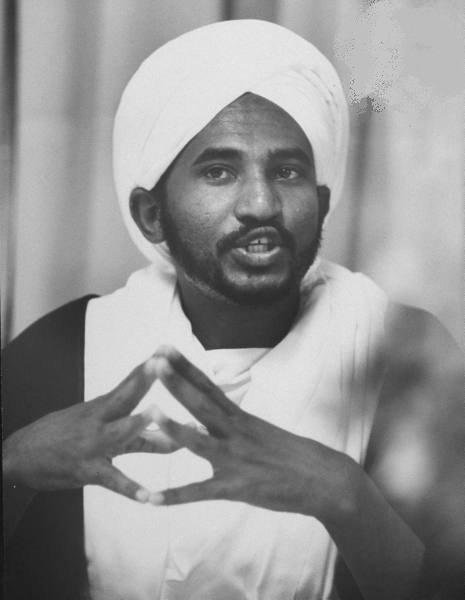
Al-Sadiq al-Mahdi† (1935–2020) was a towering figure in the modern history of Sudan, embodying a unique fusion of religious authority and political leadership. As the great-grandson of Muhammad Ahmad al-Mahdi, the 19th-century messianic leader who founded the Mahdist state, and the imam of the Ansar religious movement, Al-Sadiq al-Mahdi† carried immense spiritual and historical weight. His significance, however, extended far beyond his lineage. He served as the Prime Minister of Sudan on two pivotal occasions (1966–1967 and 1986–1989) and was the leader of the Umma Party, one of the nation's oldest and most influential political organizations. His life was a continuous navigation of the complex intersection between Islam, democracy, and national identity, making him a central and often controversial architect of Sudan's post-independence trajectory in both Politics & Government and Religious Leadership.
Early Life and Education: Heir to a Legacy
Born on December 25, 1935, in Al-Abasya, Sudan, Sadiq al-Siddiq was destined for a life in the public eye. His family, the al-Mahdi family, commanded unwavering loyalty from the Ansar, a large Sufi-based religious community. From a young age, he was immersed in both Islamic scholarship and the realities of political leadership. His early education was traditional, rooted in Quranic studies, but he later pursued a modern academic path that would distinguish him from many of his peers.
Al-Sadiq al-Mahdi† attended the University of Khartoum before earning a degree in Philosophy, Politics, and Economics (PPE) from St John's College, Oxford in 1957. This elite Western education provided him with a framework for democratic governance and economic theory, which he would continually attempt to reconcile with his identity as an Islamic leader. His formative years were marked by Sudan's tumultuous early independence, the military coup of 1958, and the constant pressure of living up to his family's monumental legacy. These experiences forged in him a dual commitment: to modernize the Ansar Leadership and to steer Sudan towards a democratic, yet distinctly Islamic, future.
Career and Major Achievements: Between Premiership and Opposition
The career of Al-Sadiq al-Mahdi† was a rollercoaster of electoral victory, military coups, and persistent opposition. He first became Prime Minister in 1966 after leading the Umma Party to success in a coalition government. This first term was short-lived, ending in 1967, but it established him as a national leader. His more consequential second term began in 1986 following the popular uprising that ousted the dictator Jaafar Nimeiry. Elected democratically, his government faced insurmountable challenges.
Navigating Civil War and Sharia Law
His second premiership was dominated by two crises: the ongoing civil war with the Sudan People's Liberation Movement/Army (SPLM/A) in the south, and the contentious issue of Islamic law. Nimeiry had imposed a harsh version of sharia in 1983, exacerbating the north-south conflict. Al-Sadiq al-Mahdi†, a proponent of a more moderate and modernized Islamic legal framework, promised a review. However, caught between hardline Islamists in the north and the demands of the southern rebels, he struggled to build consensus. His inability to decisively end the war or repeal Nimeiry's laws is often cited as a major failure of his administration.
The 1989 Coup and Decades of Resistance
On June 30, 1989, his government was overthrown in a military coup led by Omar al-Bashir, with the backing of Islamist ideologue Hassan al-Turabi. This began a new, defining chapter for Al-Sadiq al-Mahdi† as a political prisoner and later as the figurehead of the democratic opposition. He spent years under house arrest or in exile but remained the symbolic leader of the Umma Party and a potent critic of the Bashir regime. His enduring relevance was proven in the 21st century as he engaged in national dialogues and remained a key voice advocating for a civilian-led transition.
Intellectual Contributions and Theological Reform
Beyond the political arena, Al-Sadiq al-Mahdi† was a prolific writer and Islamic thinker. He authored numerous books and essays arguing for:
- Ijtihad (independent reasoning) in Islamic jurisprudence to address modern issues.
- The compatibility of democracy and human rights with Islamic principles.
- Condemnation of extremist ideologies like those of al-Qaeda and ISIS.
Personal Life, Philanthropy, and Lasting Legacy
Al-Sadiq al-Mahdi† was married to his cousin, Fatima bint al-Mahdi, and was the father of a large family, including several children who followed him into politics and public service. His personal demeanor was often described as scholarly and reserved, reflecting his intellectual pursuits. While not a businessman in the traditional sense, his "wealth" was the vast social and religious capital of the Ansar movement. His philanthropic efforts were channeled primarily through the Ansar's social networks, which provided education, healthcare, and community support across Sudan, particularly in rural areas where the movement's strength was concentrated.
His legacy is profoundly complex. To supporters, he was the "Democratic Imam," a man who tirelessly advocated for constitutional rule and a peaceful, pluralistic Sudan. To critics, he was an indecisive leader whose theological and political compromises contributed to national strife. His death from COVID-19 in November 2020 in the UAE, just as Sudan was navigating a fragile transitional government, marked the end of an era. Yet, his ideas and the political structures he led continue to influence Sudan's path. The Umma Party remains a force, and the debate he centered—on the role of Islam in a diverse, modern state—remains utterly central to Sudan's future.
Net Worth and Business Ventures: The Capital of Influence
Quantifying the net worth of Al-Sadiq al-Mahdi† in purely financial terms is challenging and arguably misses the point of his influence. He was not known for vast personal business empires or commercial ventures. His family's wealth was historically tied to land ownership and the economic ecosystem of the Ansar community. His true capital was political and religious. As the imam of millions of Ansar, he commanded a form of "soft power" and grassroots mobilization that few in Sudan could rival. The assets of the Umma Party and the Ansar's social institutions represented a significant, though non-personal, economic network. In later years, his primary "venture" was intellectual—producing books and lectures that shaped discourse. Therefore, while not a billionaire, Al-Sadiq al-Mahdi†'s wealth lay in his unparalleled legacy as a bridge between Sudan's Mahdist past and its uncertain democratic future.
Sources: Historical accounts of his life and career are documented by major news archives including BBC News, Reuters, and Al Jazeera. His theological and political views are extensively recorded in his own writings, such as "The Questions of the Civil State and the Religious State" and numerous public lectures available through academic and media databases.
Net Worth Analysis
Al-Sadiq al-Mahdi was a political and religious leader, not a business figure, and his wealth was tied to historical family status and political roles, not corporate holdings. He was not on any billionaire list.
Quick Stats
Related People
Aaron Motsoaledi
LP; Minister of Home Affairs
Abane Ramdane†
FLN Leader & Strategist
Abdalla Hamdok
Ex-Prime Minister
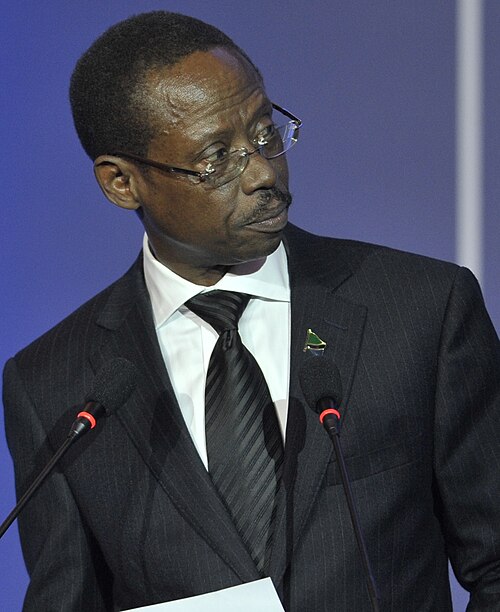
Abdallah Kigoda
Ex-Minister of Natural Resources