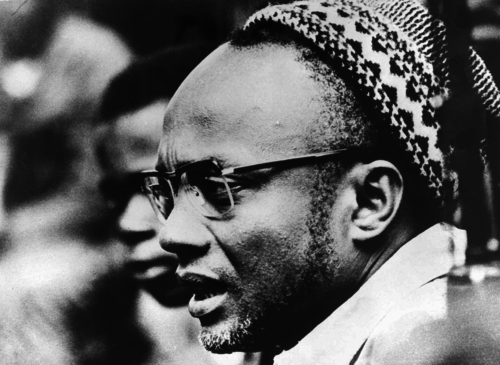
Biography
Introduction: The Revolutionary Intellectual
Amílcar Cabral† stands as one of the most profound and influential figures in the history of African liberation. More than just a military strategist, Cabral was a revolutionary theorist, agronomist, and poet whose ideas reshaped the struggle against colonialism. As the founding father of the independence movements for both Guinea-Bissau and Cape Verde, he masterfully led the Partido Africano da Independência da Guiné e Cabo Verde (PAIGC) in a successful armed struggle against Portuguese colonial rule. His unique contribution lies in his sophisticated theoretical framework, which emphasized cultural resistance, class analysis, and the unity of oppressed peoples. Amílcar Cabral's† legacy transcends his tragic assassination in 1973, cementing his place as a pivotal thinker in the global canon of Pan-Africanism and anti-colonial theory.
Early Life & Education: Forging an Anti-Colonial Consciousness
Amílcar Lopes da Costa Cabral was born on September 12, 1924, in Bafatá, Portuguese Guinea (now Guinea-Bissau), to Cape Verdean parents. He spent his formative years in Cape Verde, an archipelago suffering from devastating droughts and famine under Portuguese neglect. Witnessing this profound social suffering firsthand planted the early seeds of his political consciousness. A brilliant student, he earned a scholarship to study agronomy at the Instituto Superior de Agronomia in Lisbon, Portugal, in 1945.
His time in Lisbon was transformative. The post-war Portuguese capital was a hub for intellectuals from across the colonies. Here, Cabral connected with future leaders like Agostinho Neto of Angola and Marcelino dos Santos of Mozambique. Together, they founded clandestine student movements dedicated to discussing liberation and African nationalism. Graduating in 1950 as one of the few Africans with an advanced degree in agronomy, Cabral returned to Guinea-Bissau in 1952 to work for the colonial agricultural service. This role involved traveling extensively across the countryside, which proved strategically invaluable. It allowed him to conduct a meticulous socio-economic survey of rural life, intimately understand the peasantry—who would become the backbone of his revolution—and witness the brutal realities of colonial exploitation up close.
Career & Major Achievements: From Theory to Liberation
Amílcar Cabral's† career is a testament to the power of organized theory meeting revolutionary practice. His major achievements span political organization, military strategy, and intellectual contribution.
Founding the PAIGC and Launching the Struggle
In 1956, Cabral co-founded the PAIGC in Bissau, alongside his brother Luís Cabral, Aristides Pereira, and others. Initially focused on peaceful protest and labor organizing, the group faced severe repression from the Portuguese secret police (PIDE). This forced a strategic shift. In 1963, after years of political mobilization, Cabral launched a sustained armed struggle for independence. Unlike many liberation movements, the PAIGC, under Cabral's guidance, prioritized political education alongside military training. He famously stated, "We are not fighting to have a flag or a national anthem; we are fighting to have a better life."
Revolutionary Theory and International Diplomacy
Cabral developed a unique theoretical framework for liberation. Key concepts included:
- “Return to the Source”: The need to reclaim indigenous culture as a weapon against colonial mental domination.
- Class Suicide: The idea that revolutionary intellectuals must shed their petty-bourgeois class allegiances and fully integrate with the peasant masses.
- National liberation as an act of culture and a necessary step for genuine human development.
Simultaneously, he became a masterful diplomat, securing crucial support from non-aligned nations, the Soviet bloc, and Scandinavian countries. His eloquent speeches at the United Nations and the Organization of African Unity (OAU) raised the international profile of the PAIGC's cause. By the early 1970s, the PAIGC controlled nearly two-thirds of Guinea-Bissau, having established schools, hospitals, and people's stores in liberated zones—a demonstration of Cabral's belief in building state capacity from within.
Military Success and Tragic End
Militarily, Cabral's strategy of guerrilla warfare, rooted in the support of the rural population, effectively neutralized a Portuguese force that grew to over 35,000 troops. In a monumental achievement, the PAIGC successfully shot down a Portuguese aircraft in 1973, demonstrating their growing strength. That same year, Cabral proclaimed the independent state of Guinea-Bissau in the liberated regions. Tragically, he would not live to see full formal recognition. On January 20, 1973, in Conakry, Guinea, Amílcar Cabral† was assassinated in a plot instigated by disaffected PAIGC members and aided by Portuguese agents. His death sent shockwaves across Africa and the world.
Personal Life & Legacy: The Enduring Influence
Amílcar Cabral was a multifaceted man—an agronomist, a poet, and a charismatic leader known for his humility and intellectual rigor. He was married to Maria Helena de Athayde e Castro Rodrigues, a Portuguese woman he met in Lisbon, and later to Ana Maria Foss de Sá, with whom he had two children. His personal interests in poetry and culture deeply informed his political thought, viewing cultural expression as the fundamental resistance of a people.
His legacy is immense and multifaceted. Guinea-Bissau achieved unilateral independence in September 1973, followed by Cape Verde in 1975. More enduring is his intellectual legacy. Amílcar Cabral's† writings, such as "The Weapon of Theory" and "National Liberation and Culture," remain essential reading in post-colonial studies, political theory, and liberation theology. He influenced a generation of Black Power and civil rights activists in the United States, including the Black Panther Party. Today, he is remembered as a martyr and a visionary whose ideas on cultural resistance, unity, and the role of intellectuals continue to inspire social justice movements globally. His face adorns banknotes and public squares in both nations he helped free, a permanent symbol of unity and struggle.
Net Worth & Business: The Revolutionary's Economy
Discussing Amílcar Cabral† in terms of personal net worth or business ventures is antithetical to his life's work and philosophy. As a revolutionary dedicated to the eradication of exploitation and the creation of an egalitarian society, Cabral explicitly rejected personal wealth accumulation. He lived modestly, channeling all resources and energy into the liberation movement. His "business" was the revolution itself, and his "capital" was the political consciousness of the people. The PAIGC's economic strategy focused on building self-sufficiency in liberated zones through collective farming and trade, not private enterprise. Any assessment of Cabral's success must be measured in political and ideological capital—the liberation of two nations, the empowerment of a peasantry, and the enduring power of his ideas—which is a legacy of incalculable value far beyond financial metrics. His life underscores that for some leaders in Politics & Government, true worth is found in service and sacrifice.
Sources and further reading on Amílcar Cabral† can be found through academic databases and institutions like the Encyclopædia Britannica, the BlackPast.org archive, and the Marxists Internet Archive which hosts several of his key texts.
Frequently Asked Questions
What is Amílcar Cabral†'s estimated net worth?
Net worth details for Amílcar Cabral† are currently being updated.
What is Amílcar Cabral†'s role and nationality?
Amílcar Cabral† is a Independence Leader & Theorist; Revolutionary & Theorist from Cape Verde.
How did Amílcar Cabral† make their money?
Amílcar Cabral† built their fortune primarily through Amílcar Cabral was a revolutionary leader and political theorist, not a business figure, and was assassinated in 1973 before his country's independence..
How old is Amílcar Cabral†?
Amílcar Cabral† was born in 1924 (102 years old).
Which category is Amílcar Cabral† listed under?
Amílcar Cabral† is featured under the Politics & Government category on NetWorth Africa.
How is Amílcar Cabral†'s net worth calculated?
NetWorth Africa estimates financial valuations using publicly available stock equity holdings, company ownership records, real estate assets, and verified market data.
Net Worth Analysis
Amílcar Cabral was a revolutionary leader and political theorist, not a business figure, and was assassinated in 1973 before his country's independence.
Quick Stats
Related People
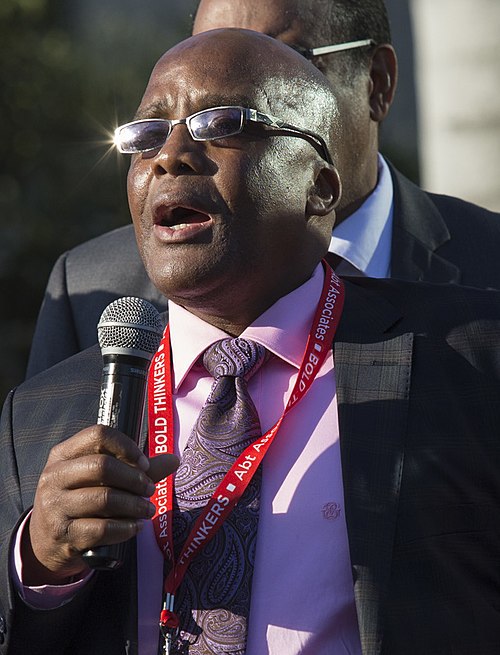
Aaron Motsoaledi
LP; Minister of Home Affairs • South Africa
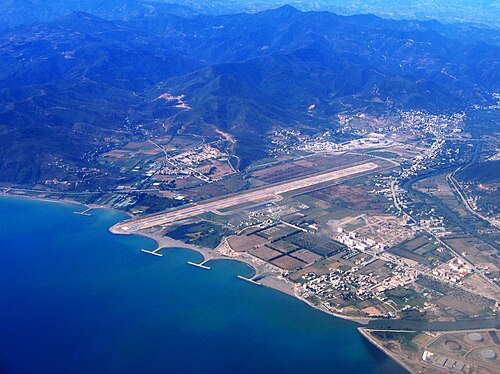
Abane Ramdane†
FLN Leader & Strategist • Algeria
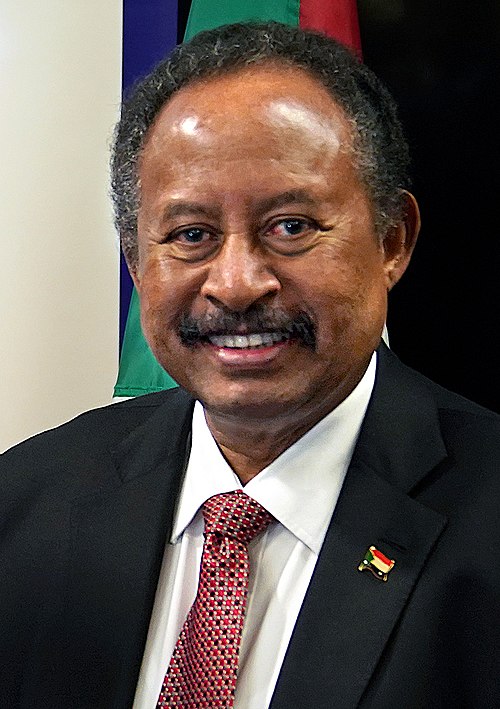
Abdalla Hamdok
Ex-Prime Minister • Sudan
Abdallah Kigoda
Ex-Minister of Natural Resources • Tanzania