Financial Breakdown
Asset Distribution
Assets vs Liabilities
Assets
Disclaimer: These financial estimates are based on publicly available information and should be considered approximate. Last updated: 12/31/2025
Biography
Introduction: The Voice of a Nation's Memory
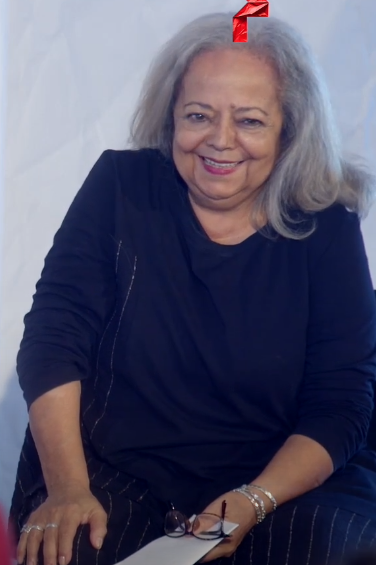
Ana Paula Ribeiro Tavares stands as one of the most significant and resonant voices in contemporary Angolan literature and a distinguished figure in the Arts & Culture landscape of her nation. Born in 1952, her life and work are inextricably linked to Angola's tumultuous journey from colonialism through independence and civil war, into a complex present. As both a Poet; Professor & Poet, Tavares has masterfully woven together the threads of historical memory, feminine experience, and the natural world of the Angolan plateau. Her key achievement lies in crafting a poetic language that is at once intimate and epic, personal and national, giving voice to silenced histories and establishing a new lyrical cartography for Angola. Her contributions have earned her prestigious awards, including the Sagrada Esperança Prize and the Mário António Poetry Prize from the Calouste Gulbenkian Foundation, cementing her status as a literary icon.
Early Life & Education: Foundations in the Angolan Landscape
Ana Paula Ribeiro Tavares was born in 1952 in the town of Lubango, in the Huíla province of southern Angola. This region, with its distinct geography and cultural traditions, would become a profound source of imagery and thematic material throughout her poetic career. Growing up in the final decades of Portuguese colonial rule, her formative years were marked by the tensions and contradictions of that era. She pursued her higher education initially in History at the University of Luanda, an academic path that would deeply inform her literary work, instilling a rigorous concern for historical narrative and archival memory.
Her passion for literature and language led her to further studies in Portuguese Philology. This dual training in History and Literature equipped Tavares with a unique toolkit: the poet's sensitivity to metaphor and sound, and the historian's eye for detail, cause, and consequence. These formative experiences—the sensory memories of the Angolan landscape, the political consciousness shaped by colonialism, and her academic disciplines—coalesced to create the foundation for a poetic voice that seeks to interrogate the past while carefully documenting the textures of place and identity.
Career & Major Achievements: Poetry, Academia, and National Voice
The career of Ana Paula Ribeiro Tavares is a testament to the powerful synergy between creative writing and academic scholarship. Her professional life has unfolded in parallel tracks, each enriching the other.
Literary Work and Poetic Evolution
Tavares began publishing poetry in the 1980s, a period of intense conflict in Angola. Her early collections, such as Ritos de Passagem (1985) and O Sangue da Buganvília (1998), immediately established her distinctive themes. Her poetry is characterized by:
- Historical Reclamation: Giving voice to the marginalized and forgotten figures of Angola's past, particularly women.
- Lusophone Dialogue: Engaging with and reshaping the Portuguese language from an African perspective.
- Ecological Consciousness: Using the flora, fauna, and landscapes of Angola as central, living characters in her work.
- Feminine Intimacy: Exploring the private worlds, desires, and struggles of women with candor and lyrical precision.
Later works like Dizes-me coisas amargas como os frutos (2001) and Manual para amantes desesperados (2007) further refined her style, blending love poetry with sharp social observation. Her 2010 collection, Como Veias Finas na Terra, is often considered a masterpiece, a profound meditation on memory, war, and the connection between people and land.
Academic Contributions and Editorial Work
Parallel to her creative output, Ana Paula Ribeiro Tavares built an esteemed academic career. She taught at the Catholic University of Portugal and the University of Lisbon, where she influenced a new generation of scholars in African literatures and history. Her scholarly work often focused on oral traditions, historical archives, and the literature of Angola. Furthermore, she played a crucial editorial role, organizing and prefacing collections of traditional Angolan stories and proverbs, thus actively participating in the preservation and dissemination of her country's cultural heritage. This dual role as Professor & Poet allowed her to both create and contextualize Angolan literature, making her a central node in the Lusophone literary world.
Awards and Recognition
The impact of Ana Paula Ribeiro Tavares's work has been recognized with numerous accolades. She received the Sagrada Esperança Prize for literature and the highly prestigious Mário António Poetry Prize from the Calouste Gulbenkian Foundation (Portugal) in 2004. Her books have been translated into several languages, including French, Italian, Spanish, and German, amplifying the reach of Angolan poetry on the global stage. She is a frequent presence at international literary festivals and a respected voice in discussions on post-colonial literature and African writing.
Personal Life & Legacy: The Lasting Imprint
While Ana Paula Ribeiro Tavares maintains a certain privacy regarding her personal life, her public persona is that of a thoughtful, erudite, and deeply committed intellectual. Her interests, as reflected in her work, span history, botany, folklore, and the arts. She has lived for extended periods in Portugal, which has positioned her as a cultural bridge between Angola and its former colonizer, engaging in a critical yet productive dialogue with the Lusophone world.
Her legacy is multifaceted. Firstly, she has expanded the thematic and linguistic boundaries of Angolan poetry, moving beyond immediate political rhetoric to explore nuanced psychological and historical territories. Secondly, through her academic work, she has ensured that Angolan cultural production is studied with seriousness and depth. Finally, as a woman writing in a field often dominated by male voices, Ana Paula Ribeiro Tavares has opened pathways for future generations of Angolan women writers. She leaves behind a body of work that serves as both an artistic treasure and a vital historical document, ensuring that the stories of her land and its people are remembered, felt, and understood.
Literary Estate and Cultural Impact
While discussions of net worth are rarely appropriate or publicly known for literary figures like Ana Paula Ribeiro Tavares, her value is measured in cultural capital and enduring influence. Her primary "business ventures" are her intellectual and creative outputs: over a dozen published books of poetry and scholarly works. Her income streams have traditionally derived from publishing royalties, academic salaries, honoraria from lectures and festival appearances, and literary prizes. The true economic footprint of her work is seen in its academic study—generating dissertations, conferences, and critical editions—and its role in bolstering the international profile of Angolan Arts & Culture. Publishers in Portugal, Angola, and Brazil continue to keep her work in print, a testament to its lasting relevance. In essence, the enterprise of Ana Paula Ribeiro Tavares is the enterprise of memory and language, an invaluable contribution to the cultural heritage of Angola and the Portuguese-speaking world.
Sources & Further Reading: For those interested in exploring the work of Ana Paula Ribeiro Tavares, her poetry is available from major Lusophone publishers like Caminho and Editorial Caminho. Critical analyses can be found in academic journals dedicated to African and Lusophone studies. Reputable sources for biographical information include the Calouste Gulbenkian Foundation archives (prize announcements) and encyclopedic resources on African literature.
Frequently Asked Questions
What is Ana Paula Ribeiro Tavares's estimated net worth?
Ana Paula Ribeiro Tavares has an estimated net worth of $500,000.
What is Ana Paula Ribeiro Tavares's role and nationality?
Ana Paula Ribeiro Tavares is a Poet; Professor & Poet from Angola.
How did Ana Paula Ribeiro Tavares make their money?
Ana Paula Ribeiro Tavares built their fortune primarily through Ana Paula Tavares is a renowned poet and academic, not a business figure; her wealth stems from literary work and teaching, not corporate ownership or Forbes-listed assets..
How old is Ana Paula Ribeiro Tavares?
Ana Paula Ribeiro Tavares was born in 1952 (74 years old).
Which category is Ana Paula Ribeiro Tavares listed under?
Ana Paula Ribeiro Tavares is featured under the Arts & Culture category on NetWorth Africa.
How is Ana Paula Ribeiro Tavares's net worth calculated?
NetWorth Africa estimates financial valuations using publicly available stock equity holdings, company ownership records, real estate assets, and verified market data.
Net Worth Analysis
Ana Paula Tavares is a renowned poet and academic, not a business figure; her wealth stems from literary work and teaching, not corporate ownership or Forbes-listed assets.
Quick Stats
Related People
Abasse Ndione
Novelist & Playwright • Senegal
Abdel Rahman al-Abnudi†
Poet (Egypt-Sudan) • Sudan
Abdelkrim Ghallab†
Novelist & Journalist • Morocco
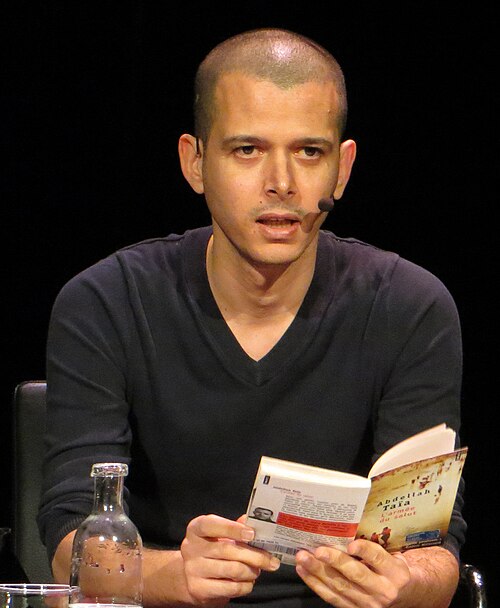
Abdellah Taïa
Novelist & Filmmaker • Morocco