Financial Breakdown
Asset Distribution
Assets vs Liabilities
Assets
Liabilities
Disclaimer: These financial estimates are based on publicly available information and should be considered approximate. Last updated: 12/29/2025
Biography
Introduction: A Polarizing Figure in Central African Politics
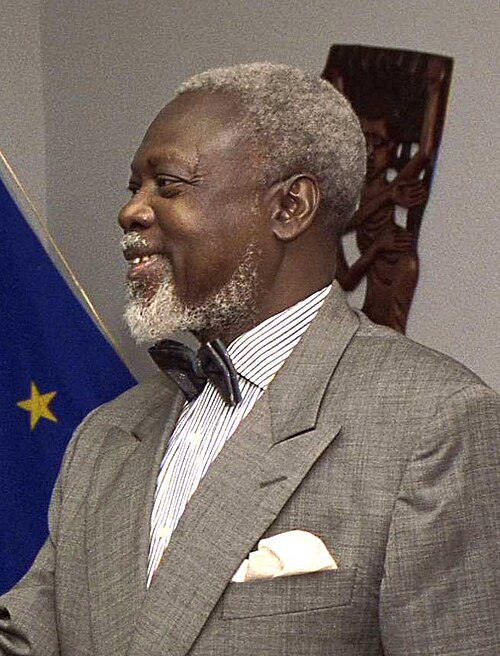
Ange-Félix Patassé† (1937-2011) stands as one of the most significant and controversial figures in the modern political history of the Central African Republic. Serving as the nation's President from 1993 to 2003, his tenure marked a pivotal, tumultuous decade following the reintroduction of multiparty democracy. Patassé's rise to the highest office in Politics & Government was historic, as he became the first president to be democratically elected after the long and often brutal rule of military leaders like Jean-Bédel Bokassa and André Kolingba. His key achievement was this very electoral victory, which symbolized a fragile hope for democratic consolidation. However, his presidency was ultimately defined by severe political instability, ethnic polarization, military mutinies, and his eventual ousting by a coup d'état, leaving behind a deeply contested legacy that continues to influence the nation's trajectory.
Early Life & Education: From Paoua to Paris
Ange-Félix Patassé was born on January 25, 1937, in Paoua, located in the northwestern region of what was then French Ubangi-Shari. His ethnic background as a member of the Sara-Kaba group from the north would later become a central factor in the country's political divisions. His early education took place locally before he pursued agronomic studies, a field that would shape the initial phase of his professional career.
Seeking higher education, Patassé traveled to France, where he studied at the prestigious École Supérieure d’Agronomie Tropicale (Graduate School of Tropical Agronomy). This French education placed him among a cadre of African elites who returned to their home countries with technical expertise and political ideas shaped by the colonial metropole. Upon returning to the Central African Republic, he applied his training, taking on significant roles in the nation's agricultural development. He served as the Director of the Office of Agricultural Development and later as the Director of the Office of Agricultural Research. This technical background provided a foundation for his entry into public service and, eventually, high-level Executive Leadership.
Career & Major Achievements: The Path to Power and Tumultuous Presidency
Ange-Félix Patassé's political career began under the regime of President Jean-Bédel Bokassa. He held several ministerial portfolios, including Minister of Development and Minister of Transport, Energy, and Mines. His close association with Bokassa, however, led to his exile after Bokassa's overthrow in 1979. Patassé returned to the political fray in the early 1990s as the country transitioned towards multiparty politics.
Founding the MLPC and Historic Election
In 1992, Patassé founded the Mouvement de Libération du Peuple Centrafricain (MLPC), a party with strong regional support in the north. In the landmark 1993 presidential election—the nation's first multiparty vote—Ange-Félix Patassé† emerged victorious, defeating the incumbent military ruler General André Kolingba and former president David Dacko. This victory, with 52.45% of the vote in the second round, was a monumental achievement, ending decades of military rule and raising hopes for democratic progress.
A Presidency Marred by Crisis
Patassé's time in office, from 1993 to 2003, was plagued by incessant crises. His government faced:
- Military Mutinies (1996-1997): Three major army mutinies in 1996 and 1997, primarily over unpaid salaries, devastated the capital Bangui. These events required military intervention from France and the United Nations to broker ceasefires.
- Ethnic and Regional Polarization: Patassé's administration was perceived as favoring his northern ethnic base, exacerbating long-standing tensions with southern and riverine groups, deepening societal fractures.
- Political Violence and Coups: He survived a coup attempt in 2001 led by former President André Kolingba. In response, Patassé increasingly relied on foreign security forces, notably Libyan troops and Congolese rebel militias loyal to Jean-Pierre Bemba, further alienating the Central African military and populace.
- Economic Decline: The chronic instability crippled the economy, leading to a collapse in public services and infrastructure, and isolating the country internationally.
Ouster and Exile
While attending a conference abroad in March 2003, Ange-Félix Patassé† was overthrown in a coup led by General François Bozizé, his former army chief of staff whom he had dismissed. This ended his decade in power. Patassé went into exile in Togo and later Benin. He was tried in absentia by the Central African judiciary on charges including embezzlement and was convicted, though these proceedings were widely viewed as politically motivated. He returned to the CAR in 2009 to contest the 2010 presidential election but finished fourth.
Personal Life, Legacy, and Lasting Impact
Outside of politics, Ange-Félix Patassé was known to be a devout Protestant, which distinguished him in a political landscape with many Catholic leaders. His personal life, including his marriages, remained largely private amidst the public turmoil of his presidency.
The legacy of Ange-Félix Patassé† is profoundly complex and divisive. To his supporters, particularly in the northwest, he remains a symbol of democratic breakthrough and a leader who challenged the political dominance of southern elites. His election in 1993 remains a pivotal moment in the nation's democratic experiment.
To his critics, however, his presidency was a catastrophic failure of Executive Leadership that institutionalized governance based on ethnic patronage, directly contributed to the weakening of the state, and set the stage for the cycles of rebellion and violent conflict that have plagued the Central African Republic since his overthrow. His use of foreign militias is often cited as a precedent that eroded national sovereignty and military cohesion. Patassé passed away on April 5, 2011, in Douala, Cameroon, but the political and ethnic cleavages that defined his rule continue to resonate deeply in the nation's unresolved crises.
Net Worth, Business Ventures, and Financial Controversies
Quantifying the precise net worth of Ange-Félix Patassé† is challenging due to a lack of transparent financial records and the extreme poverty of the country he led. However, his financial affairs were a constant source of controversy. During and after his presidency, he faced numerous, persistent allegations of large-scale embezzlement and misappropriation of state funds. The Central African government under his successor, François Bozizé, convicted him in absentia in 2006 for fraud and embezzlement involving millions of dollars, although these trials were politically charged.
Unlike some leaders who had clear business empires, Patassé's wealth was largely tied to his control of state resources. Reports from international bodies like the IMF and World Bank often cited widespread corruption during his era. There is no documented evidence of significant, legitimate private business ventures that generated wealth independent of his political office. His financial legacy is thus inextricably linked to the accusations of state plunder that contributed to the economic collapse of the Central African Republic during his troubled decade in power.
For further reading on the political context of his rule, credible sources include the Encyclopædia Britannica and historical analyses from institutions like the International Crisis Group.
Net Worth Analysis
Ange-Félix Patassé died in 2011, and as a former president of the Central African Republic, a country with extreme poverty, there are no credible reports of significant personal wealth or a known estate.
Quick Stats
Related People
Aaron Motsoaledi
LP; Minister of Home Affairs
Abane Ramdane†
FLN Leader & Strategist
Abdalla Hamdok
Ex-Prime Minister
Abdallah Kigoda
Ex-Minister of Natural Resources