Financial Breakdown
Asset Distribution
Assets vs Liabilities
Assets
Disclaimer: These financial estimates are based on publicly available information and should be considered approximate. Last updated: 12/29/2025
Biography
Introduction: The Architect of Egyptian Peace
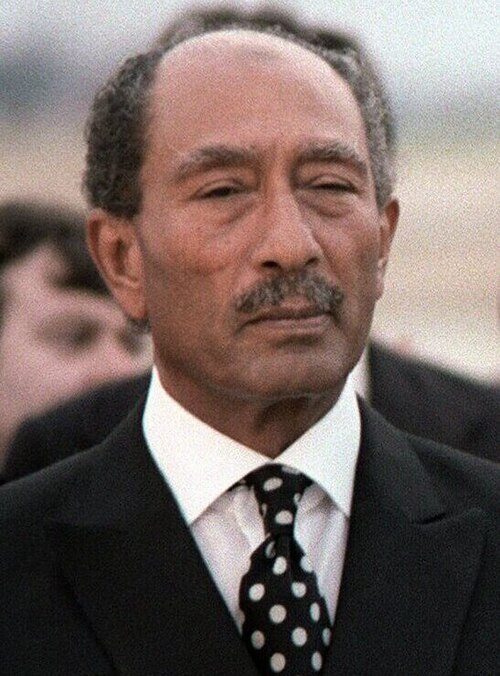
Anwar Sadat† stands as one of the most transformative and controversial figures in modern Middle Eastern history. Serving as the third President of Egypt from 1970 until his assassination in 1981, Sadat engineered a dramatic shift in the geopolitical landscape. He is best known for his daring and visionary pursuit of peace with Israel, a journey that began with the 1973 October War and culminated in the historic 1979 Camp David Accords. For this monumental achievement, Anwar Sadat† was jointly awarded the Nobel Peace Prize in 1978 with Israeli Prime Minister Menachem Begin. His presidency, marked by both the Infitah (economic opening) policy and a decisive move away from Soviet influence towards the United States, redefined Egypt's role in global Politics & Government. This biography explores the life, career, and enduring legacy of a leader whose actions forever changed the Peace Era in his region.
Early Life & Education: Forging a Nationalist Spirit
Muhammad Anwar el-Sadat was born on December 25, 1918, in Mit Abu El-Kom, a small village in the Nile Delta, Monufia Governorate, Egypt. He was one of 13 children in a modest Egyptian family, a background that kept him connected to the rural roots of his nation. His early education was religious, as he attended a Quranic school, before moving to Cairo for secular secondary education. The political climate of his youth—Egypt being under British occupation—profoundly shaped Sadat's nationalist fervor. He deeply admired Indian independence leader Mahatma Gandhi and Egyptian nationalist figures who resisted colonial rule.
In 1936, Sadat's life took a decisive turn when he gained admission to the Royal Military Academy in Cairo. This opportunity, expanded by the 1936 Anglo-Egyptian Treaty, allowed young men from non-aristocratic backgrounds to become officers. It was here, in 1938, that he first met Gamal Abdel Nasser, a fellow cadet who would become a lifelong associate and predecessor. Graduating as a second lieutenant, Sadat was posted to a remote outpost where he, Nasser, and other disgruntled young officers formed a secret revolutionary cell dedicated to freeing Egypt from British control and the corrupt monarchy. During World War II, Sadat's anti-British activities led to his imprisonment twice by the British authorities, experiences that hardened his resolve and political identity.
Career & Major Achievements: From Revolution to Peace
Anwar Sadat's† political career is a narrative of unexpected pivots and historic bravery. He was a key, though not central, figure in the Free Officers Revolution of July 23, 1952, which overthrew King Farouk I. Under President Nasser, Sadat held various high-level positions, including serving as Speaker of the National Assembly and Vice President. Often perceived as a loyalist without a strong independent base, his succession to the presidency upon Nasser's death in September 1970 was met with skepticism both domestically and internationally.
The October War and the Path to Diplomacy
Sadat quickly defied expectations. Seeking to break the diplomatic stalemate following the 1967 Six-Day War, he planned a bold military maneuver. On October 6, 1973, Egyptian forces launched a surprise attack across the Suez Canal, piercing the seemingly impregnable Israeli Bar-Lev Line. While the war's later stages saw Israeli counter-advances, the initial Egyptian success restored Arab military pride and, crucially, made Anwar Sadat† a hero at home. More importantly, it created the conditions for serious negotiation. In a move that stunned the world, Sadat traveled to Jerusalem in November 1977, addressing the Israeli Knesset and declaring, "We welcome you among us with full security and safety." This unprecedented gesture began a direct dialogue.
The Camp David Accords and Nobel Peace Prize
The pinnacle of Sadat's diplomatic efforts was reached at the U.S. presidential retreat of Camp David in September 1978. After 13 days of tense negotiations mediated by U.S. President Jimmy Carter, Anwar Sadat† and Menachem Begin agreed on a framework for peace. The resulting Egypt–Israel Peace Treaty, signed on the White House lawn on March 26, 1979, had monumental consequences:
- Mutual recognition between Egypt and Israel.
- The complete withdrawal of Israeli forces from the Sinai Peninsula, which was finalized by 1982.
- The establishment of diplomatic and economic ties.
Personal Life, Legacy, and Assassination
Anwar Sadat was known for his distinctive personal style—impeccably dressed, often with a pipe in hand—and his deep religiosity. He was married twice; his second marriage was to Jehan Raouf (later Jehan Sadat) in 1949, who became a prominent public figure and advocate for women's rights and social reform in her own right. Together they had three daughters and a son. Jehan Sadat was instrumental in pushing through important family law reforms, known as "Jehan's Laws," in 1979.
The legacy of Anwar Sadat† is complex and dual-faceted. Internationally, he is celebrated as a courageous peacemaker who took immense personal and political risks to end decades of conflict. His actions repositioned Egypt as a major ally of the West and secured the return of the Sinai. However, domestically and across the Arab world, his peace with Israel was condemned as a betrayal of the Palestinian cause and Arab solidarity. Egypt was suspended from the Arab League (until 1989), and Sadat faced growing internal dissent due to economic issues and his crackdown on Islamist and secular opposition. This culminated in his assassination on October 6, 1981, during a military parade commemorating the October War. He was killed by members of the Egyptian Islamic Jihad, who opposed the peace treaty and his secular governance. Sadat was succeeded by his Vice President, Hosni Mubarak. Today, his legacy is carefully managed in Egypt, officially honored as a "Hero of War and Peace," while the full complexity of his reign remains a subject of intense historical debate.
Net Worth & Financial Context
In the context of Politics & Government, discussing the personal net worth of historical figures like Anwar Sadat† is challenging due to the lack of transparent financial disclosures common in that era. Unlike modern leaders with documented business ventures, Sadat's wealth was intrinsically tied to his position as a state leader. He lived a life commensurate with the head of state, residing in presidential palaces and utilizing state resources. His economic Infitah policies encouraged private capital and benefited a new class of entrepreneurs, but there is no credible evidence of Sadat engaging in personal business ventures for private wealth accumulation. Any assessment of his finances remains speculative. His primary "wealth," as perceived historically, was the political capital he spent on his peace initiative and the lasting, albeit divisive, impact he had on the nation of Egypt. His estate, including his family home, is now part of a presidential museum, underscoring that his historical value far transcends monetary measure.
For further reading on the life and times of Anwar Sadat, consider visiting the official Nobel Prize biography or the Encyclopædia Britannica entry.
Frequently Asked Questions
What is Anwar Sadat†'s estimated net worth?
Net worth details for Anwar Sadat† are currently being updated.
What is Anwar Sadat†'s role and nationality?
Anwar Sadat† is a President & Nobel Laureate from Egypt.
How did Anwar Sadat† make their money?
Anwar Sadat† built their fortune primarily through Anwar Sadat was assassinated in 1981; he was a military officer and statesman, not a business figure, and did not accumulate significant personal wealth..
How old is Anwar Sadat†?
Anwar Sadat† was born in 1918 (108 years old).
Which category is Anwar Sadat† listed under?
Anwar Sadat† is featured under the Politics & Government category on NetWorth Africa.
How is Anwar Sadat†'s net worth calculated?
NetWorth Africa estimates financial valuations using publicly available stock equity holdings, company ownership records, real estate assets, and verified market data.
Net Worth Analysis
Anwar Sadat was assassinated in 1981; he was a military officer and statesman, not a business figure, and did not accumulate significant personal wealth.
Quick Stats
Related People

Aaron Motsoaledi
LP; Minister of Home Affairs • South Africa

Abane Ramdane†
FLN Leader & Strategist • Algeria

Abdalla Hamdok
Ex-Prime Minister • Sudan

Abdallah Kigoda
Ex-Minister of Natural Resources • Tanzania