Biography
Introduction: A Trailblazer for Mali
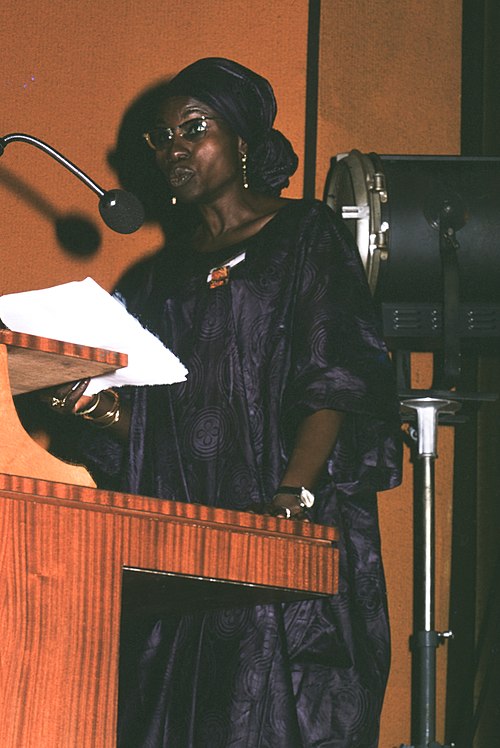
Aoua Kéita stands as a monumental figure in the history of Mali and the broader struggle for African emancipation and gender equality. Born in 1912, she carved a path that was extraordinary for her time, becoming a pivotal force in Politics & Government as a Politician & Women's Rights Pioneer. Her life's work was a powerful fusion of healthcare, political activism, and feminist advocacy. As a trained midwife, she touched lives directly, and as a political leader, she helped shape the destiny of a nation. Her most celebrated achievement was becoming the first woman from Mali to be elected to parliament in 1959, a landmark victory that broke significant barriers. The story of Aoua Kéita† is not just a political chronicle; it is a testament to the relentless pursuit of justice, equality, and national sovereignty.
Early Life & Education: Forging a Path Against the Grain
Aoua Kéita was born in 1912 in Bamako, then part of French Sudan within French West Africa. Her father, a former soldier, and her mother, a traditional healer, provided a home environment that valued both modern and traditional knowledge. Defying prevailing social norms that often limited girls' education, her father insisted she attend school—a decision that would alter the course of her life and Malian history. In 1923, she was one of the first girls to enroll at the newly opened Foyer de Métisses school in Bamako, an institution for mixed-race children, though she herself was not.
Her academic prowess earned her a coveted spot at the École de Médecine de Dakar in Senegal in 1928. Here, she trained as a midwife, a profession that placed her at the heart of community life and exposed her to the stark realities and hardships faced by women, particularly in rural areas. Graduating in 1931, she began her career as a state midwife, a role that took her across French Sudan (now Mali). This work was her political awakening. Witnessing firsthand the injustices of the colonial system—from forced labor to discriminatory healthcare—and listening to the struggles of women, planted the seeds for her future activism. Her education was not merely academic; it was a profound education in the needs and power of her people.
Career & Major Achievements: From Midwife to Parliamentarian
The career of Aoua Kéita† is a masterclass in translating grassroots experience into political power. Her activism began in earnest after World War II. In 1946, she joined the Rassemblement Démocratique Africain (RDA), the leading anti-colonial political party in French West Africa. Using her profession as cover, she traveled widely, providing medical care while simultaneously organizing women, raising political consciousness, and recruiting members for the RDA. Her home often served as a secret meeting place for party leaders.
Political Mobilization and the Union of Women
Kéita understood that women were the backbone of the independence movement and that their liberation was intertwined with national liberation. She played an instrumental role in founding the Union des Femmes du Soudan in 1958, an organization dedicated to mobilizing women politically, fighting against forced marriage and female genital mutilation, and promoting education for girls. She organized rallies, literacy campaigns, and voter education drives, empowering thousands of women to engage in the political process. Her work ensured that women's voices were not an afterthought but a central component of the emerging nation.
A Historic Election and Legislative Work
The pinnacle of her political career came in the elections of 1959, following the establishment of the Sudanese Republic. Aoua Kéita ran for a seat in the territorial assembly and won decisively, becoming the first elected female parliamentarian in Malian history. In this role, she was a tireless advocate for social legislation, focusing on family law, women's welfare, and children's health. She continued her work after Mali achieved full independence in 1960, serving as a member of the Political Bureau of the US-RDA, the ruling party. Her influence was critical in shaping the new nation's approach to social issues, always centering the experiences of women she had served as a midwife.
Literary Contribution: "Femme d'Afrique"
In 1975, Kéita added author to her impressive list of accomplishments. She published her autobiography, "Femme d'Afrique: La vie d'Aoua Kéita racontée par elle-même" (Woman of Africa: The Life of Aoua Kéita Told by Herself). This book is an invaluable historical document, providing a first-hand account of the anti-colonial struggle, the inner workings of Malian politics, and the specific challenges faced by women activists. It remains a foundational text for understanding the era and her role within it.
Personal Life & Legacy: The Enduring Spirit
The personal life of Aoua Kéita† was marked by the same courage and defiance she showed in public. Her first marriage was dissolved under pressure from her husband's employer, the colonial administration, which disapproved of her political activities—a testament to the perceived threat she posed. This personal sacrifice only strengthened her resolve. While dedicated to the national cause, she maintained a deep connection to the cultural traditions of Mali, often blending them with her modern political outlook.
Her legacy is profound and multifaceted. Aoua Kéita is remembered as a founding mother of the Malian nation and a pioneering icon of Pan-African feminism. She demonstrated that women's rights were not a secondary concern but essential to building a just and independent society. Streets and institutions in Mali bear her name, honoring her contributions. Internationally, she is recognized as a key figure in 20th-century African history. Her legacy lives on in every Malian woman who participates in politics, pursues an education, or fights for her rights, standing on the shoulders of the midwife who delivered not only babies but also a new political reality for women.
Net Worth & Historical Context
It is important to contextualize the concept of net worth for a figure like Aoua Kéita. As a civil servant midwife and later a politician in a newly independent and socialist-leaning Mali, her life was not one of significant personal wealth or business ventures in the traditional sense. Her value and "wealth" were measured in social and political capital, in her immense contribution to nation-building. Her career was dedicated to public service, first in healthcare and then in government. Any financial resources she had were likely modest and tied to her salaries. The true estate of Aoua Kéita† is her enduring legacy: the political space she opened for women, the legislation she influenced, and the powerful example she set. Her autobiography, "Femme d'Afrique," stands as her most lasting personal contribution to the historical record, a priceless asset for future generations. Her life reminds us that impact and influence are the most significant measures of a leader's worth.
Sources & Further Reading: The primary source on Kéita's life is her autobiography, Femme d'Afrique (1975). Scholarly analyses can be found in works on Malian history, such as A History of Modern Mali by Andrew F. Clark, and in Pan-African feminist anthologies. Reputable online resources include Encyclopædia Britannica entries on Mali and articles from academic databases focusing on African studies and women's history.
Frequently Asked Questions
What is Aoua Kéita†'s estimated net worth?
Net worth details for Aoua Kéita† are currently being updated.
What is Aoua Kéita†'s role and nationality?
Aoua Kéita† is a Politician & Women's Rights Pioneer from Mali.
How did Aoua Kéita† make their money?
Aoua Kéita† built their fortune primarily through Aoua Kéita was a pioneering midwife, activist, and politician who died in 1980; she was not a business figure and her legacy is not financial..
How old is Aoua Kéita†?
Aoua Kéita† was born in 1912 (114 years old).
Which category is Aoua Kéita† listed under?
Aoua Kéita† is featured under the Politics & Government category on NetWorth Africa.
How is Aoua Kéita†'s net worth calculated?
NetWorth Africa estimates financial valuations using publicly available stock equity holdings, company ownership records, real estate assets, and verified market data.
Net Worth Analysis
Aoua Kéita was a pioneering midwife, activist, and politician who died in 1980; she was not a business figure and her legacy is not financial.
Quick Stats
Related People
Aaron Motsoaledi
LP; Minister of Home Affairs • South Africa
Abane Ramdane†
FLN Leader & Strategist • Algeria
Abdalla Hamdok
Ex-Prime Minister • Sudan
Abdallah Kigoda
Ex-Minister of Natural Resources • Tanzania