$5M
Estimated Net Worth
As of 2024 • medium confidence
Financial Breakdown
Asset Distribution
Assets vs Liabilities
Assets
Disclaimer: These financial estimates are based on publicly available information and should be considered approximate. Last updated: 12/30/2025
Biography
Introduction: The Steady Hand of Ugandan Governance
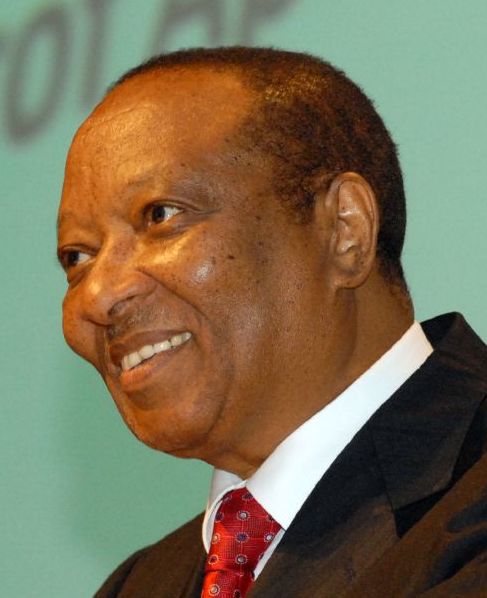
Professor Apolo Nsibambi† stands as a monumental figure in the modern political history of Uganda. Renowned for his intellectual rigor and administrative acumen, he served as the Prime Minister of Uganda from 1999 to 2011, making him one of the longest-serving heads of government in the nation's post-independence era. His tenure, under President Yoweri Museveni, was marked by a period of relative stability and economic recovery following decades of turmoil. Apolo Nsibambi's† key achievement was his steadfast stewardship of the cabinet and the implementation of key government policies, including the influential Poverty Eradication Action Plan (PEAP). As an academic-turned-statesman, he brought a unique, disciplined approach to the Executive Cabinet, earning respect across political divides and cementing his legacy as a stabilizing force in Ugandan Politics & Government.
Early Life & Education: The Formative Years of a Scholar
Apolo Nsibambi† was born in 1940 in the then-British protectorate of Uganda. Hailing from the Buganda region, his early life was shaped within a context of colonial rule and the burgeoning movement towards independence. He pursued his secondary education at the prestigious King's College Budo, a nursery for many of Uganda's future leaders. His academic prowess was evident early on, leading him to the University of East Africa at Makerere University, where he earned a Bachelor of Arts in Economics.
Nsibambi's quest for knowledge took him overseas. He obtained a Master of Arts in Political Science from the University of Chicago in the United States in 1967, followed by a Doctor of Philosophy (PhD) in Political Science from the same institution in 1970. His doctoral thesis focused on "The Role of Civil Servants in Rural Development," a theme that would profoundly influence his later career in public service. Returning to Uganda, he immersed himself in academia at his alma mater, Makerere University, rising through the ranks to become a respected professor and, later, Dean of the Faculty of Social Sciences. This period solidified his reputation as a thoughtful analyst of governance and development, laying a robust intellectual foundation for his future political role.
Career & Major Achievements: From Academia to the Premiership
The career of Apolo Nsibambi† seamlessly bridged the worlds of academia and high-level governance. Before his appointment as Prime Minister, he held several significant public offices where he honed his administrative skills.
Ministerial Roles and Policy Formulation
In the 1990s, Apolo Nsibambi† joined the Executive Cabinet of President Museveni. He first served as Minister of Public Service (1994-1996), where he initiated reforms aimed at professionalizing Uganda's civil service. His most impactful ministerial role was as Minister of Education and Sports (1996-1998). During this tenure, he championed the landmark Universal Primary Education (UPE) policy launched in 1997. This policy dramatically increased primary school enrollment across Uganda, removing school fees for up to four children per family and opening the doors of education to millions, especially girls.
Tenure as Prime Minister of Uganda (1999-2011)
Appointed Prime Minister on April 5, 1999, Apolo Nsibambi† assumed the role of head of government. His 12-year tenure was characterized by:
- Cabinet Coordination: He skillfully chaired the cabinet, ensuring policy coherence and driving the government's legislative agenda in parliament.
- Poverty Eradication: He was the chief implementer of the government's Poverty Eradication Action Plan (PEAP), which guided national development and attracted donor support, contributing to a significant reduction in poverty rates during the 2000s.
- Stability and Continuity: His leadership provided administrative continuity and stability, which was crucial for economic growth and investor confidence.
- Decentralization: He oversaw the further implementation of Uganda's decentralization framework, devolving powers and resources to local governments.
Despite operating within a broad executive framework led by the President, Apolo Nsibambi† was widely regarded as an efficient, incorruptible, and diligent manager of government business. His academic background informed his evidence-based approach to policy, making him a respected figure both domestically and internationally.
Personal Life, Philanthropy & Lasting Legacy
Beyond the corridors of power, Apolo Nsibambi† was a family man and a devoted academic. He was married to Esther Nsibambi, a fellow educator and counselor. His personal interests remained rooted in intellectual pursuits; even while serving as Prime Minister, he maintained a connection to Makerere University, often engaging in scholarly discussions. He was known for his humility, integrity, and soft-spoken yet firm demeanor—a stark contrast to the often-boisterous nature of politics.
His philanthropic efforts were closely tied to education and community development. He supported various educational initiatives and was a patron of efforts to promote literacy and good governance. The legacy of Apolo Nsibambi† is multifaceted. He is remembered as:
- The Implementer: A pragmatic leader who translated national policies into actionable programs.
- The Educator-Statesman: A rare blend of deep scholarly insight and practical political skill, demonstrating that intellectuals can effectively lead in government.
- A Symbol of Stability: His long tenure provided a sense of predictability and calm in Uganda's executive branch during a critical period of post-conflict rebuilding.
Professor Apolo Nsibambi† passed away on May 28, 2019. His death was met with an outpouring of tributes from all sectors of Ugandan society, a testament to the widespread respect he commanded. His life journey from a university lecturer to the nation's head of government remains an inspiring chapter in Ugandan Politics & Government.
Net Worth & Business Ventures: The Profile of a Public Servant
Unlike many in high political office, Apolo Nsibambi† was not known for significant private business ventures or substantial personal wealth accumulation. His primary career was in public service and academia, sectors not typically associated with vast financial prosperity. His net worth was considered modest, reflective of a life dedicated to service rather than commerce. Any financial success he enjoyed was likely tied to his salaries as a professor, minister, and prime minister, along with prudent personal management.
This relative lack of conspicuous wealth reinforced his public image as a leader of integrity. In a region where politics and business interests are often closely intertwined, Apolo Nsibambi's† financial profile underscored his reputation as a committed public servant focused on national development rather than personal enrichment. His legacy is thus firmly rooted in his contributions to policy and governance, not in any commercial empire, solidifying his standing as a respected and selfless figure in Uganda's executive history.
Net Worth Analysis
Apolo Nsibambi was a long-serving public servant and academic, not a business figure; his wealth was likely derived from his salary, pensions, and possibly family assets, not placing him among Uganda's business elite.
Quick Stats
Related People

Aaron Motsoaledi
LP; Minister of Home Affairs

Abane Ramdane†
FLN Leader & Strategist

Abdalla Hamdok
Ex-Prime Minister

Abdallah Kigoda
Ex-Minister of Natural Resources