Biography
Introduction: The Soldier-President of Mali
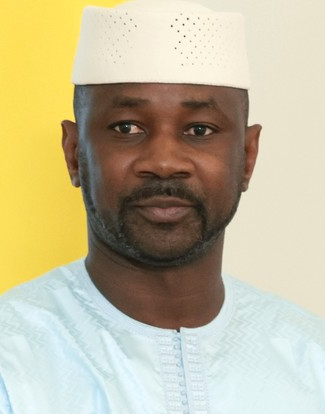
Colonel Assimi Goïta is a central figure in contemporary West African Politics & Government, serving as the transitional and subsequently elected President of Mali. His rise to the nation's highest office is inextricably linked to his background in Military Leadership, marking a significant period of military-led governance in Mali's history. Born in 1983, Goïta emerged from the ranks of the Malian armed forces to lead two coups d'état in less than a year—first in August 2020, which ousted President Ibrahim Boubacar Keïta, and again in May 2021, to solidify his own control. These actions positioned him as the de facto leader of the country's transitional government, a role later formalized by a constitutional court ruling. His tenure is defined by a decisive break from former colonial power France, a pivot towards strategic partnerships with Russia, and a continued, intense struggle against jihadist insurgencies that plague the Sahel region. Understanding Assimi Goïta is key to understanding the current trajectory of one of Africa's most geopolitically significant nations.
Early Life & Military Education
Assimi Goïta was born in 1983 in Mali, though specific details about his early childhood and family background remain relatively private, consistent with his military demeanor. His formative years set him on a path toward a military career, a common route for leadership in the region. He pursued his education within prestigious military institutions, laying the groundwork for his future command.
Goïta's professional military training began at the Joint Military School in Koulikoro, the primary training academy for officers in the Malian Armed Forces. His aptitude and discipline propelled him to further specialization. He received advanced training as a commando officer, focusing on tactics suited for irregular warfare—skills that would become critically relevant in the fight against Mali's myriad armed groups. Notably, Assimi Goïta also participated in international training programs, including courses with the United States military. He attended the Special Forces Officer Course at Fort Benning, Georgia, and other tactical training sessions under the U.S. Africa Command (AFRICOM) security cooperation programs. This blend of domestic and international military education equipped him with a broad perspective on counter-insurgency and special operations, shaping the officer who would later command key units in Mali's most volatile regions.
Career, Coups, and Ascension to the Presidency
Assimi Goïta's military career was largely spent in operational roles, particularly in the restive northern and central regions of Mali. He served as a commander in the Malian special forces, an elite unit at the forefront of the nation's protracted conflict with jihadist and separatist factions. His experience on the front lines, witnessing the instability of the state and the challenges faced by the military, reportedly fueled his disillusionment with the civilian political class in Bamako.
The August 2020 Coup
Following mass protests against the government of President Ibrahim Boubacar Keïta over economic woes, perceived corruption, and a worsening security situation, Colonel Goïta emerged as the leader of the National Committee for the Salvation of the People (CNSP). On August 18, 2020, the CNSP seized power, detaining Keïta and other senior officials. Goïta declared himself chairman of the CNSP, becoming the head of the transitional government that promised to return the country to civilian rule after an 18-month transition. This event marked his explosive entry into the sphere of Politics & Government.
The May 2021 Coup and Consolidation of Power
The transition proved turbulent. In May 2021, a dispute over a government reshuffle led to the arrest of the transitional President and Prime Minister by soldiers loyal to Goïta. On May 24, 2021, he announced the removal of the civilian leadership for allegedly failing in their duties. The Constitutional Court subsequently declared Assimi Goïta the new transitional President. This move consolidated his authority and extended the military's hold on the transition timeline.
Presidency and Pivotal Policy Shifts
As transitional President, Goïta oversaw a fundamental shift in Mali's foreign policy and security strategy. His government:
- Expelled the French military force, Barkhane, and withdrew from all defense agreements with France.
- Forged a close security partnership with the Russian private military company Wagner Group, drawing international scrutiny.
- Postponed promised elections, citing security concerns, and adopted a new constitution in 2023 that strengthened presidential powers.
- Formally ended the 2015 peace agreement with northern Tuareg separatist groups, reigniting conflict in the north in 2023.
In 2024, following a presidential election, Assimi Goïta was declared the winner and officially sworn in as the elected President of Mali, cementing his transformation from a military coup leader to a constitutionally recognized head of state, albeit amid ongoing political and security challenges.
Personal Life, Leadership Style, and Legacy
Assimi Goïta maintains a notably private personal life, characteristic of his military background. He is known to be married and has children, but he rarely features his family in public discourse. His public persona is that of a stern, disciplined, and often taciturn leader, frequently appearing in military fatigues rather than civilian suits. This projects an image of a hands-on commander still engaged in the nation's security battle. Unlike some leaders, he is not associated with public philanthropy or a lavish lifestyle; his focus is squarely presented as one of national sovereignty and military resolution to Mali's crises.
The legacy of Assimi Goïta is actively being written and is deeply contentious. Supporters view him as a patriot who took necessary, drastic action to rescue a failing state from corrupt politicians and reclaim national sovereignty from foreign powers. They credit his government with standing up to former colonial influence and taking a harder line against insurgents. Critics, however, see a pattern of authoritarian Military Leadership that has undermined democratic norms, intensified conflict with rebel groups, and aligned the country with pariah states. His lasting impact will likely be judged by whether his policies ultimately bring greater stability and security to Mali or lead to deeper fragmentation and international isolation.
Net Worth and Financial Considerations
As with many aspects of his life, precise details regarding Assimi Goïta's personal net worth and business interests are not publicly transparent. His financial standing is not a subject of detailed public disclosure, which is common for military figures who ascend to power in such circumstances. His income prior to becoming president was derived from his salary as a colonel in the Malian armed forces. Since assuming the role of transitional and now elected President of Mali, his official income is determined by state protocols for the head of state. There have been no widely verified reports or credible documentation of significant private business ventures or commercial holdings owned by Goïta. His financial profile, as publicly understood, remains tied to his official positions within the military and government of Mali. Any analysis of wealth in this context is speculative, as the primary focus of his administration and public narrative revolves around security, sovereignty, and political control rather than personal financial achievement.
Frequently Asked Questions
What is Assimi Goïta's estimated net worth?
Assimi Goïta has an estimated net worth of $5.0 Million.
What is Assimi Goïta's role and nationality?
Assimi Goïta is a President of Mali from Mali.
How did Assimi Goïta make their money?
Assimi Goïta built their fortune primarily through Assimi Goïta is a military officer and head of state; his wealth is not publicly disclosed and is not comparable to business tycoons on the Forbes list. The estimate is based on typical assets for a senior military official in Mali..
How old is Assimi Goïta?
Assimi Goïta was born in 1983 (43 years old).
Which category is Assimi Goïta listed under?
Assimi Goïta is featured under the Politics & Government category on NetWorth Africa.
How is Assimi Goïta's net worth calculated?
NetWorth Africa estimates financial valuations using publicly available stock equity holdings, company ownership records, real estate assets, and verified market data.
Net Worth Analysis
Assimi Goïta is a military officer and head of state; his wealth is not publicly disclosed and is not comparable to business tycoons on the Forbes list. The estimate is based on typical assets for a senior military official in Mali.
Quick Stats
Related People

Aaron Motsoaledi
LP; Minister of Home Affairs • South Africa

Abane Ramdane†
FLN Leader & Strategist • Algeria

Abdalla Hamdok
Ex-Prime Minister • Sudan

Abdallah Kigoda
Ex-Minister of Natural Resources • Tanzania