Financial Breakdown
Asset Distribution
Assets vs Liabilities
Assets
Liabilities
Disclaimer: These financial estimates are based on publicly available information and should be considered approximate. Last updated: 12/31/2025
Biography
Introduction: A Voice Against Apartheid
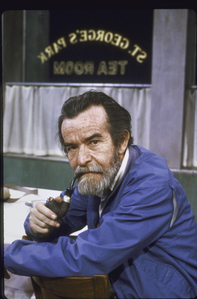
Athol Fugard is universally acclaimed as one of the most important playwrights of the 20th century and a towering figure in Arts & Culture. Born in 1932 in South Africa, his life and work became inextricably linked with the nation's brutal apartheid system. More than just a playwright, Fugard emerged as a vital Anti-Apartheid Voice, using the stage as a powerful platform for moral interrogation, social justice, and profound humanism. His key achievement lies in his ability to translate the specific, harrowing realities of apartheid into universal stories of resilience, conflict, and dignity, earning him international recognition including a Tony Award for Lifetime Achievement and the prestigious EC (Extraordinary Companion) of the Order of the Companions of O. R. Tambo. The works of Athol Fugard remain essential reading and viewing for understanding the human cost of oppression and the redemptive power of art.
Early Life & Education: Formative Years in a Divided Land
Harold Athol Lannigan Fugard was born on June 11, 1932, in Middelburg, Eastern Cape, South Africa. His early years were marked by economic struggle and cultural mixture. His mother, an Afrikaner, ran a boarding house and later a small café, while his father, of Irish-English descent, was a disabled former jazz pianist. This biracial heritage, though he was classified as white, gave him an early, nuanced perspective on South Africa's racial divides. The family moved to Port Elizabeth, a city that would become the setting for many of his most famous plays and which he considers his spiritual home.
Fugard's education began at local schools in Port Elizabeth. A pivotal moment came when he won a scholarship to study at the University of Cape Town, where he enrolled in a philosophy degree in 1950. However, the call of adventure and a burgeoning interest in the wider world led him to drop out just before his final exams. He hitchhiked across Africa, worked as a seaman on a steamer in the Far East, and, crucially, began to write. These experiences broadened his worldview but also sharpened his focus on the injustices at home. Returning to South Africa in 1956, he married actress Sheila Meiring, whose influence was profound. She introduced him to theatre, and together they began writing and staging plays, laying the groundwork for a career that would define an era of South African Arts & Culture.
Career & Major Achievements: The Stage as a Battleground
Athol Fugard's career is a testament to artistic courage. He did not write from a safe distance; he was an active participant in the struggle, often at great personal risk. His early plays, like The Blood Knot (1961), which explored the relationship between two mixed-race brothers, immediately drew the attention of the apartheid censors. This play established his central themes: the corrosive nature of institutionalized racism and the complex personal bonds it strains or severs.
The Serpent Players and "Statements" Plays
In the 1960s, Fugard formed a groundbreaking collaboration with a group of black actors in Port Elizabeth known as the Serpent Players. Defying segregation laws, they rehearsed in secret. From this collective, in partnership with actors John Kani and Winston Ntshona, emerged the so-called "Statements" plays: Sizwe Banzi Is Dead (1972) and The Island (1973). Created through improvisation, these works are masterpieces of protest theatre. The Island, set in Robben Island prison, was a daring act of solidarity with Nelson Mandela and other political prisoners. These plays catapulted Athol Fugard and his collaborators to global stages, forcing international audiences to confront apartheid's brutality.
International Acclaim and Major Works
Throughout the 1970s and 80s, Fugard's reputation soared. Plays like "Master Harold"...and the Boys (1982), a deeply personal drama inspired by his childhood, and The Road to Mecca (1984), a meditation on artistic freedom, showcased his evolving style—moving from overt political protest to more intimate, character-driven explorations of the same themes. His works were produced on Broadway and in London's West End, making him the most prominent South African writer in the world. Key achievements include:
- Tony Awards: "Master Harold"...and the Boys won the Drama Desk Award for Outstanding Play; Fugard received a Special Tony Award for Lifetime Achievement in 2011.
- International Honors: He was awarded the EC (Extraordinary Companion) of the Order of the Companions of O. R. Tambo by South Africa for his contribution to the struggle against apartheid.
- Literary Output: Author of over 30 major plays, several novels, and memoirs, ensuring his voice remains a permanent part of world literature.
- Directorial Work: He has directed many of his own plays and films, including the acclaimed adaptation of Boesman and Lena (1973).
Even after apartheid's end, Fugard continued to write, examining the new complexities of post-apartheid South Africa in plays like Valley Song (1995) and The Train Driver (2010), proving his role as a Playwright is that of a perpetual questioner of his society.
Personal Life & Legacy: The Man Behind the Plays
Athol Fugard's personal life has been deeply intertwined with his art. His first marriage to Sheila Meiring was a foundational creative partnership that lasted over four decades. Following their divorce, he married the novelist Paula Fourie in 2016. He divides his time between South Africa and the United States, where he has taught playwriting. Despite his global fame, he maintains a reputation for modesty and a deep connection to the ordinary people of South Africa, whom he has immortalized on stage.
Fugard's legacy is monumental. He is credited with almost single-handedly putting South African theatre on the world map. More importantly, he demonstrated that art could be a potent weapon against injustice, not through propaganda, but through unflinching empathy and psychological truth. His plays are performed worldwide and are standard texts in drama and literature courses. The Fugard Theatre in Cape Town (now closed) stood as a physical testament to his impact. His legacy is that of a witness and a chronicler—a man who held up a mirror to his country's soul during its darkest hours and helped guide it toward a vision of shared humanity. His influence on generations of playwrights, both in South Africa and globally, is immeasurable.
Net Worth & Business Ventures
While Athol Fugard is not primarily known as a business figure, his successful career as a Playwright, director, and author has undoubtedly provided financial stability. His income streams have traditionally derived from:
- Play Royalties: As one of the most produced playwrights globally, royalties from productions of his extensive catalog form a significant part of his earnings.
- Publishing Rights: Sales of his published plays, novels (like Tshetsi), and memoirs contribute to his literary income.
- Film Adaptations: Several of his plays have been adapted into films, likely involving option agreements and residuals.
- Academic Positions: His teaching roles at universities, such as the University of California, Riverside, have provided additional income.
Any estimation of Athol Fugard's net worth is speculative, as he is a private individual. However, it is safe to characterize it as the result of a lifetime of acclaimed artistic achievement rather than commercial enterprise. His "wealth" is more accurately measured in his cultural capital and the enduring power of his work, which continues to generate artistic and social dividends long after its creation. His legacy in Arts & Culture is truly priceless.
Sources for this biography include reputable literary databases, official awards archives, and biographical accounts such as the Encyclopædia Britannica, the Tony Awards official records, and Fugard's own memoirs.
Frequently Asked Questions
What is Athol Fugard's estimated net worth?
Athol Fugard has an estimated net worth of $1.0 Million.
What is Athol Fugard's role and nationality?
Athol Fugard is a EC; Playwright; Playwright & Anti-Apartheid Voice from South Africa.
How did Athol Fugard make their money?
Athol Fugard built their fortune primarily through Athol Fugard is a celebrated playwright and activist, not a business magnate; his wealth derives from his literary career and is not on any billionaire list..
How old is Athol Fugard?
Athol Fugard was born in 1932 (94 years old).
Which category is Athol Fugard listed under?
Athol Fugard is featured under the Arts & Culture category on NetWorth Africa.
How is Athol Fugard's net worth calculated?
NetWorth Africa estimates financial valuations using publicly available stock equity holdings, company ownership records, real estate assets, and verified market data.
Net Worth Analysis
Athol Fugard is a celebrated playwright and activist, not a business magnate; his wealth derives from his literary career and is not on any billionaire list.
Quick Stats
Related People
Abasse Ndione
Novelist & Playwright • Senegal
Abdel Rahman al-Abnudi†
Poet (Egypt-Sudan) • Sudan
Abdelkrim Ghallab†
Novelist & Journalist • Morocco
Abdellah Taïa
Novelist & Filmmaker • Morocco