$1.5B
Estimated Net Worth
As of 2024 • medium confidence
Financial Breakdown
Asset Distribution
Assets vs Liabilities
Assets
Disclaimer: These financial estimates are based on publicly available information and should be considered approximate. Last updated: 12/29/2025
Biography
Introduction: A Defining Figure in Nigerian Politics
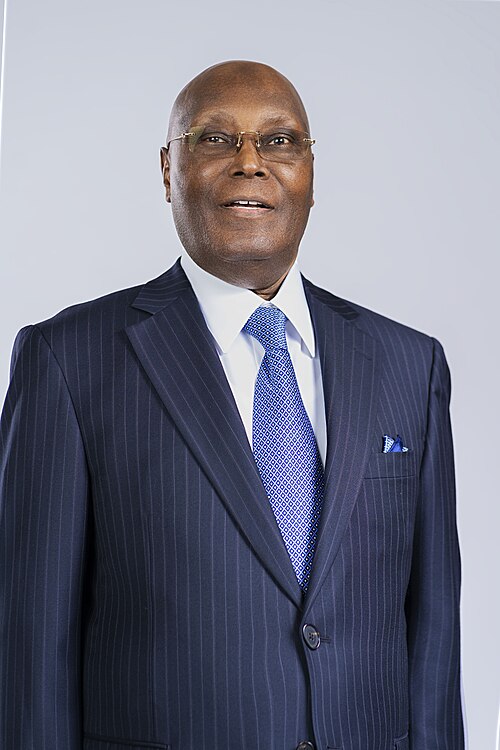
Atiku Abubakar, GCON, is a towering and influential figure in the landscape of Nigerian Politics & Government. Best known as the Ex-Vice President & Presidential Candidate, he served as the second-in-command to President Olusegun Obasanjo from 1999 to 2007, a pivotal period in Nigeria's return to democratic rule. His career, however, spans far beyond the vice-presidency. Atiku Abubakar is a formidable businessman, a dedicated philanthropist, and a persistent aspirant to the nation's highest office, having contested the presidency multiple times. His life story intertwines the narratives of public service, private enterprise, and the complex dynamics of power in Nigeria, making him one of the most recognized and debated political personalities of the Fourth Republic.
Early Life & Education: Foundations in Adamawa
Atiku Abubakar was born on November 25, 1946, in Jada, a town in the present-day Adamawa State, northeastern Nigeria. His early years were marked by tragedy with the death of his father, Garba Abubakar, a Fulani trader, when Atiku was still very young. Raised by his mother and stepfather, he developed a strong sense of independence and resilience from an early age. His educational journey began in Jada Primary School before he proceeded to Adamawa Provincial Secondary School in Yola.
A pivotal moment came in 1960, the year of Nigeria's independence, when he gained admission to the prestigious Nigeria Police College in Kaduna. However, he left after a brief period, choosing a different path. He then attended the School of Hygiene in Kano, graduating in 1966 as a Sanitary Inspector. Not content, his thirst for knowledge led him to pursue further studies at the Ahmadu Bello University (ABU) in Zaria, where he obtained a Diploma in Law in 1969 while working as a Tax Officer at the Regional Ministry of Finance. This unique blend of practical work experience and academic pursuit during his formative years laid the groundwork for his future in both public administration and business.
Career & Major Achievements: From Customs to the Corridors of Power
Rise in the Nigerian Customs Service
Atiku Abubakar's formal public service career began in 1969 when he joined the Nigerian Customs Service. He rose steadily through the ranks, serving in various commands including Lagos, Kano, and Ibadan. His dedication saw him climb to the position of Deputy Director, becoming the second-highest-ranking officer in the service at the time. During his tenure, he was known for his efficiency and reformist ideas. He voluntarily retired in April 1989 after 20 years of service, having amassed significant experience in national revenue systems and border governance—knowledge that would later inform his policy perspectives.
Business Ventures and Entry into Politics
Parallel to his customs career, Atiku Abubakar cultivated a diverse portfolio of business interests. His ventures, under the umbrella of the Intels Group (co-founded with an Italian partner), spanned logistics, agriculture, education, and media. This success established him as a major private sector player before his full plunge into politics. His political journey began in the late 1980s. He was a founding member of the People's Front of Nigeria, associated with Shehu Musa Yar'Adua, and later played key roles in the Social Democratic Party (SDP). In 1992, he was elected Governor of Gongola State (now Adamawa and Taraba states), but was unable to assume office due to the military intervention of General Sani Abacha.
Vice Presidency and Governance Reforms (1999-2007)
The return to democracy in 1999 marked the zenith of Atiku Abubakar's political career. He was selected as the running mate to presidential candidate Olusegun Obasanjo under the platform of the Peoples Democratic Party (PDP). Their ticket won, and Atiku was sworn in as Vice President on May 29, 1999. During his two-term tenure, he chaired the National Council on Privatisation (NCP), overseeing a significant economic reform program that privatized several key state-owned enterprises. He was also a vocal advocate for constitutional reforms and greater fiscal federalism. His tenure, however, was also marked by a famous and protracted political feud with President Obasanjo, which defined much of the administration's later years and led to his departure from the PDP in 2006.
Presidential Ambitions and Political Evolution
Since leaving office, Atiku Abubakar has remained at the forefront of Nigerian politics, primarily through his pursuit of the presidency. His campaigns have been a constant feature of the electoral cycle:
- 2007: Contested as the candidate of the Action Congress (AC), finishing third.
- 2011: Sought the PDP nomination but lost to President Goodluck Jonathan.
- 2015: Switched to the All Progressives Congress (APC) but lost the primary to Muhammadu Buhari.
- 2019: Secured the PDP nomination and was the main challenger to incumbent President Buhari, losing in the general election.
- 2023: Again the PDP flagbearer, he contested against Bola Tinubu of the APC and Peter Obi of the Labour Party, finishing second in a highly competitive race.
Personal Life, Philanthropy & Legacy
Atiku Abubakar is a polygamist and a father to many children, a aspect of his life that is often discussed within the context of his public persona. Beyond politics, he is known for his commitment to education and youth empowerment. His most significant philanthropic contribution is the American University of Nigeria (AUN) in Yola, Adamawa State. Founded in 2003 as Nigeria's first American-style university, AUN stands as a testament to his belief in education as a catalyst for development. The university emphasizes critical thinking, entrepreneurship, and peacebuilding, particularly in the conflict-affected Northeast region.
His legacy is multifaceted. Supporters view him as a pro-business reformer, a champion of restructuring and devolution of power, and a symbol of perseverance. Critics often point to controversies surrounding wealth and governance. Regardless of perspective, Atiku Abubakar has indelibly shaped the political and economic conversations in Nigeria for over three decades. His journey from a sanitary inspector to the vice presidency embodies a certain aspirational narrative, while his sustained political relevance highlights his strategic acumen.
Net Worth & Business Empire
Atiku Abubakar is consistently ranked as one of the wealthiest individuals in Nigerian politics. While exact figures are often disputed, his net worth is estimated to run into hundreds of millions of dollars, built over decades of successful entrepreneurship. His business interests are vast and diversified. The flagship, Intels Nigeria Limited, is a leading oil and gas logistics service company. Other ventures include:
- Prodeco, a property development company.
- Adama Beverages Limited, producers of Faro bottled water.
- ABT Pharmaceuticals.
- Numerous real estate holdings within Nigeria and abroad.
For further reading on his political career and policy positions, credible sources include his official website, profiles from the BBC, and archives from Nigerian newspapers like Premium Times and Vanguard.
Net Worth Analysis
Atiku Abubakar's wealth is estimated at around $1.5 billion from his extensive business interests in oil, agriculture, and media, though he is not listed on major international billionaire rankings.
Quick Stats
Related People

Aaron Motsoaledi
LP; Minister of Home Affairs

Abane Ramdane†
FLN Leader & Strategist

Abdalla Hamdok
Ex-Prime Minister

Abdallah Kigoda
Ex-Minister of Natural Resources