$10M
Estimated Net Worth
As of 2024 • low confidence
Financial Breakdown
Asset Distribution
Assets vs Liabilities
Assets
Disclaimer: These financial estimates are based on publicly available information and should be considered approximate. Last updated: 12/29/2025
Biography
Introduction: The Enduring Leader of the Archipelago
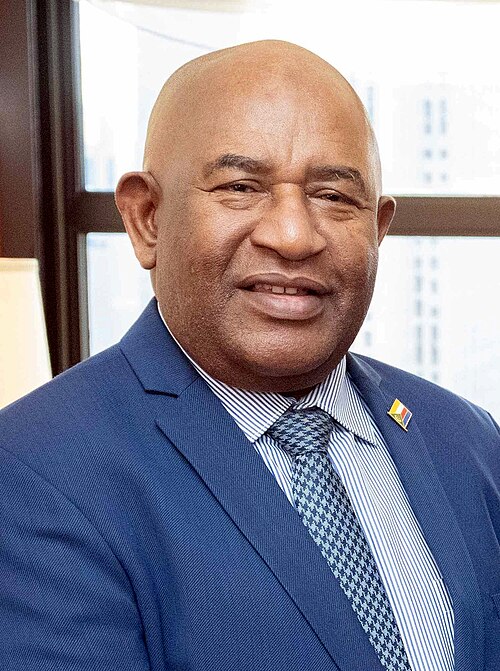
Colonel Azali Assoumani is a dominant and enduring figure in the modern Politics & Government of the Comoros. Born in 1959, his career has been intrinsically linked to the turbulent and complex political evolution of the island nation. He first seized power in a military coup in 1999 and has since served multiple terms as the President of Comoros, most recently securing a controversial fourth term in 2024. His tenure is marked by a central paradox: he is credited with bringing a degree of stability and constitutional order to a country plagued by coups and secessionist crises, yet his methods and prolonged hold on power have drawn significant criticism. A key achievement often attributed to Azali Assoumani is his pivotal role in establishing the 2001 constitution, which created the Union of the Comoros and instituted a rotating presidency among the three main islands—Grande Comore, Anjouan, and Mohéli—a system designed to manage endemic political fragmentation.
Early Life and Military Education
Azali Assoumani was born on January 1, 1959, in the town of Mitsoudjé, located on the island of Grande Comore. Details of his early childhood are sparse in the public record, but his formative path led him decisively towards a military career. This choice was not uncommon in a post-colonial context where the army was often seen as a avenue for advancement and national service.
He pursued his military education abroad, a typical route for officers from smaller nations. Azali Assoumani trained at the Royal Moroccan Military Academy in Meknes, an institution known for producing disciplined officers. Following this, he furthered his military expertise in France, attending the prestigious École d'application de l'infanterie in Montpellier. These experiences equipped him with formal military strategy and leadership skills, shaping the officer who would later intervene directly in the political affairs of Comoros. His rise through the ranks of the Comorian military was steady, and by the late 1990s, he had achieved the rank of Colonel and was serving as the Chief of Staff of the Comorian Army. This position placed him at the center of power during a period of profound crisis for the archipelago.
Career and Major Achievements: From Coup Leader to Elected President
The political career of Azali Assoumani is a complex tapestry of military intervention, constitutional engineering, and electoral politics.
The 1999 Coup and Initial Rule
In April 1999, amidst a severe political and secessionist crisis on the island of Anjouan, Colonel Azali Assoumani led a bloodless military coup, overthrowing the interim President Tadjidine Ben Said Massounde. Citing chaos and the imminent breakup of the nation as his justification, Assoumani suspended the constitution and dissolved all state institutions. His initial rule (1999-2002) was that of a military head of state, focused on negotiating an end to the Anjouan secession and laying the groundwork for a new political framework.
Architect of the 2001 Constitution and the "Grande Comore" Accord
This period yielded his most significant political achievement. Under international and domestic pressure, Assoumani oversaw a lengthy negotiation process that culminated in the Fomboni Accord of 2001. This agreement led to the adoption of a new constitution, ratified by a referendum in December 2001. The constitution established the Union of the Comoros as a decentralized federation, with significant autonomy for each island and, critically, a rotating presidency. After stepping down in 2002 to allow for elections, he later won the 2002 presidential election, becoming the first president under the new system representing Grande Comore. This transition from coup leader to constitutionally elected president marked a pivotal, if contested, moment of stabilization.
Subsequent Terms and Consolidation of Power
Azali Assoumani's relationship with the rotating system he helped create became complicated. After his first elected term (2002-2006), he respected the rotation. However, he returned to power by winning the 2016 election, which was轮到 Grande Comore's turn again. His third term saw a dramatic shift. In 2018, he pushed through a controversial constitutional referendum that abolished the rotating presidency, allowing him to run for two consecutive five-year terms and centralizing power. He won the subsequent 2019 election, which was boycotted by the opposition. His government has since been characterized by:
- A stronger alignment with Middle Eastern partners, particularly the United Arab Emirates and Saudi Arabia.
- Ambitious, often Chinese-funded, infrastructure projects.
- Increasing authoritarian tendencies, including crackdowns on dissent, protests, and media freedom.
- A more prominent role in African diplomacy, culminating in his chairmanship of the African Union in 2023-2024.
Personal Life, Legacy, and Lasting Impact
Outside the political arena, Azali Assoumani is known to be a private family man. He is married to First Lady Ambari Assoumani, and together they have children. His personal interests are rarely publicized, as his public image remains firmly that of a military-turned-political leader. His legacy is deeply polarizing and remains a work in progress.
On one hand, his supporters credit him with saving the Comoros from disintegration in 1999 and providing a constitutional framework that, for over a decade, managed the nation's fragile unity. They point to infrastructure development and increased international visibility during his AU chairmanship as positive achievements. On the other hand, critics argue that his recent actions have dismantled the very power-sharing system he created, replacing it with a personalist and authoritarian regime. They contend that economic gains are uneven and that political freedoms have sharply declined. Ultimately, the legacy of Azali Assoumani will be judged on whether the stability he enforced translates into sustainable development and democratic consolidation for the people of Comoros, or if it merely entrenches a cycle of centralized power.
Net Worth and Business Interests
As with many heads of state, the precise net worth of President Azali Assoumani is not publicly transparent and is a subject of speculation. Official salaries for the President of Comoros are modest relative to global standards, given that the Comoros is among the world's poorer nations. However, analysts note that political control in the Comoros has historically been linked to economic patronage and business opportunities. During his long tenure in high office, Assoumani and his inner circle are widely believed to have significant influence over state contracts and key sectors of the economy. Major infrastructure projects funded by foreign partners, particularly in transportation, energy, and public works, offer avenues for financial influence. While no specific business ventures are formally attributed to him personally, the confluence of political power and economic leverage in a small, developing state suggests that his financial standing is likely derived from his position and networks rather than from independent commercial enterprises. For accurate and current financial disclosures, one would need to consult official government publications or reports from international transparency organizations, which are often limited in the Comorian context.
Net Worth Analysis
As a long-serving president of a low-income nation, his wealth is not publicly documented on international rich lists and is estimated based on his political position and typical regional context.
Quick Stats
Related People
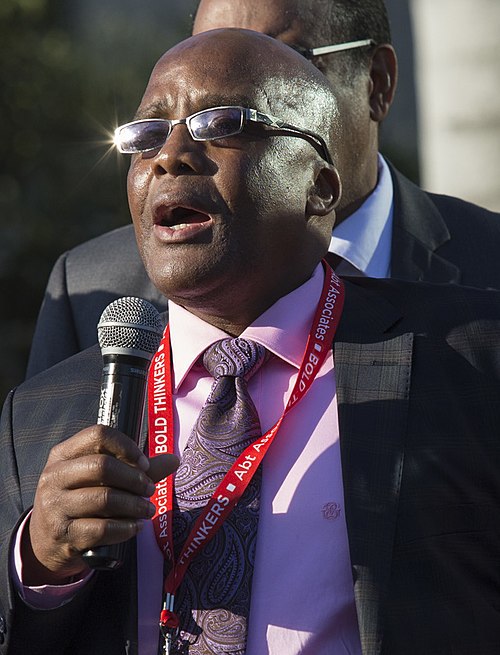
Aaron Motsoaledi
LP; Minister of Home Affairs
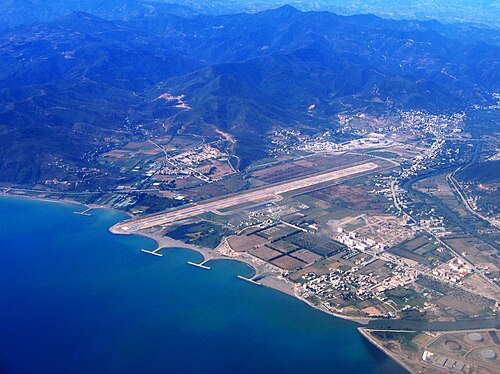
Abane Ramdane†
FLN Leader & Strategist
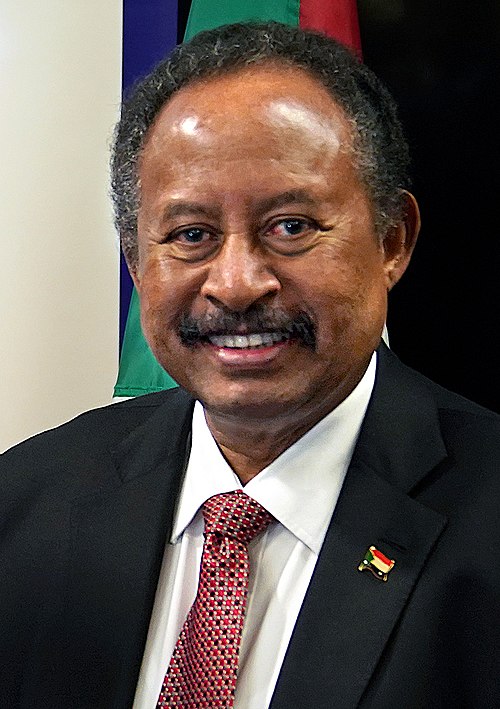
Abdalla Hamdok
Ex-Prime Minister
Abdallah Kigoda
Ex-Minister of Natural Resources