Biography
Introduction: The Voice of a Nation Unborn
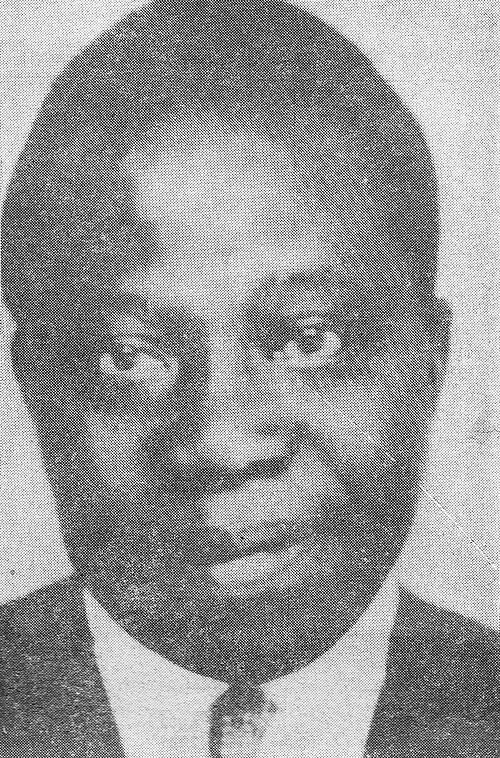
In the annals of African independence, the name Barthélémy Boganda† stands as a beacon of visionary leadership and unwavering dedication. Revered as the Founding Father of the Central African Republic, Boganda was more than a politician; he was a priest, a statesman, and the principal architect of his nation's journey to sovereignty. His life's work, tragically cut short, was dedicated to liberating the people of Oubangui-Chari from the yoke of French colonial rule and forging a new, unified national identity. Barthélémy Boganda's most notable achievement was his relentless political struggle, which directly led to the establishment of the Central African Republic, a nation whose very name he coined. His philosophy of "Zo kwe zo" ("Every human being is a person") remains the moral cornerstone of the country, cementing his legacy as the indispensable figure in its birth during the tumultuous Independence Era.
Early Life & Education: From Village to Seminary
Barthélémy Boganda was born on April 4, 1910, in Bobangui, a village in what was then the French colony of Oubangui-Chari, part of French Equatorial Africa. His early life was marked by the harsh realities of colonialism; his father was executed for resisting forced labor, and his mother died shortly after. Orphaned, he was taken under the wing of Catholic missionaries who recognized his keen intellect. This formative experience with the Church set him on a path that would define the first half of his life.
Boganda received his primary education at mission schools in Mbaiki and Bétou, demonstrating exceptional promise. His mentors, impressed by his dedication, arranged for him to attend the Minor Seminary in Brazzaville. He continued his theological studies at the Major Seminary in Yaoundé, Cameroon. On March 17, 1938, Barthélémy Boganda was ordained as the first Catholic priest of Central African origin. This was a landmark event in the colony, challenging the racial hierarchies of the time and making him a symbol of potential and pride for his people. His education provided him with powerful tools—rhetoric, philosophy, and a deep understanding of both African and European systems—that he would later wield in the political arena.
Career & Major Achievements: The Path to Independence
Boganda's career evolved from spiritual leadership to political activism. As a priest, he witnessed firsthand the exploitation and brutality of the colonial administration and the concessionary companies. His sermons began to increasingly criticize the injustices of the system, creating friction with both colonial authorities and some Church superiors. This growing consciousness propelled him into the realm of Politics & Government.
Entry into Politics and the MESAN Movement
In 1946, following a new French constitution that allowed for colonial representation, Barthélémy Boganda was elected as the first representative of Oubangui-Chari to the French National Assembly. He served in this capacity until 1958. Frustrated by the slow pace of reform in Paris, he founded the Movement for the Social Evolution of Black Africa (MESAN) in 1949. MESAN quickly became the dominant political force in the territory, transcending ethnic divisions with Boganda's unifying message of dignity and self-determination.
The Struggle for Autonomy and the "Central African Republic"
Boganda's political objectives crystallized in the 1950s. He advocated not for permanent integration with France, but for autonomy within the French Community. His vision was bold and inclusive; he even proposed the creation of a "United States of Latin Africa," encompassing Oubangui-Chari, Chad, Congo, and Gabon. Although this larger federation did not materialize, his work ensured the transformation of Oubangui-Chari. In December 1958, following a referendum, the colony became the Central African Republic, an autonomous member of the French Community. Barthélémy Boganda became the President of the provisional government, effectively the nation's first prime minister. He personally designed the new republic's flag and national anthem, crafting the symbols of a nascent nation.
Key Accomplishments and Vision
- Architect of Independence: Successfully led the transition from colony to autonomous republic, setting the irreversible course for full independence.
- Unifying Ideology: Promoted the concept of "Zo kwe zo" to combat ethnic division and build a common national identity.
- Economic Reforms: Fought against the monopolistic concession companies and advocated for economic policies that would benefit Central Africans directly.
- Institution Builder: Established the foundational political and administrative structures of the new state.
Personal Life, Death, & Legacy
In a move that shocked both the Church and colonial society, Barthélémy Boganda renounced his priesthood in 1957 to marry Michelle Jourdain, his French parliamentary assistant. This act solidified his break with past institutions and underscored his commitment to a new, self-defined path. Tragically, on March 29, 1959, just days before the first legislative elections and mere months before full independence, Barthélémy Boganda died in a plane crash under circumstances that remain controversial and unresolved. The nation was plunged into mourning, losing its guiding light at the threshold of sovereignty.
The legacy of Barthélémy Boganda† is profound and omnipresent in the Central African Republic. He is the nation's Founding Father, and his image adorns the country's currency. The main stadium in Bangui and countless schools and avenues bear his name. More importantly, his dream of a unified, dignified, and sovereign nation continues to inspire, even amidst the country's subsequent political challenges. His philosophy serves as a constant reminder of the egalitarian principles upon which the state was founded. The Central African Republic achieved full independence on August 13, 1960, a milestone made inevitable by Boganda's tireless efforts, cementing his status as the indispensable hero of the nation's birth.
Net Worth & Historical Context of Wealth
Assessing Barthélémy Boganda's net worth in modern terms is not applicable, as his life was not defined by personal business ventures or financial accumulation. His career was one of public service, first in the Church and then in politics. As a priest and later a parliamentarian, his livelihood was derived from these institutions. Unlike some independence-era leaders, Boganda did not engage in notable private commercial enterprises. His "wealth" was measured in political capital and the immense respect he commanded from the populace. His focus remained squarely on the economic liberation of his people from colonial exploitation rather than personal enrichment. The resources he managed were those of the nascent state, and his legacy is one of ideological, not material, wealth. His enduring value lies in the intangible foundation he built for the Central African Republic.
For further reading on the life and impact of Barthélémy Boganda, credible historical resources can be found through academic databases and archives specializing in African history and Politics & Government.
Frequently Asked Questions
What is Barthélémy Boganda†'s estimated net worth?
Net worth details for Barthélémy Boganda† are currently being updated.
What is Barthélémy Boganda†'s role and nationality?
Barthélémy Boganda† is a Founding Father from Central African Republic.
How did Barthélémy Boganda† make their money?
Barthélémy Boganda† built their fortune primarily through Barthélémy Boganda died in 1959, before the Central African Republic's independence, and held a political role, not a business one, so he did not accumulate personal wealth in the modern sense..
How old is Barthélémy Boganda†?
Barthélémy Boganda† was born in 1910 (116 years old).
Which category is Barthélémy Boganda† listed under?
Barthélémy Boganda† is featured under the Politics & Government category on NetWorth Africa.
How is Barthélémy Boganda†'s net worth calculated?
NetWorth Africa estimates financial valuations using publicly available stock equity holdings, company ownership records, real estate assets, and verified market data.
Net Worth Analysis
Barthélémy Boganda died in 1959, before the Central African Republic's independence, and held a political role, not a business one, so he did not accumulate personal wealth in the modern sense.
Quick Stats
Related People
Aaron Motsoaledi
LP; Minister of Home Affairs • South Africa
Abane Ramdane†
FLN Leader & Strategist • Algeria
Abdalla Hamdok
Ex-Prime Minister • Sudan
Abdallah Kigoda
Ex-Minister of Natural Resources • Tanzania