$50M
Estimated Net Worth
As of 2024 • medium confidence
Financial Breakdown
Asset Distribution
Assets vs Liabilities
Assets
Liabilities
Disclaimer: These financial estimates are based on publicly available information and should be considered approximate. Last updated: 12/29/2025
Biography
Introduction: The Long-Serving Leader of Burkina Faso
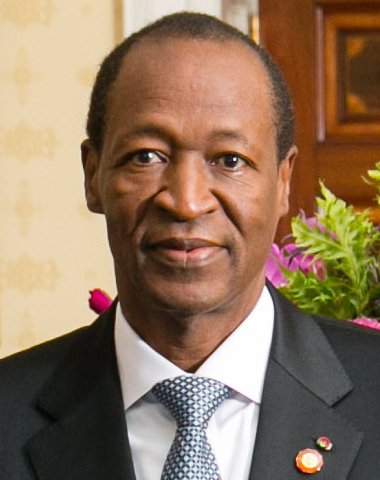
Blaise Compaoré is a defining figure in the modern political history of Burkina Faso and West Africa. Serving as the Ex-President of Burkina Faso for 27 years, from 1987 until his dramatic ousting in 2014, his tenure represents one of the longest periods of continuous rule on the continent. Compaoré rose to power through a military coup that resulted in the death of his former friend and revolutionary icon, Thomas Sankara. His rule was characterized by a complex duality: he was seen internationally as a skilled mediator in regional conflicts, earning the nickname "Africa's mediator," while domestically, his regime was marked by allegations of authoritarianism, corruption, and the suppression of dissent. This biography explores the life, career, and contested legacy of a leader who shaped Burkina Faso for nearly three decades.
Early Life & Education: Formative Years in Upper Volta
Blaise Compaoré was born on February 3, 1951, in Ziniaré, a town in the Mossi heartland of what was then the French colony of Upper Volta. His father was a former prisoner of war and a respected figure in the community. This background provided young Blaise Compaoré with a degree of social standing. His early education took place locally before he attended the prestigious Prytanée Militaire de Kadiogo, a military secondary school, which set him on a path toward a career in the armed forces. This environment was crucial in shaping his worldview and building the network of military connections that would later prove instrumental.
Following his secondary education, Compaoré pursued further military training. He attended the École Militaire Préparatoire de Général Leclerc in Cameroon and later the École d’Infanterie de Montpellier in France. These experiences exposed him to formal military doctrine and solidified his professional identity. It was during this period, and upon his return to Upper Volta, that he forged a fateful friendship with a charismatic young captain, Thomas Sankara. Their shared vision for radical change in their impoverished nation led to their collaboration in the 1983 coup that brought Sankara to power, with Compaoré serving as a key lieutenant and Minister of State.
Career & Major Achievements: From Coup to Controversial Presidency
The career of Blaise Compaoré is indelibly marked by the events of October 15, 1987. On that day, he led a violent coup d'état that resulted in the assassination of President Thomas Sankara. Compaoré immediately assumed power as the head of state, justifying the act by accusing Sankara of endangering national unity. This event cast a long shadow over his entire presidency and remains a source of deep national trauma in Burkina Faso.
Consolidation of Power and Political Transition
In the years following the coup, Compaoré moved to consolidate his authority. He initially led through a military-political body but, under domestic and international pressure, began a process of controlled democratization. In 1991, a new constitution was adopted, establishing a semi-presidential system. Blaise Compaoré won the presidential elections of 1991 (boycotted by the opposition) and subsequent elections in 1998, 2005, and 2010. Each election was marred by opposition accusations of fraud and constitutional manipulation, most notably the removal of presidential term limits in 1997, which allowed him to run indefinitely.
Foreign Policy and Regional Mediation
On the international stage, Compaoré cultivated a reputation as an adept diplomat and peacebroker. He played a significant role in mediating conflicts across West Africa, including in:
- Togo: Following the death of Gnassingbé Eyadéma in 2005.
- Côte d'Ivoire: During the protracted Ivorian Civil War, hosting peace talks in Ouagadougou.
- Liberia and Sierra Leone: Engaging in regional efforts to end civil conflicts.
This role earned him credibility with international partners like France and the United States, who saw him as a stabilizing force in a volatile region.
Domestic Policies and Economic Management
Domestically, Compaoré's government shifted away from Sankara's revolutionary socialism. He implemented Structural Adjustment Programs promoted by the International Monetary Fund and World Bank, liberalizing the economy. While this led to periods of macroeconomic growth and made Burkina Faso a regional hub for commerce, critics argued that benefits were unevenly distributed, exacerbating inequality. His tenure also saw significant expansion of the cotton industry and the development of the gold mining sector, which became the country's primary export. However, his government faced persistent allegations of endemic corruption and nepotism.
Personal Life, Downfall & Legacy
Blaise Compaoré is married to Chantal Compaoré, a former diplomat who was known for her social and humanitarian work, particularly through her foundation. His personal interests have remained relatively private, with his public image being overwhelmingly that of the statesman and military leader.
The downfall of Blaise Compaoré was precipitated by his attempt to once again amend the constitution to abolish presidential term limits, which would have allowed him to run for a fifth term in 2015. This move sparked massive, nationwide protests in October 2014. On October 30, 2014, facing a storming of the parliament building and the withdrawal of military support, he was forced to resign. He fled to Côte d'Ivoire, where he was granted citizenship and refuge.
His legacy is profoundly polarized. In April 2022, a Burkinabè military tribunal in absentia sentenced him to life imprisonment for his role in the murder of Thomas Sankara. This legal conclusion formally cemented one view of his legacy: that of a coupist and assassin. Conversely, some credit him with bringing a degree of stability and international relevance to a landlocked and resource-poor nation. His ultimate legacy in Burkina Faso is that of a leader whose lengthy rule created a complex political and social landscape, the repercussions of which continue to shape the country's turbulent politics today.
Net Worth & Business Ventures
The precise net worth of Blaise Compaoré and his family has been a subject of intense speculation and investigation, both in Burkina Faso and internationally. While no officially verified figure exists, he is widely believed to have amassed significant wealth during his 27-year presidency. Allegations of corruption and embezzlement have persistently followed him and his inner circle, known as "the Blaise system." Following his ouster, the new Burkinabè government launched investigations into his assets. Reports and allegations have suggested the Compaoré family holds substantial interests in real estate, both within Burkina Faso (including luxury properties in Ouagadougou and Ziniaré) and abroad, as well as potential holdings in the lucrative gold mining and cotton sectors. The true extent of his business ventures and wealth remains obscured, emblematic of the opaque financial practices often associated with long-term authoritarian rule.
Net Worth Analysis
Estimates are speculative as he is not on any billionaire list; his wealth is linked to his 27-year presidency and alleged corruption, with figures often cited in the tens of millions.
Quick Stats
Related People
Aaron Motsoaledi
LP; Minister of Home Affairs
Abane Ramdane†
FLN Leader & Strategist
Abdalla Hamdok
Ex-Prime Minister
Abdallah Kigoda
Ex-Minister of Natural Resources