$50M
Estimated Net Worth
As of 2024 • low confidence
Financial Breakdown
Asset Distribution
Assets vs Liabilities
Assets
Liabilities
Disclaimer: These financial estimates are based on publicly available information and should be considered approximate. Last updated: 12/31/2025
Biography
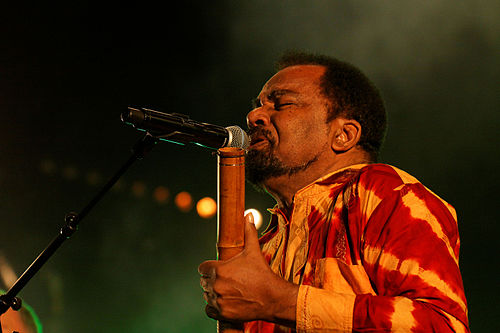
In the pantheon of African music legends, few figures embody the spirit of a nation and a continent's struggle as profoundly as Bonga. Born Barceló de Carvalho in 1940, the artist known globally as Bonga is a seminal Pioneer of Angolan music, a fearless cultural activist, and a revered Mentor to generations. His career, spanning over five decades, is a powerful narrative woven into the fabric of Angola's fight for independence and its post-colonial identity. As a towering figure in both Arts & Culture and Media & Journalism through his lyrical storytelling, Bonga masterfully blended traditional Angolan rhythms like semba, kilapanga, and rebita with Portuguese fado and other global sounds. His 1972 debut album, "Angola 72," recorded in exile, became an anthem of resistance, solidifying his status as the voice of a people yearning for freedom. This biography delves into the life of an artist whose music is not just entertainment but a historical document and a timeless celebration of Angolan resilience.
Early Life & Education: The Roots of Resistance
Bonga was born in 1940 in the province of Bengo, near the capital city of Luanda, which was then under Portuguese colonial rule. Growing up in the musically rich musseques (shanty towns) of Luanda, he was immersed from childhood in the complex, swaying rhythms that would form the backbone of his artistry. The semba—a precursor to Brazilian samba—and other local styles provided the soundtrack to his early years, instilling in him a deep sense of cultural pride in a system designed to suppress it.
His talent as a runner, however, first brought him to the attention of the colonial establishment. Demonstrating exceptional athletic prowess, Bonga became a champion sprinter, holding the national record for the 400-meter dash. This athletic career led him to Portugal in the late 1960s, ostensibly to run for the Portuguese sports club Benfica. Yet, this move was a pivotal turning point. Living in the colonial metropole, he witnessed the political dynamics from a new angle and became increasingly involved with the community of Angolan intellectuals and nationalists in exile. His home became a clandestine meeting point, and his commitment to the liberation movement, the MPLA (People's Movement for the Liberation of Angola), deepened. This period of dual identity—public athlete and clandestine activist—forged the unwavering political consciousness that would define his music. The education he received was not in a formal institution, but in the streets of Luanda and the underground networks of Lisbon, shaping him into an artist-activist of profound conviction.
Career & Major Achievements: Exile, Anthems, and Global Recognition
Bonga's musical career is inextricably linked to Angola's political journey. In 1972, with the war for independence intensifying, he made the definitive leap from athlete to full-time musician and activist. He abandoned his athletic career and went into exile in Rotterdam, Netherlands. It was there he recorded his explosive debut album, "Angola 72." Released under his adopted name Bonga Kuenda (meaning "Bonga, who is on the move"), the album was a direct, poetic, and musically revolutionary affront to the Portuguese regime. Tracks like "Mona Ki Ngi Xica" (My Child, Leave Me) became instant anthems of longing and defiance, smuggled back into Angola to galvanize the populace.
The Exile Years and Musical Evolution
Forced to remain in exile due to the political content of his work, Bonga spent the next years between Paris, Rotterdam, and Lisbon, continuing to record albums that chronicled the struggle. "Angola 74" and "Raízes" further cemented his reputation. His music evolved, incorporating elements of Caribbean zouk, Cape Verdean morna, and even jazz, while always rooted in Angolan tradition. He became a central figure in the world music scene in Europe, using his platform to tirelessly advocate for Angolan independence, which was finally achieved in 1975.
Return and National Icon Status
Following independence, Bonga returned to a homeland ravaged by civil war. His role shifted from singer of liberation to singer of national reconciliation and social commentary. He released a prolific stream of albums, including:
- "Kandandu" (1980): A celebration of cultural roots.
- "Paz em Angola" (1991): A heartfelt plea for peace during the ongoing conflict.
- "Mulemba Xangola" (2001): A mature reflection on history and identity.
Personal Life & Legacy: The Mentor and Cultural Guardian
Despite his global fame, Bonga has maintained a reputation for humility and deep connection to his roots. He is a private individual, but his dedication to Angola's cultural preservation is public and unwavering. He is known as a generous Pioneer & Mentor, actively supporting and collaborating with younger Angolan artists across genres, ensuring the transmission of traditional rhythms to new generations. Artists like Paulo Flores and many others cite him as a primary influence.
His legacy is multifaceted:
- Cultural Preservation: He is credited with saving semba from obscurity and modernizing it for global audiences.
- Symbol of Resistance: He remains a symbol of dignity and resistance against oppression, relevant far beyond Angola's borders.
- Unifying Figure: In a nation with deep political and ethnic divisions, Bonga's music is a rare unifying force, beloved by all Angolans.
- Global Ambassador: He is Angola's most recognized cultural ambassador, having brought its music to the world's most prestigious stages.
Net Worth & Business Ventures
While the exact details of Bonga's net worth are not publicly disclosed, his financial success is derived from a long and prolific career encompassing album sales, extensive international touring, and royalties. As a legendary figure in world music, his concerts, particularly in Angola, Portugal, and across Europe, are major events that command significant audiences and revenue. Unlike many artists, Bonga's "business" has fundamentally been the stewardship of Angolan culture. His ventures are less about commercial enterprises and more about cultural production. Any financial gains are reinvested into his art and lifestyle, which is reported to be comfortable but not ostentatious, in line with his grounded persona. His true wealth is measured in his immense cultural capital, his vast discography of over 30 albums, and his priceless status as a national treasure of Angola. His legacy, ultimately, is his most valuable and enduring asset.
Net Worth Analysis
Based on the individual's role as a pioneer and mentor in Angolan arts, culture, and media, which are not typically ultra-high-wealth sectors in the country, and the absence from major billionaire lists, a successful career net worth is estimated in the tens of millions.
Quick Stats
Related People
Helena Vaz da Silva
Director; FESTIN Director; Producer; Producer & Festival Director
João Melo
Columnist; Poet; Poet & Cultural Critic

Leila Lopes
Miss Universe; Miss Universe & Activist; Miss Universe 2011; Miss Universe 2011 & Activist
Manuel Figueiredo
Director; Director & Producer