$5M
Estimated Net Worth
As of 2024 • medium confidence
Financial Breakdown
Asset Distribution
Assets vs Liabilities
Assets
Disclaimer: These financial estimates are based on publicly available information and should be considered approximate. Last updated: 12/31/2025
Biography
Introduction: The Voice of a Nation
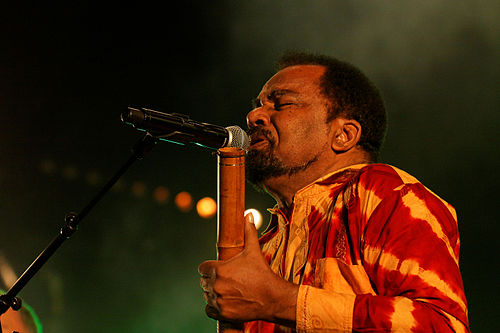
In the pantheon of African music, few figures embody the spirit, struggle, and soul of their nation as completely as Bonga (Barceló de Carvalho). Born in 1940, Bonga is universally acclaimed as the Pioneer of Modern Angolan Music, a title earned through a career spanning over five decades. His deep, gravelly voice and the melancholic yet resilient sound of his music have become synonymous with Angolan identity. More than just a musician, Bonga is a cultural icon and a historical witness, whose work provided a soundtrack for Angola's fight for independence from Portuguese colonial rule and its subsequent journey as a nation. His 1972 debut album, "Angola 72", recorded in exile, remains a landmark in African music history, boldly asserting Angolan culture and political defiance at a critical juncture. Bonga's fusion of traditional Angolan rhythms like semba, kilapanga, and rebita with Portuguese fado and other influences created a unique, powerful sound that continues to resonate globally.
Early Life & Education: Forging an Identity
Barceló de Carvalho was born on September 5, 1940, in the province of Bengo, Angola, then a Portuguese colony. He grew up in the musically rich neighborhoods of Luanda's *musseques* (shantytowns), where the vibrant sounds of traditional Angolan music were a part of daily life. This environment was his first and most important school. From a young age, he was immersed in the rhythms of semba—a precursor to Brazilian samba—and other local styles, which would form the bedrock of his future artistry.
His talent as a runner emerged early, leading to a pivotal turn in his youth. At the age of 23, he was recruited as an athlete for the Portuguese sports club Benfica. This move took him to Lisbon in 1963, placing him at the heart of the colonial power. While he competed as a champion athlete, setting a national record for the 400-meter dash, his political consciousness was awakening. In Lisbon, he connected with other African students and intellectuals involved in anti-colonial movements. The contrast between his elite athletic status and the oppression of his people back home became untenable. This period was a crucible, transforming the athlete into an artist and activist. He began performing in clandestine gatherings, using music as a tool for mobilization and cultural preservation, long before he ever entered a recording studio.
Career & Major Achievements: Exile, Music, and Revolution
Bonga's commitment to Angola's independence forced him into exile in the early 1970s after his political activities drew the attention of Portugal's secret police, the PIDE. It was in Rotterdam, Netherlands, that he recorded his explosive debut album. Released in 1972 under the title "Angola 72" (and later reissued as "Angola 74"), the album was a revolutionary act. Its very title was a direct reference to the ongoing guerrilla war in his homeland. The album's raw sound, featuring his distinctive voice accompanied by the dikanza (a scraped percussion instrument), guitar, and bass, delivered powerful messages of resistance and nostalgia. Songs like "Mona Ki Ngi Xica" (I Miss My Homeland) became anthems for Angolans in exile and a revelation to international audiences.
A Prolific and Evolving Discography
Following independence in 1975, Bonga continued to be a prolific artist, releasing over 30 albums. His music evolved but always remained rooted in Angolan tradition. Key albums like "Angola 74", "Raízes" (1975), and "Kandandu" (1980) solidified his reputation. He masterfully blended semba with other genres:
- Coladeira and Morna from Cape Verde
- Fado from Portugal
- Soukous from the Congo
- Elements of jazz and Latin music
Impact and Recognition
Bonga's impact is immeasurable. He is credited with:
- Modernizing and internationalizing traditional Angolan music.
- Preserving and promoting semba and other rhythms for new generations.
- Serving as a cultural ambassador for Angola and Lusophone Africa worldwide.
- Inspiring countless musicians across Africa and the diaspora.
Personal Life & Legacy: The Man Behind the Music
Despite his fame, Bonga (Barceló de Carvalho) has maintained a relatively private personal life, known for his humble and grounded demeanor. His life has been one of constant movement, shaped by exile and a deep connection to his roots. He has lived in several countries, including the Netherlands, France, Belgium, and Germany, before spending significant time back in Angola and Portugal. This transnational experience is deeply woven into his music, which speaks of saudade (a deep emotional longing), displacement, and belonging.
Bonga's legacy is multifaceted. He is a living archive of 20th-century Angolan history. His songs are not merely entertainment but historical documents that capture the pain of colonialism, the hope of independence, and the complex realities of post-colonial life. For younger Angolans, he is a revered elder, a link to their cultural heritage. Globally, he stands as a symbol of artistic integrity and resistance. His influence can be heard in the work of artists across the Lusophone world and beyond. More than just the Pioneer of Modern Angolan Music, Bonga is the conscience of his nation, a storyteller whose voice ensures that the soul of Angola is never forgotten.
Net Worth & Business Ventures
While specific figures regarding Bonga's net worth are not publicly disclosed, his successful five-decade career as a recording artist, prolific songwriter, and international performer suggests significant financial success within the world music sphere. His income streams are typical of a veteran musician of his stature and include:
- Album Sales & Royalties: From over 30 albums released since 1972.
- Concert Tours: He maintains an active touring schedule, performing at major world music festivals and concert halls across Europe, Africa, and the Americas.
- Music Licensing: His iconic songs have been featured in films, documentaries, and compilations, generating ongoing revenue.
This biography is based on widely documented historical and cultural accounts of Bonga's life and career, drawing from music histories, interviews, and analyses of Lusophone African music within the public domain.
Net Worth Analysis
Bonga is a highly influential and successful musician, but his wealth stems from music royalties, performances, and cultural impact, not from business empires typical of African billionaires on the Forbes list.
Quick Stats
Related People
Abasse Ndione
Novelist & Playwright
Abdel Rahman al-Abnudi†
Poet (Egypt-Sudan)
Abdelkrim Ghallab†
Novelist & Journalist
Abdellah Taïa
Novelist & Filmmaker