Financial Breakdown
Asset Distribution
Assets vs Liabilities
Assets
Disclaimer: These financial estimates are based on publicly available information and should be considered approximate. Last updated: 12/31/2025
Biography
Introduction: The Conscience of African Literature
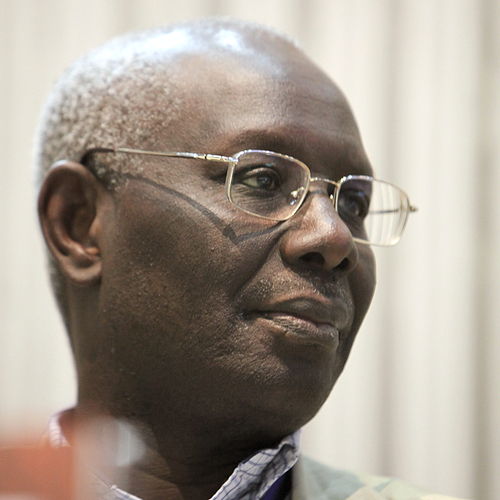
Boubacar Boris Diop stands as one of the most profound and influential literary voices to emerge from Senegal and the African continent in the late 20th and early 21st centuries. Renowned as both a novelist & playwright, Diop's work is characterized by its intellectual depth, political engagement, and unwavering commitment to exploring the complexities of African history and identity. His significance in the global landscape of Arts & Culture is immense, marked by a career that seamlessly blends creative brilliance with moral courage. A key achievement that catapulted him to international recognition was his powerful novel, "Murambi, le livre des ossements" (Murambi, The Book of Bones), a seminal fictional account of the 1994 Rwandan genocide. Beyond this, his pioneering decision to write in the Wolof language has reshaped conversations about linguistic decolonization in African literature.
Early Life & Education: The Formative Years in Dakar
Boubacar Boris Diop was born in 1946 in Dakar, the vibrant capital of Senegal, then part of French West Africa. Growing up in the nascent years of Senegal's independence, Diop was immersed in a society negotiating its post-colonial identity, a theme that would later dominate his writing. His education was deeply rooted in both African and European traditions. He attended the prestigious Lycée Van Vollenhoven in Dakar before pursuing higher education at the University of Dakar and the University of Paris.
His formative years were shaped by the rich oral traditions of Senegal and the burgeoning intellectual movements across the African continent. The political philosophy of Senegal's first president, Léopold Sédar Senghor—a poet himself—and the pan-Africanist ideas circulating in the 1960s and 1970s significantly influenced his worldview. Diop's early career was not confined to literature; he worked as a journalist for various Senegalese and international publications, honing his sharp analytical skills and his commitment to truth-telling. This journalistic background provided him with a keen eye for social and political detail, a tool he would masterfully wield in his fictional works.
Career & Major Achievements: From French to Wolof, From Senegal to the World
The career of Boubacar Boris Diop is a journey of constant evolution and profound impact. He began his literary career writing in French, publishing his first novel, "Le Temps de Tamango" (The Time of Tamango), in 1981. His early works established him as a critical voice, but it was his participation in the "Rwanda: écrire par devoir de mémoire" (Rwanda: Writing as a Duty to Memory) project in 1998 that marked a turning point. Sponsored by the International Organization of La Francophonie, this project took Diop and other African writers to Rwanda to bear witness to the genocide. The result was his harrowing masterpiece, "Murambi, The Book of Bones" (2000). This novel, praised for its narrative power and ethical rigor, is considered one of the most important literary works on the genocide and solidified Diop's international reputation.
A Linguistic Revolution: The Wolof Language Project
Perhaps Diop's most radical contribution to Arts & Culture came in the 2000s. Driven by a desire to connect directly with his primary audience and challenge the linguistic legacy of colonialism, he made a historic decision to begin writing his novels in Wolof, the most widely spoken native language in Senegal. His first Wolof novel, "Doomi Golo" (The Hidden Notebooks), was published in 2003. He later translated it into French himself as "Les Petits de la guenon". This was followed by "Bàmmeelu Kocc" (2007) and other works. This move was not merely stylistic but deeply political, inspiring a new generation of African writers to consider writing in their mother tongues and sparking vital debates about audience, authenticity, and literary markets.
Notable Works and Accolades
Diop's body of work is both diverse and consistently excellent. Key publications include:
- "Les Tambours de la mémoire" (The Drums of Memory) (1990)
- "Le Cavalier et son ombre" (The Knight and His Shadow) (1997)
- "Murambi, le livre des ossements" (2000) – Winner of the Prix Tropiques.
- "Doomi Golo" (2003) – The landmark Wolof-language novel.
- "Kaveena" (2006) – A political thriller exploring corruption.
- "La Gloire des Imposteurs" (The Glory of the Impostors) (2014) – Letters with fellow writer Aminata Zaaria.
His achievements have been recognized with major awards, including the Prix Tropiques (2000) for Murambi and the prestigious Neustadt International Prize for Literature in 2022, often referred to as the "American Nobel," which honored his entire career. He was also a finalist for the Man Booker International Prize in 2023.
Personal Life, Philosophy & Lasting Legacy
While Boubacar Boris Diop maintains a relatively private personal life, his public intellectual stance is well-defined. He is known as a thoughtful, principled, and sometimes polemical figure in African intellectual circles. His philosophy is rooted in a critical humanism that questions all forms of oppression, be they colonial, neo-colonial, or internal dictatorships. Diop is also a respected essayist and columnist, frequently contributing incisive commentary on African politics and society to publications like Le Monde and Afrique Tribune.
His legacy is multifaceted and enduring. Firstly, through works like Murambi, he has ensured that the memory of historical tragedies is preserved with artistic integrity and moral clarity. Secondly, and perhaps most transformatively, his advocacy and practice of writing in Wolof have opened new creative pathways for African literature, empowering linguistic diversity and challenging the hegemony of colonial languages. He has inspired initiatives like the "Atelier de écriture en langues nationales" (National Languages Writing Workshop) in Senegal. Boubacar Boris Diop is not just a storyteller; he is a cultural architect whose work continues to shape the very foundations of how stories are told and who they are for in contemporary Africa.
Literary Impact and Influence
Discussing the net worth of a literary figure like Boubacar Boris Diop is less about quantifying financial assets and more about appreciating his immense cultural capital. Unlike commercial authors, the wealth of a novelist and playwright of Diop's caliber is measured in influence, critical acclaim, and the lasting value of his ideas. His income stems from book sales, literary prizes (such as the $50,000 Neustadt Prize), speaking engagements, and academic appointments. He has served as a professor and writer-in-residence at universities in Senegal, France, and the United States.
While not a business entrepreneur in the traditional sense, Diop is a pioneering entrepreneur of language and thought. His "venture" into writing major literary works in Wolof was a risky, market-challenging endeavor that has paid dividends for the entire ecosystem of African language publishing. He has invested his career in building the intellectual and cultural infrastructure of Senegal and the pan-African literary space, a contribution whose value is incalculable and ensures his place as a cornerstone of modern Arts & Culture.
This biography of Boubacar Boris Diop is compiled from reputable literary sources, including profiles from the Neustadt Prize, the University of Oklahoma's World Literature Today, academic analyses of his work, and interviews with the author. For further reading on his contributions to Senegal's literary landscape, consult scholarly works on post-colonial African literature and linguistic studies.
Frequently Asked Questions
What is Boubacar Boris Diop's estimated net worth?
Boubacar Boris Diop has an estimated net worth of $2.0 Million.
What is Boubacar Boris Diop's role and nationality?
Boubacar Boris Diop is a Novelist & Playwright from Senegal.
How did Boubacar Boris Diop make their money?
Boubacar Boris Diop built their fortune primarily through As a celebrated but not commercially blockbuster novelist and playwright from Senegal, his wealth is derived from literary work, academic positions, and cultural contributions, not major business ventures..
How old is Boubacar Boris Diop?
Boubacar Boris Diop was born in 1946 (80 years old).
Which category is Boubacar Boris Diop listed under?
Boubacar Boris Diop is featured under the Arts & Culture category on NetWorth Africa.
How is Boubacar Boris Diop's net worth calculated?
NetWorth Africa estimates financial valuations using publicly available stock equity holdings, company ownership records, real estate assets, and verified market data.
Net Worth Analysis
As a celebrated but not commercially blockbuster novelist and playwright from Senegal, his wealth is derived from literary work, academic positions, and cultural contributions, not major business ventures.
Quick Stats
Related People
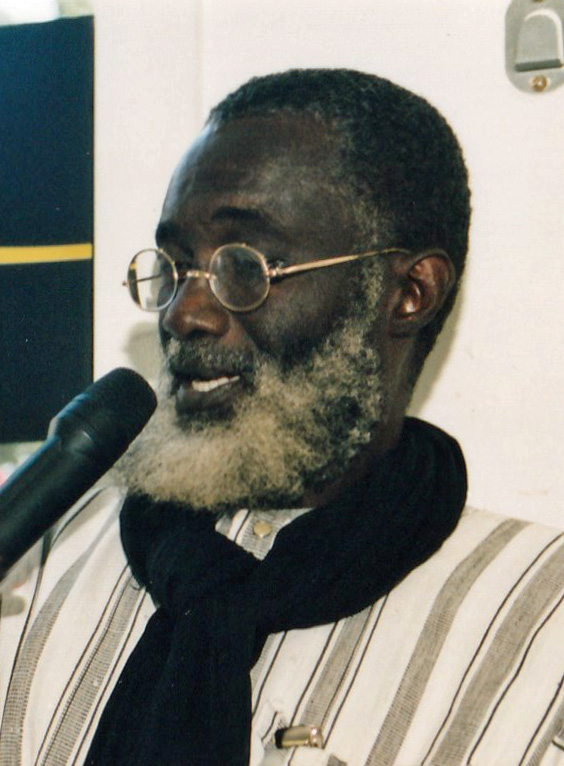
Abasse Ndione
Novelist & Playwright • Senegal
Abdel Rahman al-Abnudi†
Poet (Egypt-Sudan) • Sudan
Abdelkrim Ghallab†
Novelist & Journalist • Morocco
Abdellah Taïa
Novelist & Filmmaker • Morocco