Financial Breakdown
Asset Distribution
Assets vs Liabilities
Assets
Disclaimer: These financial estimates are based on publicly available information and should be considered approximate. Last updated: 12/29/2025
Biography
Introduction
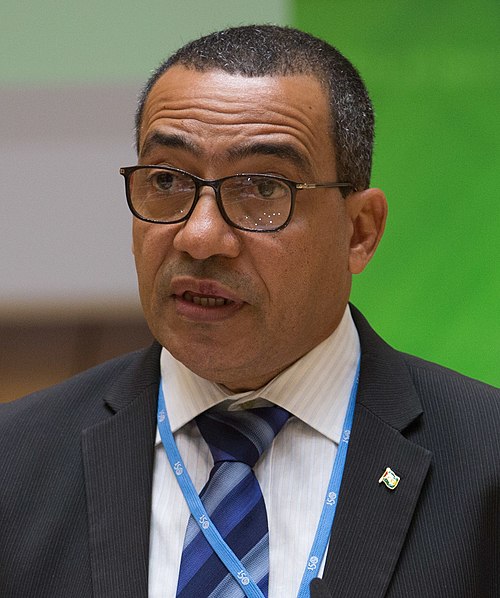
Carlos Manuel Vila Nova is a prominent figure in the Politics & Government of the Democratic Republic of São Tomé and Príncipe, having served as its President since October 2, 2021. His election marked a significant moment in the nation's democratic journey, reinforcing its stability in the Gulf of Guinea. As the head of state, Carlos Vila Nova is tasked with guiding the small island nation through challenges such as economic development, sustainable tourism, and managing its potential offshore oil resources. His rise to the Executive Presidency is the culmination of a long and dedicated career in public service, primarily within the country's infrastructure and development sectors. Recognized for his calm demeanor and technocratic approach, President Vila Nova's leadership is focused on fostering national unity, attracting foreign investment, and improving the living standards for the Santomean people, solidifying his role as a key architect of the country's contemporary political landscape.
Early Life & Education
Carlos Manuel Vila Nova was born in the city of Neves, on the island of São Tomé, in the year 1959. Growing up in a period when the nation was still under Portuguese colonial rule, his formative years coincided with the global wave of decolonization. São Tomé and Príncipe achieved its independence on July 12, 1975, an event that undoubtedly shaped the national consciousness of the young Vila Nova and his generation, who would become the first to build the newly sovereign state.
Demonstrating a strong aptitude for technical and engineering disciplines, Vila Nova pursued higher education abroad, a common path for aspiring Santomean professionals at the time. He traveled to France, where he enrolled at the prestigious École Nationale des Travaux Publics de l'État (ENTPE) in Lyon. There, he earned a degree in Civil Engineering, specializing in public works and infrastructure. This rigorous technical education provided him with a solid foundation in project management, planning, and development—skills that would later become the cornerstone of his political and administrative career. His academic background distinguishes him as one of the few Santomean heads of state with a deep, specialized technical expertise, informing his pragmatic approach to governance and national development.
Career & Major Achievements
Before ascending to the highest office, Carlos Vila Nova built a substantial career primarily within ministerial portfolios related to infrastructure and development, reflecting his educational background.
Ministerial Tenure and Infrastructure Focus
Vila Nova's political career is deeply intertwined with the Independent Democratic Action (ADI) party. His first major ministerial appointment came in 2010 when he was named Minister of Public Works, Infrastructure, Natural Resources, and Environment under the government of President Patrice Trovoada. In this role, he was instrumental in overseeing critical infrastructure projects vital for the nation's economic growth. He later served again as Minister of Infrastructure, Natural Resources, and Environment from 2014 to 2018. During these periods, his key responsibilities and achievements included:
- Overseeing the maintenance and development of the country's road networks, ports, and public buildings.
- Managing the nation's natural resources and environmental policies, a sensitive area given the exploration of offshore oil blocks.
- Playing a central role in negotiations and projects related to international partnerships for infrastructure funding.
Path to the Presidency
The pinnacle of Vila Nova's political journey was the 2021 presidential election. He ran as the candidate for the ADI party. The election process was a testament to São Tomé and Príncipe's vibrant democracy, going to a second-round runoff on September 5, 2021. Carlos Vila Nova secured victory with 57.54% of the vote, defeating his opponent, former Prime Minister Guilherme Posser da Costa. He was officially sworn in as the President of São Tomé and Príncipe on October 2, 2021.
Presidential Agenda and Governance
Since his inauguration, President Vila Nova's administration has been characterized by a focus on economic pragmatism and institutional stability. His major initiatives and focal points include:
- Economic Diplomacy: Actively engaging with international partners and multilateral institutions to secure investment and development aid for Sao Tome and Principe.
- Oil Sector Management: Cautiously overseeing the development of the nation's offshore oil resources, emphasizing transparent and beneficial contracts for the Santomean people.
- Social Cohesion: Advocating for political dialogue and unity in a nation known for its lively political discourse, aiming to create a stable environment for progress.
- Sustainable Development: Leveraging his environmental portfolio experience to promote balanced growth that protects the country's rich biodiversity and promotes eco-tourism.
His presidency has navigated global challenges such as the economic aftershocks of the COVID-19 pandemic and rising international commodity prices, striving to ensure food and energy security for the archipelago's approximately 220,000 inhabitants.
Personal Life & Legacy
Carlos Vila Nova is known to be a private family man and a devout Catholic, whose faith is reported to guide his personal ethics and approach to service. He is married and a father. His personal interests, though not extensively publicized, are understood to be aligned with his technical background, with an appreciation for structured planning and development. Unlike some of his predecessors, Vila Nova maintains a relatively low-profile public persona, emphasizing substance and work over political spectacle.
While his legacy is still being written, Carlos Vila Nova is poised to be remembered as a stabilizing, technocratic leader who presided during a crucial period of economic potential for São Tomé and Príncipe. His lasting impact will likely be judged on his ability to translate the country's natural resource potential and strategic location into tangible, sustainable improvements in infrastructure, healthcare, and education for all Santomeans. By championing transparency and international cooperation, he aims to solidify São Tomé and Príncipe's reputation as a stable democracy and an emerging partner in Central Africa. His journey from civil engineer to President embodies a career dedicated to national building through expertise and steady leadership.
Net Worth & Business
As is common with many public officials from smaller nations, the precise net worth of Carlos Vila Nova is not publicly disclosed in detailed financial statements. His career has been almost exclusively in the public sector, with his primary income derived from his salaries as a government minister and, subsequently, as President. There is no widely reported information or evidence of significant private business ventures or commercial holdings that would contribute to a substantial personal fortune outside of his public service roles. In the context of Sao Tome and Principe, where the economy is developing and based on agriculture, tourism, and nascent oil exploration, large personal wealth among politicians is not typical. Vila Nova's public image is that of a career public servant and technocrat, rather than a business magnate, aligning with his focus on infrastructural and national development over personal commercial enterprise.
Frequently Asked Questions
What is Carlos Vila Nova's estimated net worth?
Carlos Vila Nova has an estimated net worth of $500,000.
What is Carlos Vila Nova's role and nationality?
Carlos Vila Nova is a President of São Tomé and Príncipe from Sao Tome and Principe.
How did Carlos Vila Nova make their money?
Carlos Vila Nova built their fortune primarily through As a career politician and public servant from a small, lower-income nation, his wealth is not from business but from his presidential salary and typical assets for his position..
How old is Carlos Vila Nova?
Carlos Vila Nova was born in 1959 (67 years old).
Which category is Carlos Vila Nova listed under?
Carlos Vila Nova is featured under the Politics & Government category on NetWorth Africa.
How is Carlos Vila Nova's net worth calculated?
NetWorth Africa estimates financial valuations using publicly available stock equity holdings, company ownership records, real estate assets, and verified market data.
Net Worth Analysis
As a career politician and public servant from a small, lower-income nation, his wealth is not from business but from his presidential salary and typical assets for his position.
Quick Stats
Related People

Aaron Motsoaledi
LP; Minister of Home Affairs • South Africa

Abane Ramdane†
FLN Leader & Strategist • Algeria

Abdalla Hamdok
Ex-Prime Minister • Sudan

Abdallah Kigoda
Ex-Minister of Natural Resources • Tanzania