Biography
Introduction: The Steward of a New Era
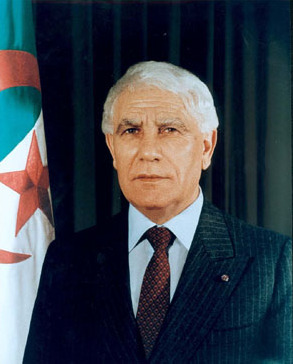
Chadli Bendjedid† stands as a pivotal figure in the modern political history of Algeria. Serving as the nation's third President from 1979 until 1992, his tenure marked a significant transition from the austere socialist policies of his predecessors, Houari Boumediene and Ahmed Ben Bella, towards a period of tentative political and economic liberalization. A career military officer, Chadli Bendjedid† rose to the highest office not through popular election but via the consensus of the ruling party, the National Liberation Front (FLN). His presidency is most notably defined by his efforts to dismantle the centralized state-controlled economy and his fateful decision to introduce multi-party politics, a move that inadvertently triggered the brutal Algerian Civil War. Understanding the life and rule of Chadli Bendjedidid† is essential to comprehending the complex trajectory of Algerian Politics & Government in the late 20th century.
Early Life & Education: From Rural Roots to Revolutionary
Chadli Bendjedid† was born on April 14, 1929, in the village of Bouteldja, near Annaba in the Constantine region of French Algeria. His early life was shaped by the rural, agrarian society of colonial Algeria, far removed from the centers of power. His formal education was limited, a common experience for many Algerians under the colonial system. Seeking opportunity, he joined the French Army in 1954, the very year the Algerian War of Independence erupted. This experience proved formative; he received military training but was also exposed to the inequalities of colonial rule.
The call for national liberation soon redirected his path. In 1955, Chadli Bendjedid† deserted the French Army and crossed into Tunisia to join the nascent National Liberation Army (ALN), the armed wing of the FLN. His military background allowed for a rapid rise within the ranks. He operated primarily in the eastern regions and along the Tunisian border, gaining a reputation as a competent and reliable officer rather than a flamboyant revolutionary leader. This period cemented his allegiance to the FLN and its cause, placing him within the network of officers who would dominate Algeria's post-independence political landscape. His formative experiences were not in universities or political salons, but in the harsh realities of guerrilla warfare and military organization, which profoundly influenced his pragmatic, cautious leadership style later in life.
Career & Major Achievements: From Colonel to President
Following Algeria's independence in 1962, Bendjedid's career advanced steadily within the new state's military structure. He was a loyal supporter of Houari Boumediene during the latter's 1965 coup against Ahmed Ben Bella. As a reward for his loyalty, Boumediene appointed him Commander of the Second Military Region in Oran in 1964, a strategically vital post, and later promoted him to Colonel. For over a decade, he solidified his power base within the army, avoiding the political intrigues of Algiers while maintaining crucial military authority.
Ascension to the Presidency
Upon Boumediene's death in December 1978, a power struggle ensued within the FLN. Chadli Bendjedid†, perceived as a consensus candidate who threatened no major faction, was elected President of the Republic on February 9, 1979. His early years were characterized by a careful distancing from Boumediene's rigid policies. He began releasing political prisoners and subtly criticizing the excesses of the previous era's secret police.
Economic Liberalization and the 1988 Riots
His most significant domestic policy shift was economic. The Chadli Bendjedid† presidency initiated a move away from state-controlled heavy industrialization (the "Boumediene industry") towards a more consumer-oriented economy. This "Chadli decade" saw the promotion of private agriculture and light industry, and the importation of more consumer goods to alleviate shortages. However, these reforms were poorly managed, leading to rampant corruption, inflation, and a severe debt crisis. Combined with high youth unemployment, this economic discontent exploded in the nationwide October 1988 riots, which were violently suppressed by the army, resulting in hundreds of deaths.
Political Opening and Constitutional Crisis
In response to the 1988 crisis, Bendjedid embarked on a dramatic political liberalization. He championed a new constitution in 1989 that ended the FLN's political monopoly, legalized political associations, and promised free elections. This unprecedented opening led to the rise of the Islamic Salvation Front (FIS), which decisively won the first round of parliamentary elections in December 1991. Faced with the imminent prospect of an Islamist-led government, the military high command intervened. On January 11, 1992, they forced Chadli Bendjedid† to resign, dissolved the parliament, and cancelled the electoral process. This act plunged Algeria into a decade-long civil war, known as the "Black Decade."
Personal Life, Legacy, and Later Years
Known for his modest and uncharismatic demeanor, Chadli Bendjedid† was often described as a "simple soldier." He was married and had children, maintaining a relatively low-profile family life compared to other Arab leaders. After his forced resignation, he was placed under house arrest in his native Bouteldja for several years, a period of effective political oblivion. He was later rehabilitated by President Abdelaziz Bouteflika and made occasional public appearances as a former elder statesman.
The legacy of Chadli Bendjedid† is profoundly contested and complex. To some, he is a reformer who attempted to modernize and open a stagnant political system but was overwhelmed by forces beyond his control. His economic reforms, though flawed, began the long process of dismantling a failing socialist model. To others, he is a weak leader whose inconsistent policies—economic liberalization without structural reform and political opening without safeguards—created the conditions for economic chaos and, ultimately, political collapse. His presidency is the crucial link between the austere, single-party state of Boumediene and the tragic civil war that defined the 1990s. Chadli Bendjedid† passed away on October 6, 2012, in Algiers, leaving behind a nation still grappling with the consequences of the pivotal transitions that occurred under his rule.
Net Worth & Post-Presidential Life
Unlike some global leaders, there is no credible public record or detailed estimation of Chadli Bendjedid†'s personal net worth. His financial status remains opaque, characteristic of the Politics & Government environment in Algeria during his era. As a career military officer and then President, his income would have been derived from state salaries. While his economic liberalization policies unfortunately opened doors for corruption among some elites and "crony capitalists," there is no substantive evidence linking Bendjedid himself to significant personal business ventures or illicit wealth accumulation. After his resignation and subsequent house arrest, he lived a quiet life out of the public eye, with no known commercial activities or philanthropic foundations attached to his name. His later years were defined not by business or wealth, but by his status as a central, yet sidelined, figure in Algeria's most traumatic modern political chapter.
Key Dates in the Life of Chadli Bendjedid†
- April 14, 1929: Born in Bouteldja, French Algeria.
- 1955: Deserted the French Army to join the ALN/FLN.
- 1964: Appointed Commander of the 2nd Military Region (Oran).
- February 9, 1979: Elected President of Algeria.
- October 1988: Nationwide riots and violent crackdown.
- February 1989: New constitution legalizing multi-party system.
- December 1991: FIS wins first round of parliamentary elections.
- January 11, 1992: Forced to resign by the military.
- October 6, 2012: Died in Algiers, Algeria.
Frequently Asked Questions
What is Chadli Bendjedid†'s estimated net worth?
Net worth details for Chadli Bendjedid† are currently being updated.
What is Chadli Bendjedid†'s role and nationality?
Chadli Bendjedid† is a Ex-President of Algeria from Algeria.
How did Chadli Bendjedid† make their money?
Chadli Bendjedid† built their fortune primarily through Chadli Bendjedid was a military officer and politician, not a business figure, and his wealth was not publicly documented; he died in 2012..
How old is Chadli Bendjedid†?
Chadli Bendjedid† was born in 1929 (97 years old).
Which category is Chadli Bendjedid† listed under?
Chadli Bendjedid† is featured under the Politics & Government category on NetWorth Africa.
How is Chadli Bendjedid†'s net worth calculated?
NetWorth Africa estimates financial valuations using publicly available stock equity holdings, company ownership records, real estate assets, and verified market data.
Net Worth Analysis
Chadli Bendjedid was a military officer and politician, not a business figure, and his wealth was not publicly documented; he died in 2012.
Quick Stats
Related People

Aaron Motsoaledi
LP; Minister of Home Affairs • South Africa

Abane Ramdane†
FLN Leader & Strategist • Algeria

Abdalla Hamdok
Ex-Prime Minister • Sudan

Abdallah Kigoda
Ex-Minister of Natural Resources • Tanzania