$20M
Estimated Net Worth
As of 2024 • medium confidence
Financial Breakdown
Asset Distribution
Assets vs Liabilities
Assets
Liabilities
Disclaimer: These financial estimates are based on publicly available information and should be considered approximate. Last updated: 12/31/2025
Biography
Introduction: The Voice of a Generation
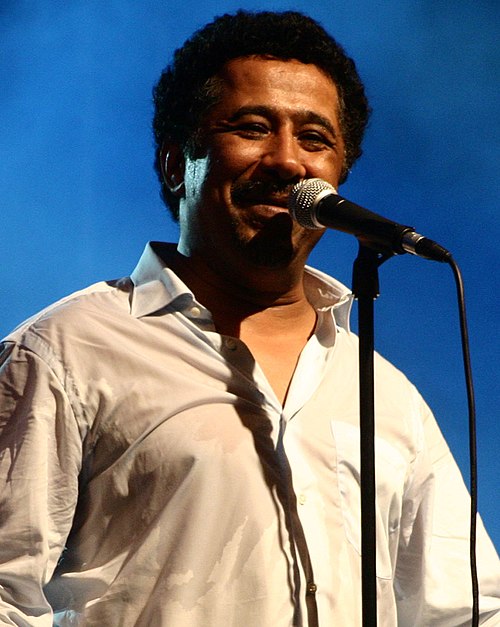
In the vibrant tapestry of world music and global entertainment, few names resonate with the power and passion of Cheb Khaled. Hailed universally as the "King of Rai," Khaled is an Algerian musical icon who transformed a regional folk sound into an international phenomenon. Born in 1960 in Oran, Algeria, the epicenter of Rai music, his journey from local wedding singer to global superstar is a testament to artistic resilience and cross-cultural appeal. His key achievement lies not only in selling millions of records worldwide but in becoming the definitive ambassador for North African music, breaking linguistic and cultural barriers. With anthems like "Didi" and "Aïcha," Cheb Khaled crafted a unique sonic identity—a fusion of traditional Algerian rhythms, Western pop, and funk—that continues to inspire artists and captivate audiences across the globe, securing his throne as a true legend in the entertainment industry.
Early Life & Education: The Roots in Oran
Cheb Khaled was born Khaled Hadj Ibrahim on February 29, 1960, in the coastal city of Oran (Wahran), Algeria. Oran was the fertile birthplace of Rai, a genre that emerged as a voice of the youth, blending Bedouin poetry with modern instrumentation to discuss love, social issues, and daily life. Growing up in the populous Eckmühl district, young Khaled was immersed in this rich musical culture from an early age.
His formative experiences were shaped by the sounds of Oran's cabarets and the records of iconic Rai sheikhs like Cheikh Hamada, as well as exposure to Egyptian pop and Western rock and roll. He showed prodigious talent early on, receiving his first guitar at age 14. While his formal education followed a traditional path, his true schooling happened in the streets and at local events. By his mid-teens, he was already performing at weddings and community gatherings, earning the title "Cheb" (meaning "young"), which distinguished the new wave of Rai singers from the older "Sheikh" masters. This period was crucial in developing his powerful, raspy voice and his innate understanding of the audience's pulse, laying the groundwork for a career that would soon explode beyond the borders of his hometown and country.
Career & Major Achievements: From Local Star to Global Icon
The career of Cheb Khaled is a story of relentless evolution and international breakthrough. His early recordings in the late 1970s and 1980s, such as "Trigue Lycee," made him a superstar within Algeria and the Maghreb. However, the political climate in Algeria, where Rai was often censored, pushed him to move to France in 1986. This relocation marked the beginning of his global ascent.
The French Breakthrough and International Stardom
In France, Khaled began collaborating with a diverse range of musicians, experimenting with synthesizers, drum machines, and saxophones. His 1992 album "Khaled" was a monumental success. It featured the global mega-hit "Didi," which topped charts across the Middle East, Africa, and Asia, becoming one of the first Arabic-language songs to break through in the West via diaspora communities and world music circuits. The album also included "El Arbi," showcasing his enduring connection to his roots.
Collaborations and Crossover Success
Khaled's 1996 album "Sahra" produced another timeless classic: "Aïcha." Originally written by French singer-songwriter Jean-Jacques Goldman, the song became an anthem of love and respect, translated into multiple languages and covered by countless artists. This period saw Cheb Khaled collaborating with international stars like Mick Jagger, Carlos Santana, and Don Was, solidifying his status as a crossover pioneer. His ability to blend Rai with flamenco, reggae, and hip-hop demonstrated incredible artistic versatility.
- Historic Grammy Nomination: In 2012, his album "C'est La Vie" was nominated for a Grammy Award for Best World Music Album, a first for an Algerian Rai artist.
- UNESCO Recognition: He was named an Artist for Peace by UNESCO in 2013 for his message of peace and cultural dialogue.
- Olympic Performance: Khaled performed at the opening ceremony of the 1998 FIFA World Cup in Paris, broadcasting his sound to billions.
- Film Soundtracks: His music has been featured in major Hollywood films, including "The Fifth Element" and "Vantage Point."
Through over a dozen studio albums and countless performances on the world's biggest stages, Cheb Khaled has achieved the rare feat of maintaining artistic credibility while achieving massive commercial success. He didn't just popularize Rai; he modernized it and made it a permanent fixture on the world music map.
Personal Life & Legacy: The Man Behind the Music
While Cheb Khaled is a very public figure, he has generally kept his personal life private. He has been married and is a father. Known for his charismatic smile and energetic stage presence, his off-stage persona is often described as generous and deeply connected to his Algerian heritage. Beyond performing, Khaled has been involved in various philanthropic efforts, particularly supporting humanitarian causes related to the Arab world and using his music as a bridge for cultural understanding, in line with his UNESCO role.
The legacy of the King of Rai is immense and multifaceted. He paved the way for subsequent generations of Maghrebi and Arab artists to dream of international careers. Artists like Rachid Taha and later stars across the Middle East and North Africa cite him as a primary influence. More than just a singer, Cheb Khaled is a cultural symbol—representing the joy, resilience, and evolving identity of the Algerian and North African diaspora. His music provided a soundtrack for liberation and celebration, giving a powerful voice to a community and introducing millions to the beauty of Arabic musical traditions. His enduring popularity, decades after his first hits, confirms that his work transcends trends, securing his legacy as one of the most important figures in global entertainment history.
Net Worth & Business Ventures
The monumental success of Cheb Khaled's career, spanning over four decades, has translated into significant financial success. While exact figures are often private estimates, various reputable sources consistently place his net worth in the range of tens of millions of dollars. This wealth has been accrued through multiple revenue streams common to top-tier music artists. His income is primarily driven by:
- Record Sales: Millions of albums sold worldwide since the 1980s.
- Sold-Out Tours: Highly lucrative international concert tours across Europe, the Middle East, and beyond.
- Digital Royalties: Streaming and digital sales of his extensive catalog of hits.
- Brand Endorsements: Selective partnerships and endorsements, leveraging his iconic status in the Arab world and France.
While not known for a vast portfolio of unrelated business ventures, Cheb Khaled's primary "business" has been his artistry and the intelligent management of his brand as the King of Rai. His investments are understood to be in real estate and the continued production of his music. His financial standing is a direct reflection of his unparalleled impact on the world entertainment stage and his ability to remain relevant across generations.
Biography compiled from reputable music history sources, official artist profiles, and documented news archives covering world music and Algerian cultural history.
Net Worth Analysis
Khaled is a highly successful musician with a long career, but he is not a business tycoon and is not listed on any billionaire ranking; his wealth is estimated from music sales, performances, and royalties.
Quick Stats
Related People
2Baba (Innocent Idibia)
Veteran Artist & Activist
Aar Maanta
Singer & Composer

Abdel Aziz al-Mubarak
Oud Master
Abdel Halim Hafez†
Legend; “Nightingale”; “The Dark-Skinned Nightingale”