$20M
Estimated Net Worth
As of 2024 • medium confidence
Financial Breakdown
Asset Distribution
Assets vs Liabilities
Assets
Disclaimer: These financial estimates are based on publicly available information and should be considered approximate. Last updated: 12/30/2025
Biography
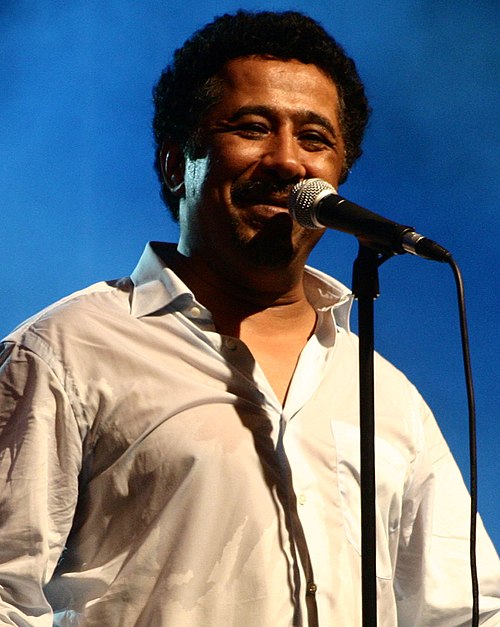
In the vibrant tapestry of world Entertainment and Music, few figures shine as brightly or as influentially as Cheb Khaled. Hailed globally as the "Rai King", Khaled is an Algerian-born artist who later became a cultural icon of the broader Maghreb, deeply associated with both Algeria and Morocco. Born in 1960 in Oran, Algeria—the birthplace of Rai—Khaled transformed a local folk genre into an international phenomenon. His journey from the gritty cabarets of Oran to sold-out world tours and platinum records is a testament to his monumental talent and resilience. With anthems like "Didi," "Aïcha," and "C'est la vie," he broke linguistic and cultural barriers, becoming the first Arab artist to achieve massive commercial success in the West. This biography delves into the life of the Rai King (Algeria-Morocco), exploring the roots of his sound, the peaks of his career, and the legacy of a man who gave a voice to a generation.
Early Life & Education: The Roots in Oran
Cheb Khaled was born Khaled Hadj Brahim on February 29, 1960, in the coastal city of Oran, Algeria. Oran, known as "the capital of Rai," was a melting pot of musical influences, where traditional Bedouin poetry met Spanish, French, and Arabic sounds. Growing up in a working-class neighborhood, young Khaled was immersed in this rich sonic environment from an early age. The title "Cheb" (meaning "young") was a convention in the emerging Rai scene, distinguishing the new, rebellious voices from the traditional "Cheikh" (elder) masters.
His formal education took a backseat to his growing passion for music. He received no formal musical training, instead learning by ear and through immersion. By the age of 14, he had already acquired a local reputation, performing at weddings and community festivals. His formative experiences were shaped by the social and political climate of 1970s Algeria. Rai music, often filled with candid lyrics about love, poverty, and social strife, was frequently censored by the authorities. For Cheb Khaled and his peers, singing Rai was an act of youthful defiance. He recorded his first single, "Trigue Lycee," in 1974 with the help of producer Rachid Baba Ahmed. This early work, distributed on cassettes, captured the raw energy and concerns of Algerian youth, setting the stage for a career that would forever change the genre.
Career & Major Achievements: From Local Star to Global Icon
The career of Cheb Khaled is a story of relentless evolution and groundbreaking achievement. In the 1980s, he became the leading figure of "Rai pop," modernizing the genre with synthesizers, drum machines, and electric guitars while preserving its emotional core. His albums with producer Rachid Baba Ahmed, like Hada Raykoum (1985) and Kutché (1988, a collaboration with jazzman Safy Boutella), were critical in refining his sound and expanding his audience within North Africa and the Arab diaspora in Europe.
International Breakthrough
The turning point came in 1992 with the release of his self-titled album Khaled, featuring the global mega-hit "Didi." The song became a sensation across the Middle East, Africa, Asia, and Europe, selling millions of copies. It introduced Rai music to a global audience and established Cheb Khaled as a world music superstar. He relocated to France, which became his new base for international operations.
His 1996 album Sahra produced another timeless classic: "Aïcha." Co-written by French songwriter Jean-Jacques Goldman, "Aïcha" was a poetic, crossover masterpiece that topped charts from the Middle East to Europe. It remains one of the best-selling singles of all time in France and is considered an anthem of multiculturalism. These successes were not just commercial; they represented a significant cultural bridge, presenting Arabic-language pop on a global stage with unprecedented production quality and appeal.
Accolades and Influence
Throughout the 1990s and 2000s, Cheb Khaled solidified his status as the Rai King. His achievements are numerous and historic:
- First Arab artist to sell out major venues like the Olympia in Paris and Zénith de Paris repeatedly.
- Collaborations with international stars including Santana, Mick Jagger, Macy Gray, and Noa.
- His 1999 album Kenza (named after his daughter) sold over 2 million copies worldwide.
- Winner of multiple awards, including a World Music Award and the Moroccan Order of Ouissam Alaouite for his cultural contributions.
- Performed at iconic global events such as the 1998 FIFA World Cup closing ceremony and Live 8 in 2005.
His influence extended beyond music, shaping fashion and popular culture across the Arab world. By blending Rai with flamenco, reggae, funk, and hip-hop, Cheb Khaled ensured the genre's relevance for new generations, proving that traditional sounds could form the foundation for innovative, contemporary Music.
Personal Life & Legacy: The Man Behind the Music
Despite his global fame, Cheb Khaled has often maintained a relatively private personal life. He is a father and has been married. His deep love for his homeland and the Arab world is a constant theme in his interviews and sometimes in his music. While not overtly political in his later career, his early music and his very identity as a Rai singer from Oran are intrinsically linked to the social narrative of his people. He has expressed pride in his heritage and has served as a de facto cultural ambassador for the Maghreb region.
His philanthropic efforts, though not always highly publicized, have included support for various humanitarian causes. More significantly, his legacy is his cultural philanthropy. Cheb Khaled opened the doors for countless Arab and North African artists, from Rachid Taha to RedOne, demonstrating that global success was attainable. He transformed Rai from a regional Algerian style into a universal language of joy, love, and resistance. Today, his music continues to be a staple at celebrations from Casablanca to Cairo and in clubs from Paris to New York. As the Rai King (Algeria-Morocco), his legacy is etched into the very definition of modern Arab pop Music and its place on the world Entertainment stage.
Net Worth & Business Ventures
The immense success of Cheb Khaled over a five-decade career has translated into substantial financial success. While exact figures are often private and fluctuate, various reputable estimates place his net worth in the range of tens of millions of dollars. This wealth is primarily attributed to his record-breaking album sales, with several albums achieving multi-platinum status, particularly in Europe and the Middle East. His extensive worldwide touring, commanding high performance fees at major festivals and concert halls, constitutes another significant revenue stream.
Beyond music sales and performances, Cheb Khaled has leveraged his brand through strategic business ventures. He has been involved in lucrative endorsement deals and licensing agreements. A notable business aspect is his savvy navigation of the music publishing and royalties landscape, ensuring he benefits from the perpetual global airplay of hits like "Aïcha" and "Didi." While not known for a vast portfolio of unrelated businesses, his primary venture remains his art and his brand as the Rai King, which he has managed and cultivated with acute awareness of its international value, securing his status as one of the wealthiest and most influential figures in Arab Entertainment history.
Net Worth Analysis
Cheb Khaled is a highly successful and influential musician, but he is not a business magnate on the Forbes Africa rich list; his wealth stems from a long career in music, album sales, and performances.
Quick Stats
Related People
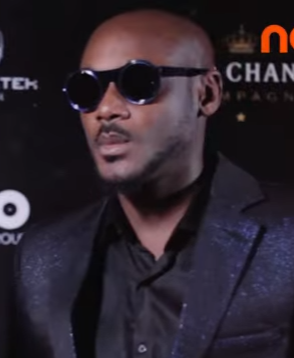
2Baba (Innocent Idibia)
Veteran Artist & Activist
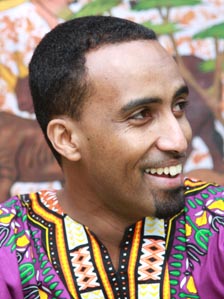
Aar Maanta
Singer & Composer
Abdel Aziz al-Mubarak
Oud Master
Abdel Halim Hafez†
Legend; “Nightingale”; “The Dark-Skinned Nightingale”