Financial Breakdown
Asset Distribution
Assets vs Liabilities
Assets
Liabilities
Disclaimer: These financial estimates are based on publicly available information and should be considered approximate. Last updated: 12/31/2025
Biography
Introduction: The Voice of Mali Through Film
In the vibrant landscape of Arts & Culture, few figures have championed the narrative of West Africa with as much conviction and artistry as Cheick Oumar Sissoko. Born in 1945 in San, Mali, Sissoko has carved an indelible legacy as a preeminent Director & Producer, whose work transcends entertainment to serve as a powerful tool for social critique and historical preservation. A leading light of the second generation of African filmmakers, Cheick Oumar Sissoko is renowned for using the cinematic medium to explore the complex tapestry of Malian society—its political struggles, its rich cultural heritage, and its enduring spirit. His most celebrated achievement, the epic film Guimba the Tyrant (1995), which won the prestigious Étalon de Yennenga at FESPACO, cemented his status as a master storyteller who skillfully blends traditional African folklore with urgent contemporary themes. Beyond the director's chair, his service as Mali's Minister of Culture further underscores his lifelong dedication to shaping and safeguarding the nation's artistic soul.
Early Life & Education: Forging a Pan-African Perspective
Cheick Oumar Sissoko's formative years were steeped in the cultural and social milieu of Mali, a nation freshly independent during his youth. This context of nascent national identity profoundly influenced his worldview. Pursuing higher education, he left Mali for France, a common path for African intellectuals of his generation. There, he studied at the Université de Vincennes (Paris VIII) and later graduated from the esteemed École nationale supérieure Louis-Lumière, a breeding ground for technical cinematic excellence. More crucially, he furthered his studies at the Institut Africain d’Éducation Cinématographique (INAFEC) in Ouagadougou, Burkina Faso, an institution dedicated specifically to training African filmmakers.
This unique educational trajectory—combining rigorous French technical training with a Pan-African pedagogical mission—equipped Cheick Oumar Sissoko with both the craft and the philosophical foundation for his career. It was during this period that he developed a clear vision for cinema: not as a mere imitation of Western models, but as a distinct voice for Africa. His early experiences and education instilled in him a belief that film must be engaged, must speak to the realities of its people, and must participate in the continent's ongoing political and cultural dialogues. This commitment would become the hallmark of his entire filmography.
Career & Major Achievements: Cinema as Social Engagement
The career of Cheick Oumar Sissoko is a testament to the power of film as a catalyst for reflection and change. He emerged in the 1980s, a period where African cinema was gaining international recognition. His early works, like Nyamanton (1986) which won a prize at the Venice Film Festival, immediately established his signature style: a focus on social issues, in this case, the struggles of street children in Bamako, told with a blend of realism and poetic empathy.
Epic Narratives and International Acclaim
Sissoko's international breakthrough came with two historical epics that used Mali's past to comment on its present. Finzan (1989) is a powerful feminist critique, tackling the oppressive practices of female circumcision and forced marriage. It sparked crucial conversations across the continent and won awards at FESPACO. His magnum opus, Guimba the Tyrant (1995), elevated him to the pinnacle of African cinema. This lavish, visually stunning film, set in a pre-colonial empire, is a masterful allegory for dictatorship and abuse of power. Its triumph in winning the top prize at FESPACO, Africa's most important film festival, was a defining moment for both the director and Malian cinema.
Political Engagement and Public Service
Cheick Oumar Sissoko's commitment to Mali extended beyond the screen into direct public service. In a remarkable chapter of his life, he served as Mali's Minister of Culture from 2002 to 2004, and later as Minister of Education. In these roles, he worked to implement policies supporting artists, preserving national heritage, and promoting Malian culture on the global stage. This dual identity as artist and administrator is rare, highlighting his deep, practical investment in the cultural health of his nation. Even after his ministerial tenure, he remained a vital figure, serving as the President of the Panafrican Film Festival of Ouagadougou (FESPACO) from 2005 to 2008, guiding the continent's premier cinematic event.
Notable Filmography and Impact
- Nyamanton (1986): Award-winning film on child poverty in Bamako.
- Finzan (1989): A bold critique of gender-based violence and tradition.
- Guimba the Tyrant (1995): Winner of the Étalon de Yennenga at FESPACO; a political allegory.
- Bàttu (2000): An adaptation of Aminata Sow Fall's novel, exploring spirituality and modernity.
- La Genèse (1999): A biblical adaptation set within a tribal context, exploring themes of conflict and reconciliation.
Personal Life, Legacy & Lasting Impact
While Cheick Oumar Sissoko is a public intellectual, he has largely kept his private life out of the spotlight, allowing his work and public service to speak for him. His personal interests are inextricably linked to his professional passions: a deep study of Malian history, oral traditions, and the ongoing socio-political development of the African continent. He is known as a thoughtful, articulate advocate, often speaking at forums and universities about the role of culture in development.
The legacy of Cheick Oumar Sissoko is multifaceted. As a filmmaker, he expanded the visual and thematic language of African cinema, proving that films could be both locally resonant and globally acclaimed. He inspired a generation of filmmakers in Mali and beyond to tackle difficult subjects with courage and artistic integrity. As a cultural statesman, he demonstrated that artists can effectively bridge the gap between creative expression and public policy. His lasting impact lies in his unwavering vision of cinema as a essential pillar of Arts & Culture—a means to preserve memory, critique power, celebrate identity, and imagine a better future for Mali and Africa. His body of work remains a critical reference point for anyone studying the evolution of post-colonial African narrative film.
Net Worth & Business Ventures
As with many revered figures in world cinema whose work is driven more by social mission than commercial appeal, the precise net worth of Cheick Oumar Sissoko is not publicly documented. Filmmaking in Mali, while culturally rich, operates with limited budgets and relies heavily on international co-productions, festival funding, and support from European television networks like Canal+. It is therefore more accurate to assess his success through cultural capital and influence rather than financial metrics.
His primary "business" has been his production company, which has facilitated the creation of his films. The financial model for his work is typical of auteur-driven African cinema: securing grants, winning production prizes at festivals like FESPACO, and partnering with European cultural institutes. While not a commercial mogul, Cheick Oumar Sissoko has built a sustainable career that has allowed him to produce a consistent and influential body of work over four decades. His true wealth lies in the enduring value of his films as cultural artifacts, his contribution to Mali's national identity, and his role as a respected elder statesman of African cinema. His ventures are those of culture and education, investments that have yielded immense dividends for the heritage of Mali and the global appreciation of African stories.
Biography compiled from reputable sources on African cinema, including FESPACO archives, academic publications on Malian film, and cultural profiles of notable Malian artists.
Frequently Asked Questions
What is Cheick Oumar Sissoko's estimated net worth?
Cheick Oumar Sissoko has an estimated net worth of $5.0 Million.
What is Cheick Oumar Sissoko's role and nationality?
Cheick Oumar Sissoko is a Director & Producer from Mali.
How did Cheick Oumar Sissoko make their money?
Cheick Oumar Sissoko built their fortune primarily through As a respected film director and cultural figure from Mali, his wealth is derived from his artistic career and public sector roles, not from major business holdings, placing him in the millionaire range..
How old is Cheick Oumar Sissoko?
Cheick Oumar Sissoko was born in 1945 (81 years old).
Which category is Cheick Oumar Sissoko listed under?
Cheick Oumar Sissoko is featured under the Arts & Culture category on NetWorth Africa.
How is Cheick Oumar Sissoko's net worth calculated?
NetWorth Africa estimates financial valuations using publicly available stock equity holdings, company ownership records, real estate assets, and verified market data.
Net Worth Analysis
As a respected film director and cultural figure from Mali, his wealth is derived from his artistic career and public sector roles, not from major business holdings, placing him in the millionaire range.
Quick Stats

Related People
Abasse Ndione
Novelist & Playwright • Senegal
Abdel Rahman al-Abnudi†
Poet (Egypt-Sudan) • Sudan
Abdelkrim Ghallab†
Novelist & Journalist • Morocco
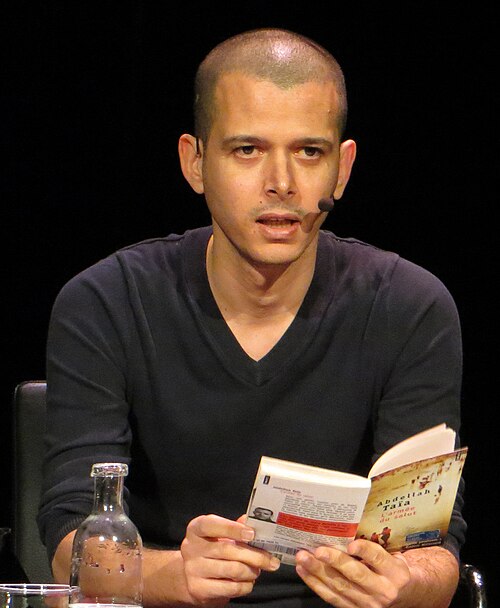
Abdellah Taïa
Novelist & Filmmaker • Morocco