Financial Breakdown
Asset Distribution
Assets vs Liabilities
Assets
Disclaimer: These financial estimates are based on publicly available information and should be considered approximate. Last updated: 12/31/2025
Biography
Introduction: The Voice of a Continent
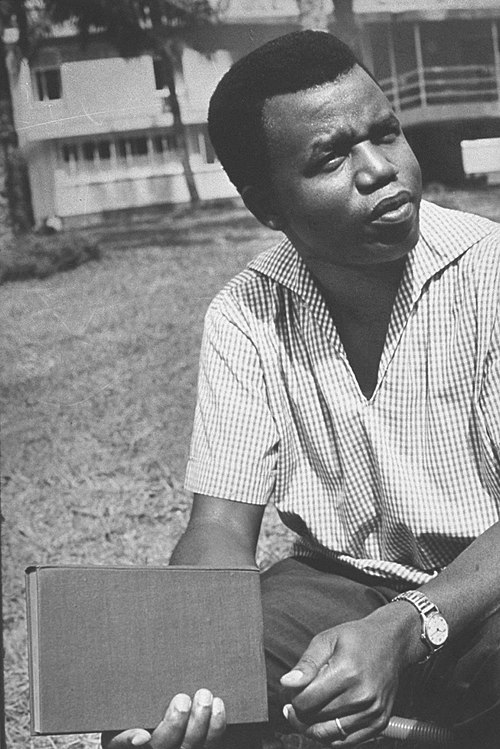
Chinua Achebe† stands as a colossus in the world of letters, the Nigerian novelist, poet, and critic who single-handedly reshaped the global perception of African storytelling. His name is synonymous with the birth and rise of modern African literature in English. Achebe's monumental achievement, the 1958 novel Things Fall Apart, has sold over 20 million copies worldwide and been translated into more than 50 languages, making it the most widely read book in modern African literature. More than just an author, Chinua Achebe† was a cultural ambassador and a fearless social critic who used his pen to challenge colonial narratives and assert the richness, complexity, and humanity of pre-colonial African societies. His work, firmly rooted in the Arts & Culture of his Igbo heritage, provided a powerful counter-narrative to Western depictions of Africa, securing his legacy as one of the most influential writers of the 20th century.
Early Life & Education: Forging a Dual Perspective
Albert Chinụalụmọgụ Achebe was born on November 16, 1930, in the Igbo village of Ogidi in southeastern Nigeria. His early life was a unique intersection of traditional Igbo culture and the incoming Christian influence. His father, Isaiah Okafor Achebe, was a teacher and evangelist for the Church Missionary Society, placing the family at the crossroads of two worlds. This duality became a foundational theme in Achebe's future writing.
Achebe was a precocious student, excelling in the colonial education system. At the age of 14, he was admitted to the prestigious Government College Umuahia, one of the best schools in West Africa at the time. In 1948, he won a scholarship to study medicine at the newly established University College Ibadan (then an affiliate of the University of London). However, after his first year, inspired by literature and rejecting the colonial bias in the standard English curriculum, he switched to studying English, History, and Theology. It was at Ibadan that he encountered novels like Joseph Conrad's Heart of Darkness, whose portrayal of Africa he would later famously critique as dehumanizing. This period of intellectual ferment, coupled with his deep personal knowledge of Igbo oral tradition, proverbs, and rituals, equipped him with the tools and the mission to tell a different story.
Career & Major Achievements: The African Trilogy and Beyond
After graduating in 1953, Chinua Achebe† worked for the Nigerian Broadcasting Service in Lagos. It was during this time he composed his masterpiece. Published in 1958, Things Fall Apart tells the story of Okonkwo, a strong-willed Igbo warrior, and the devastating impact of British colonial rule and Christian missionaries on his community. The novel's revolutionary power lay in its authentic, insider's view of a sophisticated society undergoing catastrophic change.
The African Trilogy and Literary Output
Things Fall Apart was the first part of what became known as "The African Trilogy," followed by No Longer at Ease (1960), about a grandson of Okonkwo struggling in post-colonial Lagos, and Arrow of God (1964), which explored the conflict between traditional priesthood and colonial authority. His fourth novel, A Man of the People (1966), satirizing political corruption in a newly independent African state, was so prescient that its publication coincided with a military coup in Nigeria.
Beyond his novels, Chinua Achebe† was a prolific essayist and critic. His seminal 1975 lecture, "An Image of Africa: Racism in Conrad's Heart of Darkness," delivered at the University of Massachusetts Amherst, remains a cornerstone of postcolonial literary criticism. He also co-founded the influential literary magazine Okike in 1971 and published collections of short stories, poetry, and children's books.
Impact and Recognition
Achebe's career was not without hardship. A severe car accident in 1990 in Nigeria left him paralyzed from the waist down, leading him to relocate to the United States, where he taught at Bard College and later Brown University as a professor of Arts & Culture and literature. Despite being a perennial favorite for the Nobel Prize in Literature, which he never won, his accolades were numerous:
- Man Booker International Prize (2007) for his lifetime achievement.
- Commonwealth Poetry Prize (1972).
- Over 30 honorary doctorates from universities worldwide.
- Appointment as a Goodwill Ambassador for the United Nations Population Fund in 1999.
Personal Life & Legacy: The Moral Voice
Chinua Achebe† married Christie Chinwe Okoli, a fellow academic and writer, in 1961. Their partnership lasted over 50 years and produced four children. Christie was a steadfast supporter, especially after his accident. Achebe was known for his quiet dignity, sharp wit, and unwavering moral principles. He twice rejected Nigeria's national honor, Commander of the Federal Republic (in 2004 and 2011), in protest of the political corruption and failures of leadership in his homeland, stating "the reasons for rejecting the offer when it was first made have only been exacerbated."
The legacy of Chinua Achebe† is immeasurable. He is rightly called the "father of African literature" for paving the way for generations of writers, from Ngũgĩ wa Thiong'o and Wole Soyinka to Chimamanda Ngozi Adichie. He created a literary space where African stories could be told on their own terms, with their own linguistic rhythms (often blending Igbo proverbs and speech patterns with English) and philosophical depth. His work is essential reading in global literature and postcolonial studies courses. More than an Author of *Things Fall Apart* (Legacy), he was a foundational thinker who restored dignity and agency to a continent's history, ensuring that the world would listen to the African voice, in all its resilience and complexity.
Net Worth & Literary Estate
While Chinua Achebe† achieved critical acclaim and global readership, his financial success was anchored in the enduring sales of his literary works, particularly Things Fall Apart, which remains a staple in educational curricula globally. He earned a steady income from his academic appointments in the United States later in life. Unlike many contemporary authors, he was not known for significant business ventures outside of his writing, lectures, and academic roles. His wealth was primarily intellectual and cultural. The management of his literary estate, including copyrights, royalties, and the preservation of his archives, is overseen by his family. The continued robust sales of his novels, decades after publication, are a testament to their timeless relevance and form the core of his posthumous financial legacy, supporting his family and ensuring his works remain accessible to future generations. His true "net worth," however, is best measured in his incalculable contribution to world Literature and the cultural identity of Nigeria and Africa as a whole.
Sources & Further Reading: For authoritative information on Chinua Achebe†, consult resources like the Encyclopedia Britannica, his memoir There Was a Country, and critical studies from academic publishers. The Chinua Achebe† Papers are housed at the Brown University Library.
Frequently Asked Questions
What is Chinua Achebe†'s estimated net worth?
Chinua Achebe† has an estimated net worth of $5.0 Million.
What is Chinua Achebe†'s role and nationality?
Chinua Achebe† is a Author of *Things Fall Apart* (Legacy) from Nigeria.
How did Chinua Achebe† make their money?
Chinua Achebe† built their fortune primarily through Chinua Achebe was a renowned author and professor, not a business figure; his wealth derived from literary success, not corporate holdings. He passed away in 2013, and his estate's value is not comparable to living business billionaires..
How old is Chinua Achebe†?
Chinua Achebe† was born in 1930 (96 years old).
Which category is Chinua Achebe† listed under?
Chinua Achebe† is featured under the Arts & Culture category on NetWorth Africa.
How is Chinua Achebe†'s net worth calculated?
NetWorth Africa estimates financial valuations using publicly available stock equity holdings, company ownership records, real estate assets, and verified market data.
Net Worth Analysis
Chinua Achebe was a renowned author and professor, not a business figure; his wealth derived from literary success, not corporate holdings. He passed away in 2013, and his estate's value is not comparable to living business billionaires.
Quick Stats



Related People
Abasse Ndione
Novelist & Playwright • Senegal
Abdel Rahman al-Abnudi†
Poet (Egypt-Sudan) • Sudan
Abdelkrim Ghallab†
Novelist & Journalist • Morocco
Abdellah Taïa
Novelist & Filmmaker • Morocco