Financial Breakdown
Asset Distribution
Assets vs Liabilities
Assets
Disclaimer: These financial estimates are based on publicly available information and should be considered approximate. Last updated: 12/30/2025
Biography
Introduction: A Historic Figure in West African Governance
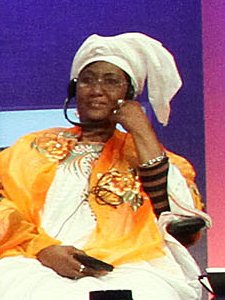
Cissé Mariam Kaïdama Sidibé stands as a monumental figure in the political history of Mali and West Africa. Her appointment on April 3, 2011, as the Prime Minister of Mali marked a historic breakthrough, making her the first woman to ever hold this high office in the nation. Serving under President Amadou Toumani Touré, her tenure placed her at the helm of the Malian government during a period of significant regional instability and domestic challenge. Cissé Mariam Kaïdama Sidibé's career is not defined solely by this groundbreaking achievement, but by decades of dedicated public service in various ministerial roles, where she focused on rural development, social welfare, and administrative reform. Her leadership, though cut short by a military coup, remains a powerful symbol of progressive change and female empowerment in Politics & Government within the Sahel region.
Early Life and Educational Foundation
Born in 1948 in what was then French Sudan, Cissé Mariam Kaïdama Sidibé grew up in a Mali on the cusp of independence, which would be achieved in 1960. While specific details of her early family life are not extensively documented in public sources, her educational path reveals a determined and intellectually gifted individual. She pursued higher education with a focus on the sciences, a field less common for women in her generation. She earned a Master's degree in Natural Sciences, laying a foundation of analytical and systematic thinking.
Her academic journey culminated at the prestigious École Nationale d'Administration (ENA) in Bamako, Mali's premier institution for training the nation's administrative and political elite. Graduating from the ENA was a significant credential, typically funneling graduates into high-level civil service positions. This formative experience equipped Cissé Mariam Kaïdama Sidibé with a deep understanding of state machinery, public policy, and administrative governance, which would prove invaluable throughout her subsequent career in the Executive Cabinet.
Political Career and Major Achievements
The career of Cissé Mariam Kaïdama Sidibé is a testament to steady progression through the ranks of Malian public administration before her historic ascent to the prime ministership.
Ministerial Tenure and Policy Focus
Long before becoming Ex-Prime Minister, Sidibé built a reputation as a competent and reliable minister. Her early cabinet posts were deeply connected to Mali's rural economy and social fabric:
- Minister of Livestock, Fisheries, and Agriculture: In this role, she addressed core issues of food security, pastoralist communities, and agricultural development, which are critical to Mali's economy.
- Minister of Rural Development: She continued her focus on the Malian countryside, overseeing programs aimed at improving infrastructure, livelihoods, and services outside urban centers.
- Minister of Social Development, Solidarity, and the Aged: This portfolio highlighted her commitment to social welfare, targeting vulnerable populations and strengthening community support systems.
These roles demonstrated her versatility and the trust placed in her by successive administrations to manage vital, yet challenging, sectors of the Malian state.
Historic Premiership and Challenges
Her appointment as Prime Minister in April 2011 was widely celebrated as a step forward for gender equality. As head of government, Cissé Mariam Kaïdama Sidibé's key responsibilities and focuses included:
- Managing the government's response to the growing Tuareg rebellion in the north of Mali, a crisis that would later escalate dramatically.
- Overseeing domestic policy and implementing the agenda of President Amadou Toumani Touré.
- Representing Mali on the international stage, advocating for development assistance and diplomatic support.
However, her tenure was abruptly and violently interrupted on March 22, 2012, when a faction of the military, dissatisfied with the government's handling of the northern conflict, staged a coup d'état. President Touré was ousted, and Cissé Mariam Kaïdama Sidibé was forced into hiding for a period before the junta consolidated power. This event ended her premiership and plunged Mali into a political crisis that eventually led to a foreign military intervention and ongoing instability in the north.
Post-Coup Engagement and Advocacy
Following the coup and the eventual restoration of civilian rule, Cissé Mariam Kaïdama Sidibé remained an engaged and respected elder stateswoman. She did not seek high office again but used her platform to advocate for democratic resilience, national unity, and the inclusion of women in peacebuilding and governance processes. Her voice carried the weight of experience, often reminding Malians of the fragility of democratic institutions.
Personal Life, Legacy, and Lasting Impact
While Cissé Mariam Kaïdama Sidibé maintained a relatively private personal life, her public legacy is profound. She was married and a mother, balancing the demands of high-level political office with family responsibilities—an experience that made her a role model for many professional women in Mali.
Her lasting impact is multifaceted:
- Symbol of Female Leadership: She shattered a significant glass ceiling, proving that a woman could lead the government of a major West African nation. Her picture as Prime Minister remains an iconic image for advocates of women's political participation across Africa.
- Expertise in Development: Her long ministerial career left a mark on Mali's policies regarding agriculture, rural development, and social welfare, areas crucial for the nation's sustainable progress.
- A Cautionary Tale in Democracy: Her term, ended by a military coup, is a stark reminder of the challenges facing democratic governance in the region. Her experience is often cited in discussions about civil-military relations and constitutional order.
Cissé Mariam Kaïdama Sidibé's legacy is thus one of both triumph and sobering reality—a pioneer who reached the pinnacle of power, only to see the institution itself collapse. Nevertheless, her dignity in service and her groundbreaking achievement ensure her a permanent and honored place in the annals of Malian history.
Net Worth and Business Ventures
As with many public servants in Mali, there is no verifiable or detailed public information regarding the personal net worth or private business ventures of Cissé Mariam Kaïdama Sidibé. Her career was overwhelmingly focused on public service within the Politics & Government sector, rather than on private commercial enterprise. Any financial success would be presumed to stem from a lifetime of government salaries and pensions associated with her high-ranking positions, including that of Prime Minister and various ministerial roles. Unlike some political figures in the region, she has not been publicly associated with significant private sector holdings or business interests, maintaining an image aligned with her technocratic and administrative background. Her primary "wealth," in a legacy sense, remains her historic contribution to Malian governance and her role in advancing the prospects for women in executive leadership across Africa.
Frequently Asked Questions
What is Cissé Mariam Kaïdama Sidibé's estimated net worth?
Cissé Mariam Kaïdama Sidibé has an estimated net worth of $5.0 Million.
What is Cissé Mariam Kaïdama Sidibé's role and nationality?
Cissé Mariam Kaïdama Sidibé is a Ex-Prime Minister from Mali.
How did Cissé Mariam Kaïdama Sidibé make their money?
Cissé Mariam Kaïdama Sidibé built their fortune primarily through As a former Prime Minister of Mali, a country with a low GDP per capita, her wealth is estimated from her public salary and post-service activities, not from major business holdings or inclusion on billionaire lists..
How old is Cissé Mariam Kaïdama Sidibé?
Cissé Mariam Kaïdama Sidibé was born in 1948 (78 years old).
Which category is Cissé Mariam Kaïdama Sidibé listed under?
Cissé Mariam Kaïdama Sidibé is featured under the Politics & Government category on NetWorth Africa.
How is Cissé Mariam Kaïdama Sidibé's net worth calculated?
NetWorth Africa estimates financial valuations using publicly available stock equity holdings, company ownership records, real estate assets, and verified market data.
Net Worth Analysis
As a former Prime Minister of Mali, a country with a low GDP per capita, her wealth is estimated from her public salary and post-service activities, not from major business holdings or inclusion on billionaire lists.
Quick Stats
Related People

Aaron Motsoaledi
LP; Minister of Home Affairs • South Africa

Abane Ramdane†
FLN Leader & Strategist • Algeria

Abdalla Hamdok
Ex-Prime Minister • Sudan

Abdallah Kigoda
Ex-Minister of Natural Resources • Tanzania