$450M
Estimated Net Worth
As of 2024 • medium confidence
Financial Breakdown
Asset Distribution
Assets vs Liabilities
Assets
Liabilities
Disclaimer: These financial estimates are based on publicly available information and should be considered approximate. Last updated: 1/21/2026
Biography
Introduction: From Activist to Head of State
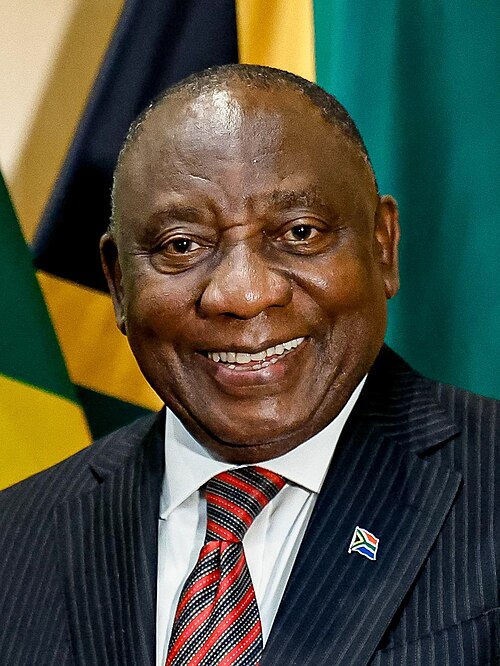
Cyril Ramaphosa, the fifth democratically elected President of South Africa, is a pivotal figure in the nation's modern history. Born in 1952, his journey from trade union leader and anti-apartheid stalwart to head of state encapsulates the struggle and evolution of post-apartheid South Africa. He first rose to national prominence as the founding General Secretary of the National Union of Mineworkers (NUM) and later as the chief negotiator for the African National Congress (ANC) during the critical transition to democracy in the early 1990s. His most notable achievement during this period was helping to broker the historic 1994 elections that ended apartheid. After a successful foray into business, Cyril Ramaphosa returned to high-level Politics & Government, serving as Deputy President before ascending to the presidency in 2018. His tenure is defined by the ambitious agenda of tackling corruption, economic revitalization, and social reform in a deeply complex political landscape.
Early Life and Education: Formative Years of a Leader
Matamela Cyril Ramaphosa was born on November 17, 1952, in Soweto, Johannesburg. The second of three children, his father was a retired policeman, and the family belonged to the Venda ethnic group. His early education took place in Soweto before he attended Mphaphuli High School in Sibasa, Venda. From a young age, Cyril Ramaphosa was exposed to political activism; at just 15, he was detained for eleven days after participating in a protest following the arrest of Nelson Mandela.
His academic path was directly influenced by his political awakening. In 1971, he enrolled at the University of the North (now University of Limpopo) to study law. It was here that his activism intensified. He became involved with the South African Students Organisation (SASO) and the Black People's Convention (BPC), both central to the Black Consciousness Movement led by Steve Biko. This involvement led to his detention in 1974 under the Terrorism Act, resulting in an initial 11-month solitary confinement sentence. After his release, he continued his studies through correspondence with the University of South Africa (UNISA), where he earned his BProc degree in 1981. These formative experiences—detention, student activism, and legal study—forged the resilience and strategic mind that would define his future roles in Politics & Government and labor movements.
Career and Major Achievements: Unionist, Negotiator, President
The career of Cyril Ramaphosa is marked by three distinct phases: labor leadership, political negotiation, and executive leadership.
Trade Union Leadership and Anti-Apartheid Struggle
After completing his articles, Ramaphosa joined the Council of Unions of South Africa (CUSA) as a legal advisor. In 1982, he leveraged this position to found the National Union of Mineworkers (NUM), becoming its first General Secretary. Under his leadership, the NUM grew explosively to become the largest and most powerful trade union in the country, with membership exceeding 300,000 by 1987. He masterminded pivotal strikes, including the massive three-week strike in 1987 that involved over 300,000 miners, fundamentally challenging the economic power of the apartheid state and establishing him as a formidable force.
Architect of Democracy and Political Transition
Following the unbanning of liberation movements in 1990, Cyril Ramaphosa was appointed head of the ANC's delegation to the Convention for a Democratic South Africa (CODESA). His legal acumen and calm demeanor proved invaluable in negotiating the end of apartheid. He played a critical role in drafting South Africa's interim constitution, widely praised as one of the most progressive in the world. Many expected him to become South Africa's first democratic deputy president, but after Nelson Mandela appointed Thabo Mbeki instead, Ramaphosa stepped back from active politics in 1997.
Business Success and Return to Politics
In his post-1997 business career, Cyril Ramaphosa became one of South Africa's most prominent black entrepreneurs through his investment company, Shanduka Group. He held significant stakes in multinational corporations like McDonald's South Africa and served as Chairman of the board for MTN Group and member of the board for Lonmin. He returned to politics in 2012, elected as ANC Deputy President, and subsequently became South Africa's Deputy President in 2014 under President Jacob Zuma. On February 15, 2018, following Zuma's resignation, the National Assembly elected Cyril Ramaphosa as the President of South Africa. He was elected for a full term in May 2019.
Presidency and Key Policies
As President, Ramaphosa's major achievements and initiatives include:
- Launching the Investment Conference to secure over R1.5 trillion in investment pledges for the South African economy.
- Establishing the State Capture Commission of Inquiry to investigate allegations of grand corruption during the Zuma era.
- Initiating reforms to struggling state-owned enterprises like Eskom and Transnet.
- Leading the national response to the COVID-19 pandemic, including implementing a nationwide lockdown and rolling out a vaccination program.
- Advocating for the African Continental Free Trade Area (AfCFTA) to boost intra-African trade.
Personal Life, Philanthropy, and Legacy
Outside the intense world of Politics & Government, Cyril Ramaphosa is a known cattle enthusiast and breeds Ankole cattle on his farm in the Limpopo province. This interest has earned him the affectionate nickname "The Farmer." He is married to Dr. Tshepo Motsepe, a medical doctor, and has four children. Ramaphosa is also a noted philanthropist. Through the Cyril Ramaphosa Foundation, established in 2004, he focuses on youth development and education. Key programs include Adopt-a-School, which improves infrastructure and leadership in under-resourced schools, and the Black Umbrellas programme, which supports emerging black entrepreneurs.
The legacy of Cyril Ramaphosa is still being written. He is historically cemented as a key architect of South Africa's democracy and a symbol of the transition from liberation movement to governance. His later-life presidency aims to be defined by the restoration of ethical leadership and economic pragmatism. Whether he will be remembered for successfully renewing the ANC and setting South Africa on a path of inclusive growth, or for presiding over continued stagnation, remains the central question of his tenure. His story remains inextricably linked to the fortunes of the nation he helped to free and now leads.
Net Worth and Business Ventures
Cyril Ramaphosa is one of the wealthiest politicians in South Africa, with an estimated net worth that has been reported by various financial publications to be in the range of hundreds of millions of South African Rands. His wealth was primarily accumulated during his successful business career between 1997 and 2012. His investment vehicle, Shanduka Group, held major stakes across sectors including resources, energy, real estate, banking, and telecommunications. Notable ventures included chairing MTN Group and serving on the board of Lonmin plc. He also held the lucrative franchise for McDonald's in South Africa. Upon returning to government as Deputy President in 2014, Ramaphosa placed his business holdings in a blind trust to avoid conflicts of interest, a move he reiterated upon becoming President of South Africa. While specific details of his current finances are private, his past business success underscores his unique profile as a leader with extensive experience in both political and corporate spheres.
Net Worth Analysis
Cyril Ramaphosa is a wealthy businessman from his pre-presidency career, notably as a trade unionist and businessman involved in Shanduka Group and other investments, but he is not listed among Africa's billionaires by Forbes.
Quick Stats
Related People
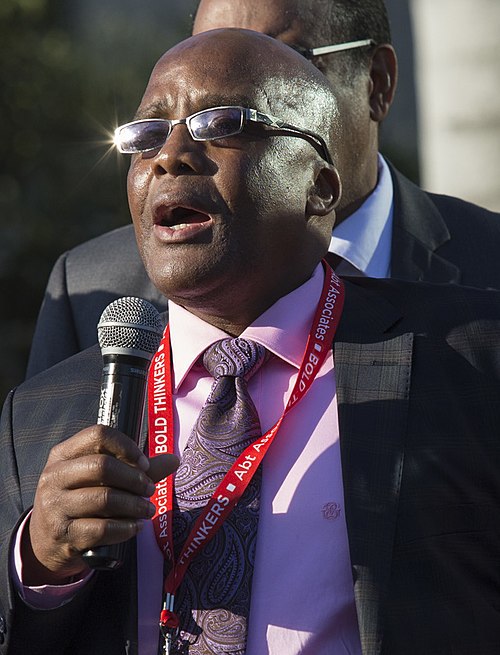
Aaron Motsoaledi
LP; Minister of Home Affairs
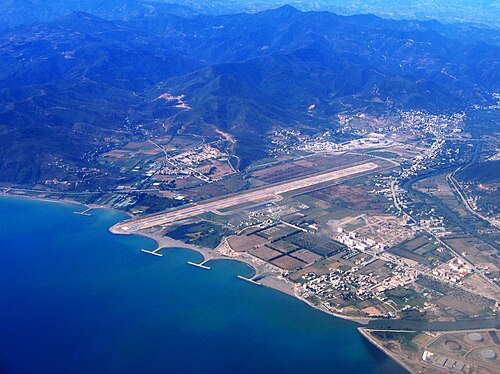
Abane Ramdane†
FLN Leader & Strategist
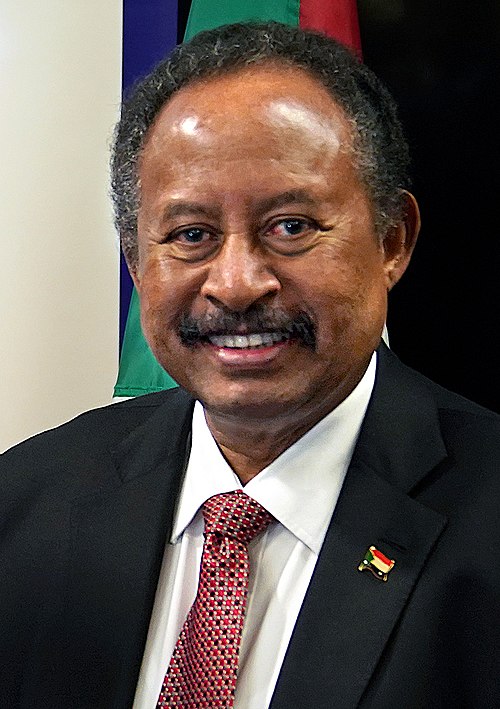
Abdalla Hamdok
Ex-Prime Minister
Abdallah Kigoda
Ex-Minister of Natural Resources