$1M
Estimated Net Worth
As of 2024 • low confidence
Financial Breakdown
Asset Distribution
Assets vs Liabilities
Assets
Disclaimer: These financial estimates are based on publicly available information and should be considered approximate. Last updated: 12/31/2025
Biography
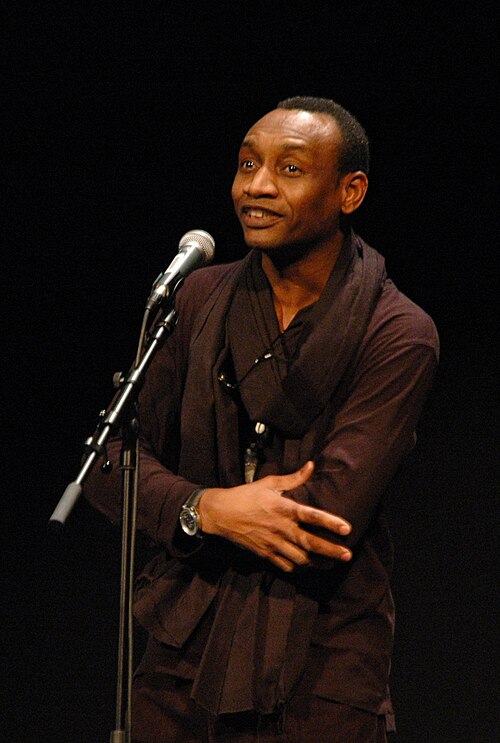
In the vibrant landscape of Arts & Culture, few figures embody the synthesis of ancient tradition and modern storytelling as profoundly as Dani Kouyaté. Born in 1961 in Burkina Faso, Kouyaté has carved a unique niche as a Director & Griot, a filmmaker who channels the oral narrative heritage of West Africa into powerful cinematic language. As a Director (Mali-Burkina Faso), his work is a cornerstone of Francophone African cinema, celebrated for its philosophical depth, cultural authenticity, and accessible artistry. His international breakthrough, the 1995 film Keïta! L'Héritage du griot, remains a seminal work, introducing global audiences to the Mande epic of Sundiata through the lens of a contemporary child's education. Dani Kouyaté is not merely a filmmaker; he is a cultural custodian whose camera serves as a modern extension of the griot's voice, ensuring that the wisdom of the past continues to illuminate the present.
Early Life & Education: The Roots of a Storyteller
The artistic destiny of Dani Kouyaté was, in many ways, preordained by his lineage. Hailing from a prestigious family of griots (or djélis) in Burkina Faso, the oral tradition of storytelling, history-keeping, and musical performance was his birthright. His father, the revered actor and griot Sotigui Kouyaté, was a monumental influence, embodying the seamless flow between traditional performance and contemporary stage and screen. This unique upbringing immersed the young Dani Kouyaté in a world where narrative was alive, communal, and essential to cultural identity.
Driven by a desire to formalize his artistic training and master new mediums, Kouyaté pursued higher education in drama and film. He attended the Institut Africain d’Éducation Cinématographique (INAFEC) in Ouagadougou, a crucial institution in the development of Burkinabé cinematic talent. His quest for knowledge then took him to France, where he studied at the Université de Paris VIII, specializing in drama, and further honed his skills at the prestigious Conservatoire Libre du Cinéma Français. This dual education—rooted in the ancestral courtyards of Burkina Faso and the technical studios of Europe—equipped Dani Kouyaté with a singular toolkit. It allowed him to approach filmmaking not as an outsider adopting a foreign form, but as an heir apparent adapting his own heritage to the most influential storytelling technology of the modern age.
Career & Major Achievements: Cinematic Griot for a Global Audience
The career of Dani Kouyaté is a testament to the power of culturally rooted cinema. His debut feature, Keïta! L'Héritage du griot (1995), co-produced between Burkina Faso and France, was an instant classic. The film cleverly frames the 13th-century epic of Sundiata Keita, founder of the Mali Empire, within a modern story of a boy named Mabo learning his history from a griot, played by Kouyaté's own father, Sotigui. This meta-narrative structure, where the film itself performs the griot's function, was a masterstroke. It won over a dozen international awards, including the prestigious UNESCO Prize at FESPACO (the Panafrican Film and Television Festival of Ouagadougou), solidifying Kouyaté's reputation.
Expanding the Narrative Scope
Kouyaté did not rest on this success. He continued to explore diverse genres and stories while maintaining his signature blend of wisdom and entertainment. His subsequent features include:
- Sia, le rêve du python (2001): A visually stunning adaptation of a Mauritanian legend, which won the Special Jury Prize at FESPACO.
- Ouaga Saga (2004): A vibrant, music-driven comedy about the dreams and struggles of youth in urban Ouagadougou, showcasing his versatility.
- Souvenirs encombrants d'une femme de ménage (2008): A film tackling themes of memory, guilt, and political violence.
- Joseph Ki-Zerbo, Identités / Identité pour l'Afrique (2005): A documentary portrait of the famed Burkinabé historian and politician.
Beyond feature films, Dani Kouyaté has been a prolific director for television, creating series and films that reach wide audiences across Africa. His work consistently returns to core themes: the transmission of knowledge, the tension between tradition and modernity, and the importance of knowing one's history to navigate the future. As a Director (Mali-Burkina Faso), his influence extends across borders, contributing significantly to the cultural dialogue within West Africa and serving as an ambassador for African cinema on the world stage at festivals from Cannes to Toronto.
Personal Life, Philosophy & Legacy
While Dani Kouyaté maintains a relatively private personal life, his public philosophy is deeply intertwined with his work. He lives as a modern griot, a role he embraces as both an honor and a responsibility. This extends beyond filmmaking into education and mentorship. He has been actively involved in training the next generation of African filmmakers through workshops and academic engagements, understanding that legacy is built through succession.
His personal and professional lives merge in his dedication to his family's heritage. The profound collaborative relationship with his father, Sotigui, until the latter's passing in 2010, stands as a beautiful real-life reflection of the themes in his films. Kouyaté's legacy is multifaceted: he is a preserver of the griot tradition, a pioneer in adapting it for film, and a democratizer of African history and philosophy. He has shown that cinema can be a tool for cultural preservation and critical thinking, not just entertainment. For aspiring filmmakers in Burkina Faso and beyond, Dani Kouyaté exemplifies how to create art that is locally resonant and globally compelling without compromising its soul.
Net Worth & Business Ventures in Context
Discussing net worth in the context of African Arts & Culture, particularly for an auteur filmmaker like Dani Kouyaté, requires nuance. Unlike mainstream commercial directors, his primary capital is cultural and artistic. Specific financial figures are not publicly disclosed, which is common for artists whose work is funded through a complex mix of international co-productions, grants from European cultural institutes (like the French Centre national du cinéma), FESPACO prizes, and pan-African television commissions.
His "business" is his art and his cultural mission. The economic model sustaining his filmography is one typical of independent and world cinema, relying on festival success, critical acclaim, and educational distribution to recoup investments. Any financial success is reinvested into the creative process of subsequent projects. Therefore, while not a commercial mogul, Dani Kouyaté's wealth is measured in his enduring film catalog, his influence on African cinema, his awards, and his unshakeable role as a respected intellectual and griot within the global cultural community. His ventures are projects that sustain the ecosystem of African storytelling, ensuring its continuity for future generations.
Net Worth Analysis
Dani Kouyaté is a highly respected but not commercially-driven film director and griot from Burkina Faso, where the film industry is not a high-wealth sector; his wealth is estimated based on his career achievements and cultural status.
Quick Stats
Related People
Abasse Ndione
Novelist & Playwright
Abdel Rahman al-Abnudi†
Poet (Egypt-Sudan)
Abdelkrim Ghallab†
Novelist & Journalist
Abdellah Taïa
Novelist & Filmmaker